Posted on Leave a comment

October 2024 Social Trends

october

October 2024 Social Trends

POSTS + tiktoks

#TrendAlert – Turn it Upside Down: People are flexing their muscles on social flipping their significant others to the tune of this audio – but CPG brands can get in on the fun, too. Grab your product and turn it upside down, showing how good it is to consume or reminding people it’s time to re-order!

#TrendAlert – Savannah, slow down: Use this sound to talk about how you tried to stop using [insert your product] but you just can’t help it. Example here.

   OCTOBER HOLIDAYS
 
  • October 1 – International Coffee Day
  • October 1 – World Vegetarian Day
  • October 4 – National Taco Day
  • October 14 – National Dessert Day
  • October 14 – Indigenous Peoples’ Day
  • October 16 – World Food Day
  • October 31 – Halloween

   TRENDING VIDEO AUDIO

  • EASY: Use this sound to talk about the real life/relatable difficulties of your job.
  • MEDIUM: Lip sync to this sound to highlight how you need your product and QUICK. Example here.
  • EASY: Use this audio on just about any video of your product in use. Example here.


   SOCIAL NEWS AND UPDATES

Ready to create a 7-figure Consumer Goods Brand without wasting money on strategies that don't work?

Then it's time you join the Consumer Goods Growth Course & start driving the results you've been wanting!

Book a call with us now & learn how you can start making consistant, 7-figure sales!

Posted on Leave a comment

August 2024 Social Trends

August 2024 Social Trends

POSTS + tiktoks

#TrendAlert, DTC / Online Orders: We’ve all been there. Water droplets on our touch phones make the craziest moves! In this trend, Creators are showing how a water drop causes an “accidental” order to be placed. Use this inspo and screen record you adding your proucts to your cart to recreate this.

#TrendAlert, TikTok: Use this sound and filter and place a hand like in this video, then caption the video with something you’d say no to if somebody asked.

AUGUST HOLIDAYS
 
  • August 1 – Back to School Season / Black Business Month
  • August 8 – International Cat Day
  • August 9 – National Book Lovers Day
  • August 17 – National Nonprofit Day
  •  
  • August 24 – College Football Season begins
  • August 26 – Women’s Equality Day / National Dog Day
  • August 28 – National Red Wine Day
  • August 30 – National Beach Day

   TRENDING VIDEO AUDIO

  • Use this sound to feature your variety of SKU’s. Copy overlay: “This trend but our product varieties”. EX
  • Use this sound to showcase how you want to save money but can’t get enough of [your products]. EX
  • BRAT summer is stil in full effect! Use this sound as a background audio or do the Apple dance while holding your products.

   SOCIAL NEWS AND UPDATES

  • TikTok Shop is raising referral fees from 6 to 8 percent.
  • Meta launches a new AI Studio platform.
  • TikTok now allows users to upload custom covers / thumbnails to videos.
  • Reddit launches lead generation ads.
  • Meta shares tips on how to avoid paying Apple fees on Ads

Ready to create a 7-figure Consumer Goods Brand without wasting money on strategies that don't work?

Then it's time you join the Consumer Goods Growth Course & start driving the results you've been wanting!

Book a call with us now & learn how you can start making consistant, 7-figure sales!

Posted on Leave a comment

July 2024 Social Trends

July 2024 Social Trends

POSTS + tiktoks

#TrendAlert, Founder Forward Content / BTS  We all love a good BTS moment… Use this sound to showcase the different stages of creating your product. Similar to how Ms. Olivia Rodrigo showcases her getting ready for a show here!

#TrendAlert, CapCut Template – Use this (view on mobile) CapCut Template to show good [your product] is that you can‘t get enough!].


Coming from Instagram? Here is your BONUS CAPCUT Template

JULY HOLIDAYS
 
  • July 1 – International Joke Day
  • July 4 – Independence Day
  • July 7 – World Chocolate Day
  • July 17 – World Emoji Day
  • July 21 – National Ice Cream Day
  • July 24 – National Tequila Day
  • July 29 – Chicken Wing Day
  • July 30 – International Day of Friendship

   TRENDING VIDEO AUDIO

  • Use this sound to tap into your niche. EX: No, I wasn’t [problem your product solves]; I just needed [your product]. Example
  • Use this sound to show how much you love your product. “I feel like you’re just here for [your product]. Example
  • This sound has been trending both on TikTok and Instagram! Use it to show off your products with the copy overlay: “Is somebody going to match my freak? (My love for [your product].” Example

   SOCIAL NEWS AND UPDATES

  • Instagram adds live streams for Close Friends only
  • TikTok shares updated trend insights for marketers
  • Pinterest introduces a new way to share Pinterest boards
  • TikTok launches an Instagram-like app called Whee (cue the panic – but rlly, don’t.)

Ready to create a 7-figure Consumer Goods Brand without wasting money on strategies that don't work?

Then it's time you join the Consumer Goods Growth Course & start driving the results you've been wanting!

Book a call with us now & learn how you can start making consistant, 7-figure sales!

Posted on Leave a comment

June 2024 Social Trends

June 2024 Social Trends

POSTS + tiktoks

#TrendAlert, Founder Forward Content Marketing Managers, this one‘s for you! Start your video with “Hey Guys, can you watch our [CEO, founder, boss, manager] for a second? “ and let the video run while you leave the room.

#TrendAlert, CapCut Template – Use this (view on mobile) CapCut Template to show how you react when someone tells you they still haven‘t bought/used [your product].

JUNE HOLIDAYS
 
  • June 1 – First Day of Pride Month
  • June 4 – National Cheese Day
  • June 8 – Best Friends Day
  • June 10 – Nat’l Egg Roll Day
  • June 18 – National Picnic Day
  • June 19 – Juneteenth
  • June 21 – National Selfie Day
  • June 30 – Social Media Day

   TRENDING VIDEO AUDIO

  • Use this sound to target your audience. Add copy overlay and replace “finance, trust fund, 6’5, blue eyes”, to describe your target audience. EX
  • Use this sound when someone asks you about a problem you fixed with your product or when someone mentions a misconception about your product.
  • This sound is perfect to showcase how much you love your product. Add copy over the video: “When someone tells me to stop eating/using [your product].”

   SOCIAL NEWS AND UPDATES

  • Sprout Social reports the best times to post on social media (test for yourself!).
  • Meta adds enhanced AI creation tools for Facebook and Instagram ads
  • TikTok launches management platform for creators
  • Instagram shares more info on distribution of longer Reels clips

Ready to create a 7-figure Consumer Goods Brand without wasting money on strategies that don't work?

Then it's time you join the Consumer Goods Growth Course & start driving the results you've been wanting!

Book a call with us now & learn how you can start making consistant, 7-figure sales!

Posted on Leave a comment

May 2024 Social Trends

May 2024 Social Trends

POSTS + tiktoks

#TrendAlert – This sound is trending on Instagram and Tiktok! Here is how you can hop on it:

  • Carousel: Use a before and after of your product
  • Carousel: Show an image of how your product solves an issue
  • Reel: Add a video of your product with product benefits callouts

OR use it as background music on your video!

#TrendAlert, CapCut Template – If you need an excuse to listen to TSwift‘s album, we‘ve got one! Use this sound and this CapCut Template to show how much you love [your product] that it‘s ruining your life (in a good way 😉). Simply add a photo of your product to the template, and you‘re set!

MAY HOLIDAYS
 
  • May 1 – First Day of AAPI Month
  • May 4 – Star Wars Day
  • May 5 – Cinco De Mayo
  • May 10 – Small Business Day
  • May 12 – Mother’s Day
  • May 27 – Memorial Day
  • May 28 – Hamburger Day
  • May 31 – National Smile Day

   TRENDING VIDEO AUDIO

  • Use this sound to debunk a myth in your product’s niche. Ex: “Isn’t your product [x]?”, “No, [insert education about the product]. Example
  • You can use this audio to show what your product does NOT do in comparison to the competitors. Example
  • Use this sound in two ways: as a founder’s forward video—“I’m working late because [insert what you do]”—or as background music! Example
  • This sound is great to add as background music to your videos.

   SOCIAL NEWS AND UPDATES

  • U.S. approves TikTok sell-off. Nothing to worry about here but a good reminder to build communities on multiple platforms (especially your own with email marketing).
  • Meta expands its test of generative AI features
  • Threads sees more daily users than X in the US
  • Instagram rolls out a new Story sticker called Frames
  • TikTok launches new brand safety innovations

Ready to create a 7-figure Consumer Goods Brand without wasting money on strategies that don't work?

Then it's time you join the Consumer Goods Growth Course & start driving the results you've been wanting!

Book a call with us now & learn how you can start making consistant, 7-figure sales!

Posted on Leave a comment

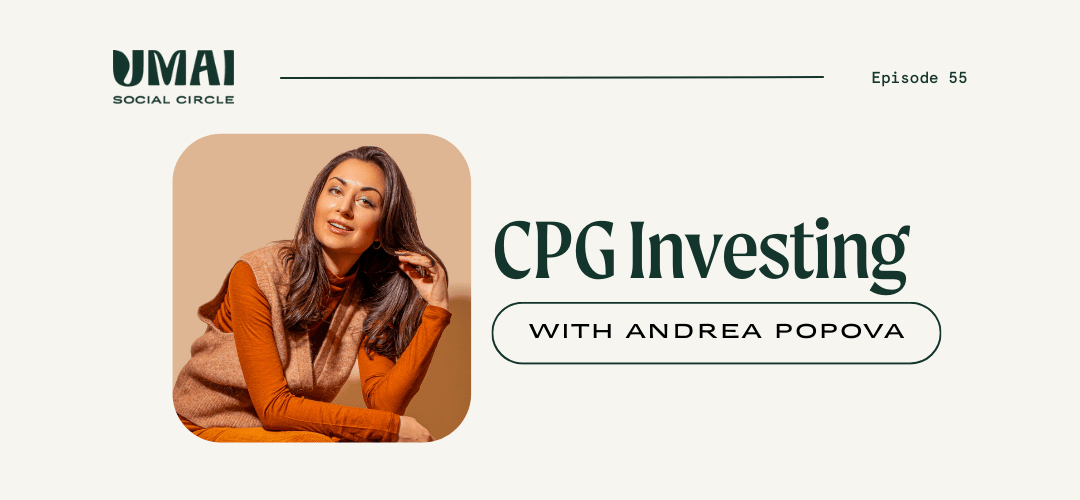
#55: CPG Investing with Andrea Popova

UMAI social circle cpg podcast

#55: CPG Investing with Andrea Popova

Welcome to episode #55 of the UMAI Social Circle, with your hosts, Karin and Alison. Today’s episode features guest Andrea Popova, and we’re discussing investing in consumer packaged goods brands from an investor perspective.

Andrea shares her journey from spending years in retail and eCommerce at companies like Walmart, Nielsen, Meta, and Prose to writing one of the most-read DTC newsletters—CPGD. CPGD has evolved into a vital resource for digitally native brands, boasting 10,000 weekly readers and fostering a vibrant community, and it’s the go-to online directory that connects brands, investors, and service providers alike. Andrea shares how her experience of finding brands to invest in, what to look for, and her favorite brand darlings at this time.

Join us as we explore the dynamic world of CPGD and uncover invaluable insights for investing success. 🎙️

Let Us Break It Down For You…

[0:59 – 5:12] Intro: Meet Andrea Popova of CPGD.xyz
[5:13 – 8:23] Making Your First Angel Investment
[8:24 – 11:43] Andrea’s Favorite Brands
[11:44 – 13:15] What to Look for When Investing
[13:16 – 15:27] What Kind of Questions Founders Should Ask Potential Investors
[15:28 – 18:30] Recent Brand Investments & CPG Opportunities
[18:33 – 21:03] CPG Trends: The Rise of Brand Profitability
[21:04 – 22:03] Final Thoughts and Closing
 

Mentions from this episode: 

Learn more and Start growing with us 

UMAI Marketing socials  –

Learn investing and CPGD with Andrea at cpgd.xyz
 
Access the Digital Marketing Tools Collection, SHOP NOW!
 

Stay in touch:

Join UMAI’s Facebook Group: CPG Marketing CORE 3 Inspo: Organic Social, Social Ads & Email with UMAI

#55: CPG Investing with Andrea Popova

 
Alison Smith: [0:17]
Howdy, listeners. We’re Alison.
 
Karin Samelson: [0:18]
And I’m Karin.
 
Alison Smith: [0:19]
And we love growing CPG brands.
 
Karin Samelson: [0:22]
We’re the founders of a digital and social media marketing agency, UMAI Marketing, and creators of The Consumer Goods Growth Course, where we’ve helped grow dozens of brands to six and seven figures.
 
Alison Smith: [0:32]
We’re former in-house marketers turned consumer goods marketing educators, who’ve set off on a mission to provide CPG founders and marketers with actionable strategies that drive community and sales. We’re talking real results.
 
Karin Samelson: [0:46]
If you’re wanting to learn simple, actionable, step-by-step strategies needed to drive real brand growth, without breaking the bank or sacrificing your social life, then this is the podcast for you. Let’s get into today’s episode.
 
Alison Smith: [0:59]
Welcome to the UMAI Social Circle, where we talk consumer goods tips to help business owners and marketers grow. We’re Alison and Karin, co-founders of UMAI Marketing, and today we’re being joined by Andrea Popova, co-founder and CEO of CPGD. Welcome.
 
Andrea Popova: [1:16]
Thank you. Thanks for having me.
 
Alison Smith: [1:17]
We’re super excited to talk to you. We’ve been following you and tracking you down for a while, so this is huge for us. And today we’re going to be talking about raising, investments, things that we haven’t really had the chance to talk in depth with. So yeah, we’re super pumped about it and we’re excited to learn all the things. But first, let’s get into your background. How’d you come to start CPGD and all the other fun things that you’re up to?
 
Andrea Popova: [1:49]
So I’ve always had an interest in E-commerce and retail. I started my career at Nielsen as a consultant at Walmart, which was such a cool time to be there because they had just acquired Bonobos and Jet.com. And so it was a very forward-thinking version of Walmart, and they were really getting into E-commerce, which was exciting. And then I went to PROS after that where I was one of their founding analysts creating dashboards and data systems to help them drive data-driven decisions. So that was where I really got into data and tech and how it can be applied to E-commerce. And that was also right around that time when I was a subscriber to CPGD and the owner of CPGD reached out to me and said that he had bought the business and that he was looking for a new owner. So he brought me in based on my experience, and it was just kind of a once-in-a-lifetime dream opportunity because you suddenly are the owner of a publication that you’re obsessed with.
 
So for the last three years I’ve been running a business that I once was just a subscriber to and watching it grow from 2,000 to 10,000 readers and a lot of them now founders who are my friends and my peers and brands I’ve helped get investments in and get different forms of traction in. And it was just such an amazing opportunity. So that’s a bit about me.
 
Karin Samelson: [3:06]
Oh, that’s so exciting that it just happened. He just really liked your experience. But for anybody who doesn’t know what CPGD is, can you give a very quick summary of what it is?
 
Andrea Popova: [3:20]
Oh, yes. CPGD stands for the Consumer Package Goods Directory, and it’s an online directory of digitally native brands and that it started as a free resource of these brands. And since then it’s sort of scaled into a newsletter where these brands are featured where we also feature different founders and agencies and services. And that’s where we have about 10,000 readers currently that read that on a weekly basis. And because of that newsletter, I’ve been able to then engage with the community in a way that now I’m able to source deal flow for the investors in the network. I work with a lot of agencies in the network to help them get clients. I help a lot of the founders on an advisorship where there’s even a mentorship basis. So yeah, it’s been a whirlwind, but that’s a bit about what exactly it is, kind of a watering hole of sorts.
 
Karin Samelson: [4:13]
Nice, nice. Yeah, it’s one of our, if not our favorite CPG newsletter, obsessed with the directory on the site and also the fact that you are helping not just CPG owners, you have agency partners, you have a whole slew of things you’re doing. Are you a one-woman team or what does that look like on the back end?
 
Andrea Popova: [4:34]
Yeah, the person who brought me on, he does own half the… I don’t know if I want to say this necessarily, but I guess the other person who brought me on, he owns part of the business and then I own the other part. And so he is not really necessarily a day-to-day operator, but so I guess you could consider me a one-woman show in that regard because I’m the only one operating the business. But I do have amazing interns who come in and currently have one from Brown University who’s just the best person ever. So it’s been awesome.
 
Karin Samelson: [5:06] 
It is awesome. We love a good intern. So congratulations on finding a really amazing one. Well, let’s just dive into investments. So getting straight to the point here, how does someone make their first angel investment in a brand?
 
Andrea Popova: [5:22] 
So getting involved in investing can be kind of daunting because you might want… There’s so many opportunities to invest. A lot of brands, especially right now are raising. And so I think the first thing is deciding what brand you want to invest in. And because there’s so many opportunities, I think it’s important for an angel investor to be really discerning, and that can be really impactful because if you invest in something early on that does really well, then that can really legitimize your career as an investor down the line.
 
So I would say yeah, being really discerning to start. And something you can do to do your due diligence, even though you’re not a fund, is leverage funds in your network to do the diligence sort of for you. So if you have an investment that you’re thinking of making, look at what other funds are investing in in the company, or if it’s very early, maybe look at later-stage companies that are in the same category of investing and ask them, “Do you think this is a brand that you would invest in if it got to a Series A or Series B?” And then in terms of the mechanics of it, typically you’ll have a call with the founder or the founding team and get an idea, a valuation and everything like that. But in terms of deciding on the brand itself, the metrics that I look at early stage are things like traction, profitability, margins, and looking at whether it can scale organically without paid media.
 
Alison Smith: [6:47]
Love that last one specifically, just because it’s something that we do, paid media, but we also do a slew of other things to build that strong foundation. And a lot of brands will come to us without that foundation and just want to throw money at the wall and see if it sticks sort of thing. So love that. You’re very in tune to that as well, and it’s like, yeah, this has to have legs. Very cool.
And have you found that being an angel investor and reaching out to firms or funds and asking for straight-up advice, like you mentioned, people are receptive to that in general?
 
Andrea Popova: [7:34]
Maybe it is because I already know a lot of these people already and talk to them on a regular basis, but…
 
Karin Samelson: [[7:41]
Talk to your friends and funds maybe first. Yes.
 
Andrea Popova: [7:45]
Yeah. I mean, if you’re interested in angel investing, maybe a first step is to have 20 or 30 calls with GPs or partners at early-stage consumer funds and understand how they’re thinking about investing. That’s what I would do is just do research among people who are already doing that and also actually joining networks like the angel group or syndicates that do a lot of the heavy lifting for you. That can be a great way to get your foot in the door, kind of dip your toe in, and then do some angel investing on your own after that.
 
Alison Smith: [8:17]
I love that actually, just doing 20 to 30 calls, just putting a number to it. Is it CPGD that got you into investing or was there a different avenue, or was it just being around all these brands constantly that made you really want to get into this?
 
Andrea Popova: [8:34]
I kind of always thought, “Will I go into venture capital, will I not?” Because I do love the entrepreneurial space, but I don’t want to run my own CPG business, but I love helping CPG businesses, so it’s kind of an easy way to do it as if you’re investing in them. But I didn’t really know if that would be possible for CPGD as a business to start doing until we found this platform called PIN that allows communities to raise capital together.
 
So the Uber alums use it to raise, the Y Combinator alums use it to raise. And so we were like, “Well, we have this community and we know that a lot of these people want to invest in CPG as well. Could we pull together money from that community using a platform called PIN to do that?” And so that’s when we first started thinking, could we actually do the investing ourselves if we reduce the technical barrier to entry and are able to use something like that. And that’s been really promising so far.
 
Alison Smith: [9:30]
Awesome. Is that still around, the PIN site?
 
Andrea Popova: [9:32]
Yeah, well, I am legally not allowed to say if we’re actively raising, I think, so what can I say? That yeah, PIN is thriving and we are actively working with them to maximize the impact of our community in CPG.
 
Alison Smith: [9:51]
Awesome.
 
Karin Samelson: [9:53]
So since you always have your eye on CPG brands right now, what are a few brands that are some of your faves that you’re interested in and why, what makes them compelling?
 
Andrea Popova: [10:04]
Yeah. Well, one brand that I’m really excited about is 4AM Skin. It’s founded by two amazing female founders and when they started the brand, they started also building their own social media followings, which ended up being really impactful because now they’re able to scale their sales pretty organically. I don’t think they’ve ever spent a dollar on paid media. They’ve actually grown through just organic mentions with the other influencers and creators that they partner with and also their own social media. And the brand itself is just very eye-catching and luxurious, and so it just garners a lot of attention. So that is a brand that I’m really excited about and the numbers are also really strong. So definitely one to watch out for in terms of content and unique, I don’t know how to describe it, unique ways of communicating with their community.
 
Omsom is a really cool example. They’re an Asian food brand. They started off doing sauces and now they do noodles as well. And just the way that they build their community online is very authentic and raw and open and the way the founders live their lives is also an expression of that. So it’s just really cool to see, again, two female founders who are actually sisters in this case, scale a business that way.
 
Karin Samelson: [11:26] 
I love that. And we always preach founder forward content just because of the connection that you can make and social is all about building community. So we completely align with that. So both of those examples were very, very strong founder stories, founder forward. Is that a huge thing that you look for other than the margin and profitability? And would you recommend other small brands be open to that kind of strategy?
 
Andrea Popova: [11:53]
Oh yeah, I totally agree that founder forward is the way. In fact, there’s this tool called Tolstoy that allows you to have videos embedded on your website. They would probably hate that I describe it this way, but it’s like a pop-up that pops up on your website. But it’s kind of like a mini way of you being able to say, “Hi, I’m the founder,” on your website. And I think that that’s why it leads to such stronger conversion rates on websites because it is so founder forward. And yeah, I just think the reason CPG is such a cool industry to be in is because the founders. So the more that people can lean into who they are and why they started the business, the better for their ability to raise and also for customer’s ability to engage with or feel the product resonates with them.
 
Alison Smith: [12:41]
Yeah, I was on a site the other day. It was a small CPG startup, and she had her Tolstoy video, and I listened to her story three times on repeat because it was good. She knew what she was doing. It was good. It instantly felt connected. I mean, just adding the human element to your shoppable website is, I’m sure it increases conversion rates, but it also just feels better as well as a consumer. I’m curious, what types of questions do founders who you’re potentially investing in, what type of questions do they ask you that you think are super smart or that you love and kind of more pique your interest into their brand?
 
Andrea Popova: [13:34]
What types of questions do founders ask me that pique my interest? What’s an example?
 
Alison Smith: [13:40]
Yeah, when they’re raising your potential investor, do they ask you any questions that you’re like, “That was a good question. It makes me want to work with them further.”
 
Andrea Popova: [13:53]
I think that any founder who’s looking for more than just capital, I think that’s always an important thing to seek out. So if a founder is asking like, “Okay, you’re investing this money in me, but what other things are you going to be providing? As an investor in this business, what are you committing to in terms of growing the business?” And I think that’s a perfect question for CPGD because we do so much beyond just investing capital. We have discounts and deals that we’ve curated on SaaS tools and agencies that we give our investments. We have advisors in our network. We have a talent pool that we can draw from. So there’s just so many things on top of the money. Obviously, the money is secondary even to all the resources and intros we can provide. So yeah, I think that that is a really good question to ask your investors.
 
Alison Smith: [14:38]
And how does CPGD get access to all of the CPG deals?
 
Andrea Popova: [14:40]
All the deals that we come across are inbound from our network. It’s pretty crazy. Either they come from the founders themselves because so many founders do subscribe to CPGD, and so they’ll tell us when they’re raising, or an investor in our network will say, “Have you seen this deal that I’ve come across?” I’m also a scout and a venture partner for several funds, so they sometimes show me deals that they’re looking at that maybe are too early for them or too late for them. So it really is all just inbound in the community, which is awesome.
 
Karin Samelson: [15:13]
That is awesome. I mean, when you build something so strong and there’s so many people that know about that reputation is really nice. There’s a lot of trust being built between what you’re doing and the brands that are relying on you here. So I love that. What are some brands that you’ve recently invested in?
 
Andrea Popova: [15:30]
I recently invested personally in Flaus, which is Flaus. I don’t know best to pronounce it, but it’s F-L-A-U-S, and it’s a really cool, really cool brand. It’s the first-ever electric flosser. And I invested in it because I talked with the founder and after talking to the founder for two minutes, I was sold. I was truly just like, “You have a vision and I am on that. I’m going to ride into the night with you till the day I die. This is just the best business ever.” That’s kind of how I left that conversation. And I have rarely felt that way. And I actually have only made just a couple personal investments in CPG brands personally versus the business, and that was one of them. So that just goes to show how strong of a business that it really feels like from talking to her.
 
Karin Samelson: [16:22]
A two-minute conversation. What on earth did she share with you in two minutes that had you sold like that?
 
Andrea Popova: [16:30]
I had follow-up conversations since then, of course, but I was already sold in that conversation. She told me about the long-term vision of the brand, how they were going to scale and different channels they were going to scale in. And I was like, “You are right.” And also the patent that they have on the business is also really promising. So yeah, very cool company.
 
Karin Samelson: [16:51]
That’s awesome. I have definitely received the ads, and I’m very intrigued because it is hard to remember to floss and of if it’s just right on my counter like that, super easy. So maybe I’ll take a harder look at it and see what stories they’re telling through their content.
 
Andrea Popova: [17:09]
Totally. Oh my gosh, yeah. You got to tell me if you try it.
 
Karin Samelson: [17:14]
I will. Now that I know that you’re an investor, that’s great. So what makes a CPG investment opportunity a good one, a smart one, when there are so many brands raising right now?
 
Andrea Popova: [17:26]
I think that right now we’re in a time of really focusing more on profitability and scale than ever before. Well, maybe not ever, ever before, but the most in the last decade. So a good investment right now is maybe even the unsexy brands that you don’t even see on trendy influencers. Maybe right now the best brands to invest in might be just brands with really solid growth that are actually targeting middle America and have strong margins. Those are really compelling businesses that are probably really acquirable on the other side. But a business that combines both hype with scalability, I think is just a unicorn. And that’s why I love brands like 4AM Skin, for example, that I think are doing really well in both regards.
 
Karin Samelson: [18:21]
I really have to take a look at 4AM Skin. I’ve never heard of it. I’m like, “Do I need this now?”
 
Andrea Popova: [18:26]
You do. I have them in my room right there.
 
Karin Samelson: [18:29]
Oh, perfect. Love it.
 
Alison Smith: [18;33]
You mentioned kind of a change towards brands feeling more that they need that profitability in CPG. We’ve definitely seen that too throughout the past year. Have you seen any other changes in the raising landscape in general as well?
 
Andrea Popova: [18:55]
Well, a lot of funds right now are having trouble raising, so I think that funds are also being way more, I don’t want to say stingy, because that almost has a negative connotation, but they’re just being more maybe selective because they have to be about what investments they make, and so brands are feeling that burn as well. But yeah, that’s definitely one trend is that I feel like it’s really coming even from the higher layer of the LPs and the funds themselves.
 
Alison Smith: [19:28]
Yeah, it’s so interesting that that wasn’t as important for some brands previously, and now it’s more like profitability is at the top of importance for at least a lot of the brands that we’re working with, which is exciting and a new challenge as well. It really puts our marketing skills to the test. But yeah, we’ve seen a lot of brands that we work with having to trim the fat in terms of looking really hard at their operations, their marketing as well, every single factor that goes into making a beautiful product. So yeah, kind of exciting new territory to work in. I’m going to use the word exciting, another way to describe it.
 
Andrea Popova: [20:20]
Marketing has always been about being creative with what you have, but now more than ever, brands have to be very creative and scrappy. Scrappy is probably the stronger word to use there.
 
Alison Smith: [20:31]
Yeah. Yeah, definitely.
 
Karin Samelson: [20:33]
Awesome, Andrea. Well, we’re so thankful that you came and shared wealth of knowledge about a subject that we really haven’t breached too much on the podcast. So we appreciate you being here, and we appreciate what you’re doing with CPGD. We reference it and we look to it all the time. And I mean, other brands should be too, regardless of if you’re looking to raise or if you’re looking for an agency partner, but just to see what the landscape is like, see what’s new, see what’s hot. So thank you for doing that work, but would you like to leave the audience with a link or a call to action, a final statement?
 
Andrea Popova: [21:09]
Well, thank you so much, first of all, for having me on. It’s been really amazing to meet you guys and to talk to you face to face. So yeah, thank you for having me on. I would just say if anyone is interested in investing or learning more about CPG, we have some resources on the website at cpgd.xyz, so check it out.
 
Karin Samelson: [21:30]
The best name, I love it.
 
Karin Samelson: [21:31]
Thanks for listening to the UMAI Social Circle, y’all. We’re here to support you in your CPG journey, so be sure to subscribe so you don’t miss any new podcast episodes. And while you’re a it, please leave us a review on your listening platform of choice. Shoot us a DM @umaimarketing on Instagram if you have any topics you want us to cover on new podcast episodes.
 
Alison Smith: [21:51]
And don’t forget to access our free masterclass where we’re showing you how to create a solid marketing strategy. You can access that at umaimarketing.com/masterclass, and we’ll meet you back here for the next episode.


Join below for marketing inspo & trends 👇👇👇

Posted on Leave a comment

#54: 4 Steps to Successful Ad Audience Targeting

UMAI social circle cpg podcast

#54: 4 Steps to Successful Ad Audience Targeting

In this final episode of our Facebook and Instagram advertising series led by Alison, co-founder of UMAI Marketing, we conclude by delving into effective audience targeting methods. Learn how to properly identify prospective audiences, optimize cost per acquisition by using better audience targeting techniques, and leverage your retargeting for lifetime value. Join us as we explore the four essential steps for discovering optimal audiences to drive successful ad campaigns. Let’s dive in! 🎧

Let Us Break It Down For You…

[0:58 – 2:07] Introduction: How to target audiences for Facebook and Instagram advertising
[2:07 – 4:22] Step 1: Analyze the Competition’s Customers
[4:23 – 5:16] Step 2: Craft Your Customer Avatar
[5:17 – 7:21] Step 3: Define Motivators & Pain Points
[7:22 – 11:23] Step 4: Choosing Targeting Interests & Other Audience Types
[11:24 – 12:25] Final Notes for Better Audience Targeting
 

Mentions from this episode: 

Learn more and Start growing with us 

UMAI Marketing socials  –

Access the Digital Marketing Tools Collection, SHOP NOW!
 

Stay in touch:

Join UMAI’s Facebook Group: CPG Marketing CORE 3 Inspo: Organic Social, Social Ads & Email with UMAI

#54: 4 Steps to Successful Ad Audience Targeting

 
Alison Smith: [0:17]
Howdy, listeners. We’re Alison.
 
Karin Samelson: [0:18]
And I’m Karin.
 
Alison Smith: [0:19]
And we love growing CPG brands.
 
Karin Samelson: [0:22]
We’re the founders of a digital and social media marketing agency, UMAI Marketing, and creators of The Consumer Goods Growth Course, where we’ve helped grow dozens of brands to six and seven figures.
 
Alison Smith: [0:32]
We’re former in-house marketers turned consumer goods marketing educators, who’ve set off on a mission to provide CPG founders and marketers with actionable strategies that drive community and sales. We’re talking real results.
 
Karin Samelson: [0:46]
If you’re wanting to learn simple, actionable, step-by-step strategies needed to drive real brand growth, without breaking the bank or sacrificing your social life, then this is the podcast for you. Let’s get into today’s episode.
 
Alison Smith: [0:58]
Welcome to the UMAI Social Circle, where we talk consumer goods tips to help business owners and marketers grow. Alison here and I’m one of the co-founders of UMAI Marketing, and I will be wrapping up our three part series on all things Facebook and Instagram advertising. So welcome to today’s episode. I’ll be covering the steps in different ways you can find new people to target with your product or offer to ensure the best cost per acquisition possible. We call these audiences who are called prospects, prospecting audiences. Additionally, you can re-target people who have interacted with your brand before. We would call this retargeting audiences, and these are people who have maybe visited your website, engaged with you on Instagram or your Facebook profiles, or are on your email list engaged with a past ad, et cetera, et cetera. But today, we’re focused mainly on targeting new customers.So let’s get into the four steps for finding the best audiences that you can target for successful ad campaigns. 
 
[2:07]
So step one is to do your research. We’d like to research our competitors and we like to research our customer avatars. To do this, we will look through a client’s FAQs, we will look through their web copy, look for any highlights, benefits, pain points that this product or brand is working on solving. And we also go to Amazon, Reddit, and Instagram, and any other social channels. So with Amazon, we are looking at the reviews for this particular brand or we’re going to competitor reviews on their brands. And we’re looking at the most frequent complaints and the most frequent likes, what they like about the product. On Amazon reviews, they generally pull out, at the top, the most frequent terms used. So it’s really easy here if you’re selling on Amazon or if your competitors are to highlight how people speak and pull that into your ad copy and creative. We also go to Reddit and we’ll type in the product or the brand name or competitor of brand names and get some really amazing data from people about this product or about this type of product, their issues with it, what they like about it, and then again, how they speak on it is really important. 
 
[3:51]
And then finally going to Instagram, looking at your competitors on Instagram, see the posts and what they talk about on these posts. Generally, for the bigger brands, they’ve spent hundreds of thousands to millions of dollars testing what resonates with their customer. So it’s a really cheaper way to conduct research if you can pull out and highlight some of the things that people are talking about and some of the content that they’re sharing when they’re a bigger brand.
 
 
[4:23]
Now onto step two to help you better target people with your Facebook and Instagram ads is to create a customer avatar. So to do this, imagine who your core customer is, really try to visualize them in their head, what they look like, how old they are, what their… You can even name them. So what’s their name, what is their job, what’s their household income? And dive into even deeper questions that you can ask yourself about who this person is. You can even go and pull a stock photo off the web of what he or she or they look like just to help you really visualize this person. So anytime you’re writing ad copy or putting together creative, you’re thinking about what this person wants to see. 
 
[5:17]
Now, step three of finding the best people to target with Facebook and Instagram is after you lay out your customer avatar or avatars, it’s then time to define what motivates them and what barriers they have or what pain points they have.
 
[5:35]
So basically how we do this is, we’ll make two columns and we’ll ask ourselves why someone would want a product like yours, what motivates them to purchase your product? And then on the other side of the pain point or the barrier side, we’ll ask ourselves, what’s hindering this person? Why would they hesitate to not buy our product? So as an example, let’s say we were the cricket protein bar by EXO, and we are running through this practice. Our benefits that we know our customers like in our product is that it’s high in protein, it’s sustainable, and it’s a on-the-go meal. But when we move to barriers, we need to figure out why someone would have a barrier to actually buy this cricket protein bar by EXO. 
 
[6:33]
So one thing that’s obvious are, crickets can be a tough thing to swallow for a lot of people. So a lot of education may have to go into solving and changing people’s mindset about why cricket protein is normal and good. And then also, these bars are a bit more expensive than other protein bars. So we’ll also need to solve for that with our marketing as well. And then once it’s time to speak to our customer avatar, through our creative and our copy and through all of our marketing, we can pull these different benefits and barriers and work to solve for them or work to speak on them so that we can really identify and relate to our end user, our customer. Okay. 
 
[7:22]
Now on to step four. Now that you’ve identified who your customer avatar is, how you want to speak to them, what your competitors are doing online, what your potential avatars are saying online, let’s now speak about the different types of audiences that you can use to target these new prospects on Facebook and Instagram. The first one, we’ll talk about our lookalike audiences. So lookalikes are a way that you can reach new people who are most likely going to be interested in your business or your product because they share similar characteristics to your existing customer base. So to create a lookalike audience, you would use a source audience, you would upload that into Facebook and it would pull all the data points from that source audience. So say you uploaded a list of people who have purchased from you in the past, it would take data points, demographics, interests, behaviors online, and spit out a completely cold audience that has similar characteristics for you to go out and target. So these are people who have never heard of you before, but they share a lot of the same traits as your current customer base. The second type of audience that we’ll talk about is inside the Meta Business Manager backend.
 
[8:48]
You can also choose additional demographics, interests, and behaviors to target. So beyond just age and gender demographics, you can also target things like this person’s household income. Are they parents and are they parents of toddlers or of small children or babies, what have you? You can even target if they’re in a relationship or not, as well as other interests that you can pull in and target, like what media do they consume in terms of magazines, books, television, movies? What influencers or prominent people do they like and interact with, as well as other behaviors. What is their political stance or what are their shopping behaviors? So as you can see, there’s tons of different specific things that you can target within Meta’s backend. So get creative and everything that you’ve done in the research and building of that customer avatar and their likes and dislikes is going to help you identify some of these things that you can target.
 
[9:57]
And finally, the last type of audience that we’ll talk about is likely the newest update to Meta at this time. It’s their Advantage Plus update. So what the Advantage Plus audience allows you to do is to maximize your performance and reach a very valuable audience with a super simple setup. So choosing the Advantage Plus type of audience will automatically choose for you. Meta will automatically choose for you who to target on your behalf, working with you to get the lowest cost strategy. This is giving Meta the reins and allowing it to choose the right people to target without you having to manually do all the research or choose all the interests or demographics or behaviors that you want to target. It’s going to do it for you. And we have seen great results with this really easy, simple approach. It is super great. We highly recommend it for any busy founders or solopreneurs who are wanting to run their own ads, but don’t have time for all the research or all the audience testing.
 
[11:09]
And then a side note, within all of these targeting options, you can also exclude certain audiences within each of these as well, so you can get really specific about the person that you want to target within Meta’s backend. 
 
[11:24]
Okay, thanks for listening to today’s episode. I hope that this gave you some insight and inspo to better target the right people at the right time for your brand. Cheers to investing in your growth and your brand’s growth. This is the final episode of our three part Facebook and Instagram advertising series. If you missed the first two episodes, feel free to go back and listen when you have a chance. And as always, let us know your thoughts or question. You can shoot us a DM on social.
 
Karin Samelson: [11:53]
Thanks for listening to the UMAI Social Circle, you all. We’re here to support you in your CPG journey, so be sure to subscribe so you don’t miss any new podcast episodes. And while you’re at it, please leave us a review on your listening platform of choice. Shoot us a DM at UMAI Marketing on Instagram if you have any topics you want us to cover on new podcast episodes.
 
Alison Smith: [12:11]
And don’t forget to access our free masterclass where we’re showing you how to create a solid marketing strategy. You can access that at umaimarketing.com/masterclass, and we’ll meet you back here for the next episode.



Join below for marketing inspo & trends 👇👇👇

Posted on 1 Comment

April 2024 Social Trends

April 2024 Social Trends

POSTS + tiktoks

#TrendAlert – This sound is trending on Instagram and Tiktok! Here is how you can hop on it and relate it to your niche:

  • When you realize life is going to be okay. You just needed a [insert your product]
  • Realizing it wasn’t that serious, you just needed [your product]
  • How life feels like after having a [your product]


#TrendAlert, CapCut Template – Use this sound and this CapCut template over an image of your product to hype it up! Ex: Me when I have a bite of [your product]. You can also use the sound to demonstrate how your product is used, here‘s an example

APRIL HOLIDAYS
 
  • April 1: April Fools
  • April 5: National Self Care Day
  • April 10: National Sibling Day
  • April 22: Earth Day
  • April 23: World Book Day
  • April 28: Stop Food Waste Day

   TRENDING VIDEO AUDIO

  • This sound is great for transitions! Use it to showcase a before-and-after or problem your product solved.
  • Use this sound to showcase some founder-forward content. Ex: You when you started your business vs you now flourishing.
  • Use this audio to tie it into how often you’ve repurchased/eaten/used [your product]. Example
  • This sound is great to add as background music to your videos.

   SOCIAL NEWS AND UPDATES

  • You can now link social media posts to your business listings on Google Business
  • Instagram is testing a new DM feature
  • TikTok has launched Creator Search Insights

Ready to create a 7-figure Consumer Goods Brand without wasting money on strategies that don't work?

Then it's time you join the Consumer Goods Growth Course & start driving the results you've been wanting!

Book a call with us now & learn how you can start making consistant, 7-figure sales!

Posted on Leave a comment

#53: Our Top 4 Ad Creative Optimization Tips to Increase Conversion Rates

ad
UMAI social circle cpg podcast

#53: Our Top 4 Ad Creative Optimization Tips to Increase Conversion Rates

Hi friends!  Today, we’re serving up some juicy tips on how to spice up your ad game with killer creativity! These tips are sure to help your brand skyrocket its growth! 🚀
 
Creative is QUEEN when it comes to ad performance, so buckle up for this episode as we share our favorite tips for better ads. We’ve gathered all of our learnings on what works and what doesn’t over the years into four simple tips (+ some bonus tips for good measure) for you to discover how to hook your audience with better creativity.
 
Whether you’re a seasoned pro or just dipping your toes into the advertising waters, this episode is sure to leave you feeling inspired and ready to take action. So, let’s roll up our sleeves, unleash our inner creative goddess, and watch those ad campaigns soar to new heights! ✨
 

Let Us Break It Down For You…

[0:58 – 3:16] Introduction: Facebook & Instagram Ad Creative Best Practices
[3:16 – 4:40] Tip 1: Create a Strong Hook to Stop the Scroll
[4:41 – 6:53] Tip 2: Test Optimal Video Lengths
[6:54 – 7:50] Tip 3: Humanize your Ads for More Engagement
[7:51 – 11:15] TIip 4: Make it Look Native
[11:16 – 12:32] Bonus Tips for Higher Performing Creatives!
[12:34 – 13:28] Closing
 

Mentions from this episode: 

Learn more and Start growing with us 

UMAI Marketing socials  –

Access the Digital Marketing Tools Collection, SHOP NOW!
 

Stay in touch:

Join UMAI’s Facebook Group: CPG Marketing CORE 3 Inspo: Organic Social, Social Ads & Email with UMAI

#53: Our Top 4 Ad Creative Optimization Tips to Increase Conversion Rates

 
Alison Smith: [0:17]
Howdy, listeners. We’re Alison.
 
Karin Samelson: [0:18]
And I’m Karin.
 
Alison Smith: [0:19]
And we love growing CPG brands.
 
Karin Samelson: [0:22]
We’re the founders of a digital and social media marketing agency, UMAI Marketing, and creators of The Consumer Goods Growth Course, where we’ve helped grow dozens of brands to six and seven figures.
 
Alison Smith: [0:32]
We’re former in-house marketers turned consumer goods marketing educators, who’ve set off on a mission to provide CPG founders and marketers with actionable strategies that drive community and sales. We’re talking real results.
 
Karin Samelson: [0:46]
If you’re wanting to learn simple, actionable, step-by-step strategies needed to drive real brand growth, without breaking the bank or sacrificing your social life, then this is the podcast for you. Let’s get into today’s episode.
  
Alison Smith: [0:58]
Welcome to the Umai Social Circle, where we talk consumer goods tips to help business owners and marketers grow. Alison here, and I’m continuing our series on all things Facebook and Instagram advertising. So let’s jump in.
 
[1:17]
Today, we’re talking all things Facebook and Instagram advertising creative best practices guaranteed to help you get a better grasp on how to optimize your creative, and therefore your ad game. Whether you are a seasoned media buyer, or this is all new to you, today’s episode will hopefully leave you with some actionable best practices. So once you’ve set up the right campaign structure that will work harder for your brand growth, it’s time to start crafting content that speaks to your audience. You have to ditch the stock photos and generic copy type of creative. It’s time to start embracing authenticity and your creativity. High quality visuals, catchy hooks and compelling ad copy are your secret weapons to Facebook and Instagram ads success.
 
[2:17]
Something that we say here, all the time, at Umai is that creative matters most. It’s what the end user, your consumer, actually engages and sees. So we want you to tell a story, spark your consumer’s curiosity, and make them stop mid scroll. Remember, you are competing for attention as people are mindlessly scrolling and scrolling through their phones, so it’s so important to work on standing out from the crowds. Now, there are a few key aspects that make up a great ad creative. We’ll talk specifically about video creative today. As we all know that video is queen and generally will result in the highest conversion rate for your brand. However, this being said, it’s important to test multiple ad formats. Now let’s dive into our key ad creative video tips.
 
[3:16]
Number one is to focus on your hook. Your hook is what hooks your audience in the first three, five seconds of seeing your ad. This is the most important part of your ad creative as this gets your potential customer to stop the scroll by doing things that relate to them, or answering, or speaking to a critical problem that they have. So upon first sight of your video ad creative, you are relating to them in three to five seconds, which can be quite tough. A great way to create a good hook is look at your most frequently asked questions to see what your customers are asking before buying your product, and then agitate this problem or question that they have in the first few seconds. For an example of this, a hook could be maybe a gifting service or your product is a great gift for moms. So your hook on your ad creative could be tired of endless research trying to figure out the best gift for the mom who has everything, and then you go into your product from there. So that’s a hook I could definitely relate to because my mom is very hard to shop for.
 
[4:41]
Okay, tip number two is to test your video link. So we test video links generally anywhere from five to 60 seconds. So the shorter links from what we’ve seen through years and years and hundreds of thousands of dollars of testing is that short, generally best performs for retargeting. So those five second ads can be really great if you’re having a promotion or a sale or you’re simply retargeting people who have already visited your site, maybe added products to their cart. They just need a short, simple reminder to go back and purchase, and that these longer ad creatives are better for top of funnel. So people that have never heard of you before, you can do a lot in 60 seconds to introduce your brand, your mission, establish that no like trust and sell towards the end, but that 60 seconds has to be engaging the whole way through.
 
So to keep that video ad creative engaging, try changing videos every five or so seconds. So different clips every five seconds. And then you can also use different on ad copy speaking about different benefits, or solution your product offers at the same cadence. So every five or so seconds talk about different value props and benefits or problems of your product that it solves. You can also add in different pieces of social proof and testimonials as well. So every five seconds switch it up. We have very short attention spans. Now if you nail every five second clip and it’s corresponding copy by relating to your customer avatar, it’s not going to matter how quality your video ad is. It doesn’t have to be some high production shot. It just has to really relate to the consumer. So don’t overthink it. Just really dive into what this person needs to hear and needs to see.
 
[6:54]
The third tip is human elements. Always try to add in as much human elements into an ad video creative as possible. That’s why we love using UGC or User Generated Content to show who our customers are and also show the product and use. It establishes a lot of social proof. It shows potential buyers that people are already using and loving this product. And then other human elements that we’ll often use is just any other product shots, short clips of any aspect of a human, their hand grabbing the product, them using the product obviously, or just someone speaking at the screen is generally going to outperform just a product shot. Even if it’s a beautiful Studio 360 shot, it’s likely not going to outperform someone speaking to the camera.
 
[7:51]
And then tip number four is to keep it native. Native ads means that your ad isn’t meant to look like an advertisement. It’s best to make it look like something an influencer or content creator made on TikTok or Instagram, as this is going to not flag people right away that, “This is an ad. I’m just going to keep scrolling.” Instead, it’s going to help people actually watch and engage with your ad. We also like to use lo-fi type videos. So videos that you film on your phone, your iPhone camera often can outperform a high produced video. Obviously test both, but don’t underestimate iPhone filmed ads. Because it looks super relatable, it looks like something a friend or family is posting, it’s going to generally help relatability and help people get engaged with that ad. Also, always think mobile first when you are creating your ads from the start. Remember that it’s going to be a vertical screen. Think about how to fill that screen. Think about how that copy is going to fit within that ad screen of 1920 by 1080.
 
[9:10]
And then we also like to use videos that are already performing organically. So say we posted something on TikTok or we posted a reel on Instagram and organically it got a ton of views, a ton of engagement. That is a great test that this post is going to perform really well as an ad creative. It related to your organic audience, it should relate to your targeted ad audience as well. So don’t reinvent the wheel. You don’t always have to be making tons of content. One for organic, one for paid. Use what’s already working on organic and pull them in as ads. And then other scroll stopping tips for your video ad creative is to focus on what’s trending. If you have the capability to crank out some ads, go check TikTok, go check Instagram. And see what the trending audio of the moment is. See what the trending memes or other styles are and hop on that trend as fast as you can.
 
[10:14]
It’s also important that you add captions to all of your videos, so that when people are, say on the bus, or work, who need to have their sound off, they still understand the general idea of that ad and are still able to engage with it even with their sound off. We also recommend using for the onscreen copy using TikTok native captions and Instagram’s native captions. So to do this after you’ve made your ad, upload it into Instagram or TikTok and add the caption straight from those platforms. They’re not going to be your brand typography, but they are going to look native to that platform so that when they are being published as an ad, they don’t look like they don’t belong on the platform. So generally, we’ve tested this a lot. It’s generally better to use the native captions that that platform provides you.
 
[11:16]
And then finally make that ad creative as flashy and as high contrasting as possible. So once you’re finished with your ad creative up the contrast, up the brightness. If you can add trendy, flashy transitions between clips, really trending music or upbeat music. that’s going to all help people stop the scroll and actually pay attention to what you have to say. And then as a bonus tip, don’t forget to utilize Facebook and Instagram’s ad libraries for inspiration. So see what other brands are doing, analyze what their successes are, see what your competitors are up to, and adapt their strategies to your own niche.
 
[12:05]
Just remember, imitation is the sincerest form of flattery as long as you add your own creative twist, so not copying, taking as spongin. And to do that, you can go to Facebook’s ads library. I believe it’s facebook.com/ads/library, and you can type in any brand that you want to see the ads that they’re currently running. 
 
[12:34]
So I hope this episode provides a fun and informative way to explore Facebook and Instagram, add creative best practices. Feel free to adapt it to your specific style and your brand voice. And let me know if you have any other questions. We’d be happy to chat. Just send us a DM on social and stay tuned for our next podcast episode as we’ll be talking more Facebook and Instagram ad strategies to help you keep scaling profitably.
 
Karin Samelson: [12:57]
Thanks for listening to the UMAI Social Circle. Y’all. We’re here to support you in your CPG journey, so be sure to subscribe so you don’t miss any new podcast episodes. And while you’re at it, please leave us a review on your listening platform of choice. Shoot us a DM at UMAI Marketing on Instagram, if you have any topics you want us to cover on new podcast episodes.
 
Alison Smith: [13:16]
And don’t forget to access our Free masterclass where we’re showing you how to create a solid marketing strategy. You can access that at umaimarketing.com/masterclass and we’ll meet you back here for the next episode.


Join below for marketing inspo & trends 👇👇👇

Posted on Leave a comment

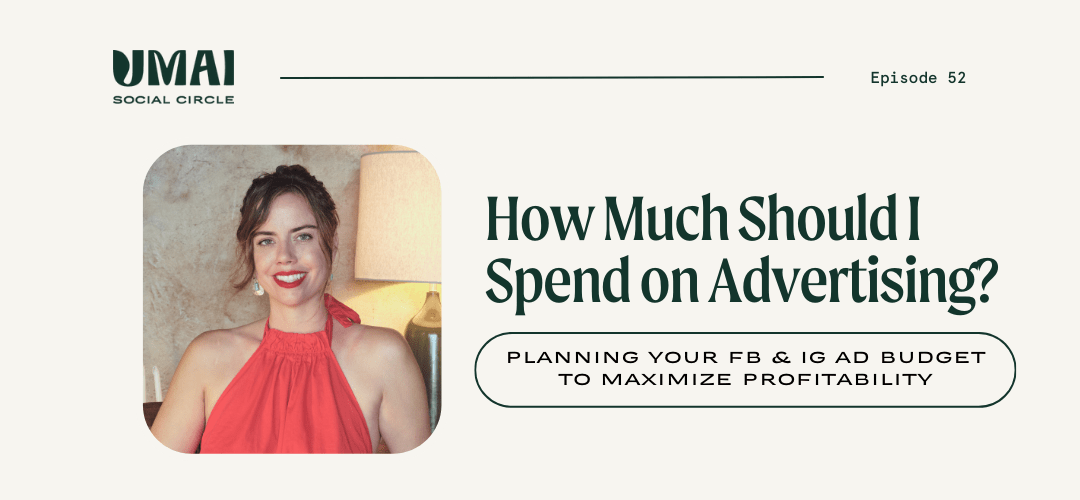
#52: How Much Should I Spend on Advertising? Planning your FB & IG Ad Budget to Maximize Profitability

ads
UMAI social circle cpg podcast

#52: How Much Should I Spend on Advertising? Planning your FB & IG Ad Budget to Maximize Profitability

Welcome to the UMAI Social Circle! In today’s episode, our co-founder, Alison, discusses Facebook and Instagram advertising. We’re answering the #1 question we get about FB and IG ads: “How much should I spend on advertising?” Join us as we discuss setting your budget, scaling it, and maximizing your spending between acquiring new customers and getting existing customers to return. Jump into today’s episode, and let’s start making your ad investment work for you! 

Let Us Break It Down For You…

[0:59 – 2:05] Introduction: How to Budget and Plan Your Meta Ad Spend for the Best Results
[2:06 – 5:51] First Tip: How to Set Your Advertising Budget
[5:52 – 7:33] Second Tip: How to Scale your Budget once you’re Hitting your Goals
[7:34 – 9:36] Third Tip: How to Break Up your Ad Spend between Prospecting for New Customers and Retargeting Existing Customers
[9:37 – 10:12] Closing
 

Mentions from this episode: 

Learn more and Start growing with us 

UMAI Marketing socials  –

Access the Digital Marketing Tools Collection, SHOP NOW!
 

Stay in touch:

Join UMAI’s Facebook Group: CPG Marketing CORE 3 Inspo: Organic Social, Social Ads & Email with UMAI

#52: How Much Should I Spend on Advertising? Planning your FB & IG Ad Budget to Maximize Profitability

 
Alison Smith: [0:17]
Howdy, listeners. We’re Alison.
 
Karin Samelson: [0:18]
And I’m Karin.
 
Alison Smith: [0:19]
And we love growing CPG brands.
 
Karin Samelson: [0:22]
We’re the founders of a digital and social media marketing agency, UMAI Marketing, and creators of The Consumer Goods Growth Course, where we’ve helped grow dozens of brands to six and seven figures.
 
Alison Smith: [0:32]
We’re former in-house marketers turned consumer goods marketing educators, who’ve set off on a mission to provide CPG founders and marketers with actionable strategies that drive community and sales. We’re talking real results.
 
Karin Samelson: [0:46]
If you’re wanting to learn simple, actionable, step-by-step strategies needed to drive real brand growth, without breaking the bank or sacrificing your social life, then this is the podcast for you. Let’s get into today’s episode.
 
Alison Smith: [0:59]
Welcome to the Umai Social Circle, where we taught consumer goods tips to help business owners and marketers grow. Today, it is just me, Alison. I am one of the co-founders of Umai Marketing. I’m giving Karin a break today, and I am going to be speaking about our series on all things Facebook and Instagram advertising. 
 
So let’s dive into it. So today, we’re diving deep into a topic that we get asked frequently, how much should I spend on Facebook and Instagram ads? We get it spending your hard-earned revenue on Mr. Mark Zuckerberg cannot feel so great. So we are here to try to reframe your mindset into something more along the lines of spending my hard-earned revenue on my business equals investing into my business’s growth. So today, specifically, we will break down some guidelines on how much you should spend at any point in your business so that you can slay your goals without breaking the bank.
 
[2:06] 
Our first tip in today’s episode is how to set your advertising budget. The first thing is we need to set a budget that makes sense for where your brand is now and where you want to take it in the next 6 to 12 months and beyond. The general rule of thumb here is to spend 20% of your monthly revenue on ad spend if you’re in growth stage. So if you’re making $10,000 a month, plan to spend about $2,000 a month on acquiring new customers through advertising. Once you start hitting target costs to acquire these new customers and hitting your overall goal return on ad spend, then you can decide if you’d like to scale this budget as your revenue scales.
 
[2:54]
Now, there are some caveats to this as well when advertising on Meta, as you’ll also want to take into account your AOV or your average order value. If your average order value is say $30 per purchase, well then you’re likely looking at a target cost to acquire a new customer around $15 on average. But if your AOV is much higher, say it’s like $400, then your cost to acquire a new customer maybe closer to say $200. Well then it’s going to cost you a bit more to acquire a new customer as it’s not going to be that no-brainer, quick-to-pull-the-trigger type of purchase for this person, it’s going to be likely a longer sales funnel process where they may weigh the pros and cons of your product. They’re going to likely conduct their own research, look at your competitors. They might talk to their spouse before they even make a purchase of this size. They might wait for their payday even. So the slower timeline for them means a longer ad funnel for you, hence generally the larger ad costs to acquire this person.
 
[4:09]
The reason you need to understand this is that in order to be successful with Meta sales campaigns is that you need your campaigns to receive at least 50 conversion events per week in order for the Meta algorithm to better optimize on your behalf. This is because it will gain more data points and 50 is really the minimum here for it to gain enough data points, and that overall is going to help you get a lower cost per acquisition. So if you are a CPG brand with a lower price point, let’s stick with that $30 AOV that we spoke about earlier and you’re shooting for around a $15 cost per acquisition or less. Then you know in order to receive those 50 conversion events in a week, you’ll need to spend at least around $750 a week or around $3,000 a month.
 
[5:07]
But say you fall into that higher price point category and you’re shooting for that $200 cost per acquisition, well then you know that in order to hit about 50 conversion sales events per week, you’re going to need to spend closer to $10,000 a week or 40k a month in order to hit that full optimization of your campaigns. So you can really see that your product retail value can change your ad spend plan, but of course, you can always start with around 20% of your revenue. And then based on the amount of conversion events you receive each week, if it’s under that 50 or over that 50, you can increase or decrease your budget from there.
 
[5:52]
So this brings us to our second tip, which is how to scale your budget once you’re hitting your goals. You don’t want to scale too fast as this can cause your campaign learning to reset and lose optimizations. Therefore, we recommend three paces to scale. You have slow scaling, medium scaling, and fast scaling. So let’s start with slow scaling. Slow scaling is to scale your spend. That’s a lot of S’s. So scale your spend budget by about 20% month over month. This is great for solopreneurs who are managing their ads themselves or for startup brands who want and need that stability. This way you can check your monthly return on ad spend at the end of each month and increase spend only once a month in your account.
 
[6:43]
The medium scaling is to scale spend by no more than 50% every seven days. This allows you to jump in only weekly, like perhaps every Monday morning and adjust the budget accordingly for the week. So say you had a really good week the previous week, everything is stabilized at this point. You can increase it up to 50% with the medium scaling and then fast scaling is no more than 50% every three days. This is best if you’re in growth mode or if you’re running a promotion and seeing a great return. Three days is generally the fastest you’ll want to scale your spend and your ad account for Facebook and Instagram ads as data can be delayed by 72 hours. So you don’t want to make decisions any faster because you’re not going to have all the data to make informed decisions.
 
[7:34]
And then finally, for our last Meta ad spend tip, let’s talk about how to break up your ad spend between prospecting for new customers and retargeting warm or existing customers to come back and buy from you again. We generally will use the 80-20 rule for splitting the budget between these two groups. So between prospecting and retargeting. So 80% is reserved for attracting and converting new potential customers while 20% is for retargeting people who have visited your website, engaged with you on social profiles or on your email list as leads. This group also includes people who have order from you in the past and it’s time for them to buy again.
 
[8:18]
Now, if you are a more established brand and you’ve either been advertising for a while and have a solid cost per new customer acquired and or are making at least 10k in sales a month organically online, then we would recommend splitting this percentage a little differently by giving a bit more weight to the prospecting budget. So instead of sending 80% on prospecting for new customers, we would generally spend closer to 90% of your ad spend on prospecting and then the remaining 10% for retargeting warm and hot leads to come back and buy. The reason for this is because Facebook and Instagram ads are really best used for acquiring new customers as a lot of times you can remarket to your leads in more cost-effective ways like through email marketing or through organic social. So therefore, if you’re a more mature brand with a more proven product and sales, you have all these other marketing cylinders firing on your behalf, then splitting the budget on Facebook and Instagram by a 90-10 rule will give you the most benefit to your brand’s growth and you will get more bang for your buck.
 
[9:37]
And that wraps up our episode on how to best budget and plan your Meta ad spend for the best results. I hope this left you feeling better armed to tackle social advertising for your brand. And if you have any questions or war stories about your own Facebook and Instagram ads, shoot us a DM on social. We’d love to hear from you. And then stay tuned for our next podcast episode as we’ll be talking Facebook and Instagram ad strategies to help keep you scaling. But in the meantime, keep converting and keep slaying those marketing goals.
 
Karin Samelson: [10:13]
Thanks for listening to the Umai Social Circle, y’all. We’re here to support you in your CPG journey, so be sure to subscribe so you don’t miss any new podcast episodes. While you’re at it, please leave us a review on your listening platform of choice. Shoot us a DM at UMAI Marketing on Instagram if you have any topics you want us to cover on new podcast episodes.
 
Alison Smith: [10:31]
And don’t forget to access our free masterclass where we’re showing you how to create a solid marketing strategy. You can access that at umaimarketing.com/masterclass and we’ll meet you back here for the next episode.
 

Join below for marketing inspo & trends 👇👇👇