Posted on Leave a comment

#52: How Much Should I Spend on Advertising? Planning your FB & IG Ad Budget to Maximize Profitability

ads
UMAI social circle cpg podcast

#52: How Much Should I Spend on Advertising? Planning your FB & IG Ad Budget to Maximize Profitability

Welcome to the UMAI Social Circle! In today’s episode, our co-founder, Alison, discusses Facebook and Instagram advertising. We’re answering the #1 question we get about FB and IG ads: “How much should I spend on advertising?” Join us as we discuss setting your budget, scaling it, and maximizing your spending between acquiring new customers and getting existing customers to return. Jump into today’s episode, and let’s start making your ad investment work for you! 

Let Us Break It Down For You…

[0:59 – 2:05] Introduction: How to Budget and Plan Your Meta Ad Spend for the Best Results
[2:06 – 5:51] First Tip: How to Set Your Advertising Budget
[5:52 – 7:33] Second Tip: How to Scale your Budget once you’re Hitting your Goals
[7:34 – 9:36] Third Tip: How to Break Up your Ad Spend between Prospecting for New Customers and Retargeting Existing Customers
[9:37 – 10:12] Closing
 

Mentions from this episode: 

Learn more and Start growing with us 

UMAI Marketing socials  –

Access the Digital Marketing Tools Collection, SHOP NOW!
 

Stay in touch:

Join UMAI’s Facebook Group: CPG Marketing CORE 3 Inspo: Organic Social, Social Ads & Email with UMAI

#52: How Much Should I Spend on Advertising? Planning your FB & IG Ad Budget to Maximize Profitability

 
Alison Smith: [0:17]
Howdy, listeners. We’re Alison.
 
Karin Samelson: [0:18]
And I’m Karin.
 
Alison Smith: [0:19]
And we love growing CPG brands.
 
Karin Samelson: [0:22]
We’re the founders of a digital and social media marketing agency, UMAI Marketing, and creators of The Consumer Goods Growth Course, where we’ve helped grow dozens of brands to six and seven figures.
 
Alison Smith: [0:32]
We’re former in-house marketers turned consumer goods marketing educators, who’ve set off on a mission to provide CPG founders and marketers with actionable strategies that drive community and sales. We’re talking real results.
 
Karin Samelson: [0:46]
If you’re wanting to learn simple, actionable, step-by-step strategies needed to drive real brand growth, without breaking the bank or sacrificing your social life, then this is the podcast for you. Let’s get into today’s episode.
 
Alison Smith: [0:59]
Welcome to the Umai Social Circle, where we taught consumer goods tips to help business owners and marketers grow. Today, it is just me, Alison. I am one of the co-founders of Umai Marketing. I’m giving Karin a break today, and I am going to be speaking about our series on all things Facebook and Instagram advertising. 
 
So let’s dive into it. So today, we’re diving deep into a topic that we get asked frequently, how much should I spend on Facebook and Instagram ads? We get it spending your hard-earned revenue on Mr. Mark Zuckerberg cannot feel so great. So we are here to try to reframe your mindset into something more along the lines of spending my hard-earned revenue on my business equals investing into my business’s growth. So today, specifically, we will break down some guidelines on how much you should spend at any point in your business so that you can slay your goals without breaking the bank.
 
[2:06] 
Our first tip in today’s episode is how to set your advertising budget. The first thing is we need to set a budget that makes sense for where your brand is now and where you want to take it in the next 6 to 12 months and beyond. The general rule of thumb here is to spend 20% of your monthly revenue on ad spend if you’re in growth stage. So if you’re making $10,000 a month, plan to spend about $2,000 a month on acquiring new customers through advertising. Once you start hitting target costs to acquire these new customers and hitting your overall goal return on ad spend, then you can decide if you’d like to scale this budget as your revenue scales.
 
[2:54]
Now, there are some caveats to this as well when advertising on Meta, as you’ll also want to take into account your AOV or your average order value. If your average order value is say $30 per purchase, well then you’re likely looking at a target cost to acquire a new customer around $15 on average. But if your AOV is much higher, say it’s like $400, then your cost to acquire a new customer maybe closer to say $200. Well then it’s going to cost you a bit more to acquire a new customer as it’s not going to be that no-brainer, quick-to-pull-the-trigger type of purchase for this person, it’s going to be likely a longer sales funnel process where they may weigh the pros and cons of your product. They’re going to likely conduct their own research, look at your competitors. They might talk to their spouse before they even make a purchase of this size. They might wait for their payday even. So the slower timeline for them means a longer ad funnel for you, hence generally the larger ad costs to acquire this person.
 
[4:09]
The reason you need to understand this is that in order to be successful with Meta sales campaigns is that you need your campaigns to receive at least 50 conversion events per week in order for the Meta algorithm to better optimize on your behalf. This is because it will gain more data points and 50 is really the minimum here for it to gain enough data points, and that overall is going to help you get a lower cost per acquisition. So if you are a CPG brand with a lower price point, let’s stick with that $30 AOV that we spoke about earlier and you’re shooting for around a $15 cost per acquisition or less. Then you know in order to receive those 50 conversion events in a week, you’ll need to spend at least around $750 a week or around $3,000 a month.
 
[5:07]
But say you fall into that higher price point category and you’re shooting for that $200 cost per acquisition, well then you know that in order to hit about 50 conversion sales events per week, you’re going to need to spend closer to $10,000 a week or 40k a month in order to hit that full optimization of your campaigns. So you can really see that your product retail value can change your ad spend plan, but of course, you can always start with around 20% of your revenue. And then based on the amount of conversion events you receive each week, if it’s under that 50 or over that 50, you can increase or decrease your budget from there.
 
[5:52]
So this brings us to our second tip, which is how to scale your budget once you’re hitting your goals. You don’t want to scale too fast as this can cause your campaign learning to reset and lose optimizations. Therefore, we recommend three paces to scale. You have slow scaling, medium scaling, and fast scaling. So let’s start with slow scaling. Slow scaling is to scale your spend. That’s a lot of S’s. So scale your spend budget by about 20% month over month. This is great for solopreneurs who are managing their ads themselves or for startup brands who want and need that stability. This way you can check your monthly return on ad spend at the end of each month and increase spend only once a month in your account.
 
[6:43]
The medium scaling is to scale spend by no more than 50% every seven days. This allows you to jump in only weekly, like perhaps every Monday morning and adjust the budget accordingly for the week. So say you had a really good week the previous week, everything is stabilized at this point. You can increase it up to 50% with the medium scaling and then fast scaling is no more than 50% every three days. This is best if you’re in growth mode or if you’re running a promotion and seeing a great return. Three days is generally the fastest you’ll want to scale your spend and your ad account for Facebook and Instagram ads as data can be delayed by 72 hours. So you don’t want to make decisions any faster because you’re not going to have all the data to make informed decisions.
 
[7:34]
And then finally, for our last Meta ad spend tip, let’s talk about how to break up your ad spend between prospecting for new customers and retargeting warm or existing customers to come back and buy from you again. We generally will use the 80-20 rule for splitting the budget between these two groups. So between prospecting and retargeting. So 80% is reserved for attracting and converting new potential customers while 20% is for retargeting people who have visited your website, engaged with you on social profiles or on your email list as leads. This group also includes people who have order from you in the past and it’s time for them to buy again.
 
[8:18]
Now, if you are a more established brand and you’ve either been advertising for a while and have a solid cost per new customer acquired and or are making at least 10k in sales a month organically online, then we would recommend splitting this percentage a little differently by giving a bit more weight to the prospecting budget. So instead of sending 80% on prospecting for new customers, we would generally spend closer to 90% of your ad spend on prospecting and then the remaining 10% for retargeting warm and hot leads to come back and buy. The reason for this is because Facebook and Instagram ads are really best used for acquiring new customers as a lot of times you can remarket to your leads in more cost-effective ways like through email marketing or through organic social. So therefore, if you’re a more mature brand with a more proven product and sales, you have all these other marketing cylinders firing on your behalf, then splitting the budget on Facebook and Instagram by a 90-10 rule will give you the most benefit to your brand’s growth and you will get more bang for your buck.
 
[9:37]
And that wraps up our episode on how to best budget and plan your Meta ad spend for the best results. I hope this left you feeling better armed to tackle social advertising for your brand. And if you have any questions or war stories about your own Facebook and Instagram ads, shoot us a DM on social. We’d love to hear from you. And then stay tuned for our next podcast episode as we’ll be talking Facebook and Instagram ad strategies to help keep you scaling. But in the meantime, keep converting and keep slaying those marketing goals.
 
Karin Samelson: [10:13]
Thanks for listening to the Umai Social Circle, y’all. We’re here to support you in your CPG journey, so be sure to subscribe so you don’t miss any new podcast episodes. While you’re at it, please leave us a review on your listening platform of choice. Shoot us a DM at UMAI Marketing on Instagram if you have any topics you want us to cover on new podcast episodes.
 
Alison Smith: [10:31]
And don’t forget to access our free masterclass where we’re showing you how to create a solid marketing strategy. You can access that at umaimarketing.com/masterclass and we’ll meet you back here for the next episode.
 

Join below for marketing inspo & trends 👇👇👇

Posted on Leave a comment

#51: Building a Black Beauty Collective with Leslie Roberson

black beauty
UMAI social circle cpg podcast

#51: Building a Black Beauty Collective with
Leslie Roberson

Welcome to episode #51 of the podcast, where we get the chance to chat with Leslie Roberson, founder and CEO of Black Beauty Collective.

With previous success in diversifying corporate teams and starting (and selling) a luxury linen rental company, Leslie’s journey reflects a commitment to social impact and leveraging her recruiting, marketing, and networking skills for the greater good.

Leslie founded The Black Beauty Collective, aiming to empower marginalized founders by providing opportunities and representation in the beauty industry. Through practical experiences and a dedication to inclusion, Leslie drives the collective’s mission to support Black founded brands’ success on and off shelf.

Curious to learn more? Let’s hear today’s episode! 🎧

Let Us Break It Down For You…

[0:58 – 10:58] Black Beauty Collective: Entrepreneurship and Diversity
[10:59 – 15:17] Exploring the Journey: Early Days, Current Retail Sites, and Future Expansion Dreams
[15:18 – 20:41] Leslie’s Online Marketplace and Recruiting Methods
[20:42 – 22:26] Marketing and Business Strategy
[22:27 – 28:18] Key Attributes of Successful Founders
[28:19 – 32:50] Some of Leslie’s Favorite Black-Owned Brands
[32:51 – 43:35] Advice for Small Brands from an Industry Expert
[43:39 – 45:06] Future Plans for The Black Beauty Collective
[45:07 – 46:36] Final Notes
 

Mentions from this episode: 

Leslie Roberson, Instagram 
Black Beauty Collective: InstagramWebsite
 
Brands mentions on the pod:
  • Bixa Beauty, here
  • Marle Rene, here
  • Natural Radiant Life, here
  • postmodernform luxe home goods, here

Learn more and Start growing with us 

UMAI Marketing socials  –

Access the Digital Marketing Tools Collection, SHOP NOW!
 

Stay in touch:

Join UMAI’s Facebook Group: CPG Marketing CORE 3 Inspo: Organic Social, Social Ads & Email with UMAI

#51: Building a Black Beauty Collective with Leslie Roberson 

 
Alison Smith: [0:17]
Howdy, listeners. We’re Alison.
 
Karin Samelson: [0:18]
And I’m Karin.
 
Alison Smith: [0:19]
And we love growing CPG brands.
 
Karin Samelson: [0:22]
We’re the founders of a digital and social media marketing agency, UMAI Marketing, and creators of The Consumer Goods Growth Course, where we’ve helped grow dozens of brands to six and seven figures.
 
Alison Smith: [0:32]
We’re former in-house marketers turned consumer goods marketing educators, who’ve set off on a mission to provide CPG founders and marketers with actionable strategies that drive community and sales. We’re talking real results.
 
Karin Samelson: [0:46]
If you’re wanting to learn simple, actionable, step-by-step strategies needed to drive real brand growth, without breaking the bank or sacrificing your social life, then this is the podcast for you. Let’s get into today’s episode.
 
Karin Samelson: [0:58]
Welcome to the Umai Social Circle, where we talk consumer goods, tips to help business owners and marketers grow. We’re Karin and Allison, co-founders of Umai Marketing, and we’re being joined by Leslie Roberson, CEO and founder of the Black Beauty Collective, a beauty retailer that features exclusively Black-owned brands. Hi Leslie, how are you?

Leslie Roberson: [1:20]
Hi, thank you for having me today.

Karin Samelson: [1:22] 
Thanks so much for being here, Leslie. First, let’s get started. We want to hear about your background, how the idea of Black Beauty Collective came to you.

Leslie Roberson: [1:33]
Okay. Let’s see. So my background, let’s start there and then I’ll work my way into how this came to me. So I have been working under three verticals, probably like the last 15 years or so. And so I’ve been an entrepreneur. And so my most recent business was a linen rental company, a luxury linen rental company. And so I was fortunate enough to make a pretty decent splash in the Chicago market where I worked with a lot of amazing event designers. I was in a lot of the magazines. It was called the Velvet Collection. You can literally look it up and see my face all over the place. And it was really cool because I love textures, I love fabrics, I love all the things, and I was able to make great strides in a very short period of time.

And so the second vertical I’ve been under is I’ve been in talent acquisition. So that’s been my corporate career. And I specialize in diversifying teams. So it absolutely matters to me if there are no veterans on a team or if there are no women on a team or there’s no minorities on the team. All those things I look at when I’m building the profile of the candidates that we’re going to go after and helping identify opportunities for diverse candidates that they may not otherwise have access to. And I’m going into those untapped markets where that talent base lies. And the third vertical I’ve been working under is I have a modeling contract with an agency here in Chicago. I do catalog modeling. So your Sears and your Bonton and your Kohl’s and Myers and whomever has some version of catalog. I’ve probably done some work for them over the last 15 years or so.

And so those are the three spaces I’ve existed in. And so that’s where I come from. So when I had the linen rental company, I was feeling restless. Even though I was in it for a short period of time, I loved it, but I was feeling restless because I felt like I wasn’t making enough of an impact and I wasn’t fully using my skills and what I do well to serve others. Even though everybody loves a beautiful event, don’t get me wrong. But I thought that I could do more. And so I landed on a place where I was going to sell the company and I did. And I actually sold it to my very first customer that rented linen from me.

They rented hundreds of times from my company and when they called to place an order one day I go, “Oh, I’m going to be sunsetting the company. This is probably going to be the last order that I’ll take.” And they go, “Man, I wish we could buy it.” And literally it is history since, because they bought the company, they are living their best lives in the event design space. And so I decided because I was like, okay, I don’t have a side hustle anymore, because that’s how this entrepreneur spirit was utilized, as a side hustle next to my corporate career, I decided to just go out and see and I was just talking to people and one of my friends go, “You should open up a beauty supply store.” And I was like, “I would never open a beauty supply store,” because I had come from this luxury white glove linen space. This is high-end fabric so all of my customers are like… I did events for Jennifer Hudson and Magic and Cookie Johnson and Michael Jordan’s daughter.

I’m doing these large scale events because I’m working with these amazing designers who have this crazy client roster. And so I come from this white glove space, but traditionally in Black communities, a lot of the retailers are Asian owned and they’re like box stores. It’s like a very similar model in most of the cities you go into. It’s not just here in the United States, but it’s like globally. It’s a very specific model you could walk into. And for the most part it’s not like that high end and white glove experience. It’s a store, they offer product, very simplistic basic. It’s to the point, and I respect it a thousand percent because I get it. But I go, I would would not open up a beauty supply store. But what it did do is it got my wheels rolling and I decided to go into other beauty retailers in other communities like your Sephora and your Credo and your Blue Mercury and just ask questions.

And so that’s where my recruiting background came into play. I started asking lots of questions like, what is your brand ethos and what are your core values? And what do you guys do here? Outside of just offering product, what do you do as a brand? So that’s how I started traveling down this road. And I was in one particular store, and this is a thousand percent a true story. The manager, as I’m asking questions, she holds up this box and she goes, “All of the brands inside of this box are Black women owned.” And I was like, “Oh, that’s great. Are these founders in other places around the store?” She was like, “Nope, they’re all in this box.” And so as a Black woman, I remember thinking to myself, okay, so that’s interesting. And why are we only in this box? What is the story behind this?

And so I started doing this research online, trying to find articles and reports and the demographics of the beauty industry. And I came across the report that McKinsey did several years ago, maybe about two years ago. They did a report on the state of the beauty industry and who were the founders. And they had Tracy Ellis Ross who owns Patterns. And all these different founders chime into the conversation and they ran numbers and stats. So of course at the time the industry was like a $60 billion industry and it’s growing rapidly. However, Black founders only represent about one and a half percent of the ownership in this beauty industry, even though Black consumers spend about 11% of that $60 billion. And so I remember thinking that, wow, it’s quite an opportunity here, but why is there such a discrepancy in ownership? And so in that article, that same article, they talked a bit about not only the discrepancies, but from a consumer’s perspective, we have to drive, I think it’s on average 13 additional minutes on average to gain access to CPG products that will suit our hair and skin.

And the likelihood is like three to one if someone will be there to answer baseline questions, to match your makeup color, to understand your hair texture, some very baseline things. But for me, because an in talent acquisition, my brain instantly, it doesn’t say, oh, it’s missed opportunity. My brain goes, oh, you’re hiring people who aren’t qualified to do the job because that’s how it resonates with me. Why not build a space that has more inclusivity and that is considering the different kinds of people that exist in the world? And so when I peeled the layers back a little bit more, I found that Black founders have received less than, I think it’s 1% of VC funding. And our access to capital looks vastly different than their counterparts. And so the reality is we’re creating amazing products, not just good products, but amazingly clean beauty products, great branding, great packaging, we have all the pieces, but we don’t have the capital the same way as our counterparts to scale our brands.

So that is the knowledge and the information that I’m working with. So I decided how can I help utilize the skills that I have that I’ve horned in on over the years from grad school and all my years in corporate because I’ve worked for the big boys, I’ve been with Arson Young and Wayfair and CNO Financial and most recently Meta. How do I use all the skills that I’ve obtained over this bit of time and to leverage that in this modeling thing, right? Because another piece, I got this face, how do I use these things to get these opportunities for all these other people? And so I created this collective and it is a thousand percent a collective model where entrepreneurs pay to be a member of the collective, but they get a 100% of their retail sales in return. And so I create this platform where they have access to retail space, which gives them access to a customer base.

They can come and engage with their customers, they can host unlimited activations at the store. We have a team of beauty advisors that are cosmetologists and estheticians and people from the industry that can answer baseline customer questions, help you match your makeup, help you understand different hair textures of what’ll work, what’ll be too much weight, cause you to be greasy, all these different things and variances that come with different kinds of hair patterns. And we have all these clean beauty brands. And so I created this retail store and it’s known as the Black Beauty Collective. So that’s how I got here.

Karin Samelson: [10:38]
Gosh. It’s such an incredible and empowering story. The second time we got to talk to you, you were in the airport, you’re on the way to an event. To me it was just like… It’s just really incredible really.

Leslie Roberson: [10:54]
That it was my entire first eight months of the business.

Karin Samelson: [10:59]
And so how long has the business been running and where is the retail location?

Leslie Roberson: [11:05]
So we launched April 2023, so it has not been a year yet. It will be a year April 8th this year. And the first location is located in Hyde Park, Chicago. Same area where the Obama Library is coming up, the University of Chicago is there. So it’s this amazing eclectic, diverse community of folks educationally and background wise. You get the legacy families, you get the traditional families, you get the university students. It’s all in the hodgepodge of a community. I think Hyde Park is on the top 10 best neighborhoods in the global list, which is interesting, a fun fact about Hyde Park. So we are over there amongst the best at the brightest.

Karin Samelson: [11:51]
Amazing. Do you have dreams of having retail locations in other cities too?

Leslie Roberson: [11:57] 
So yes, I do. And it’s not really a dream, it’s happening. So our second store launch will be in LA and the launch will be April 6th. I know, it’s so cool. It’s Playa Vista. So the area Playa Vista outside of LA. And the location is perfect, right? And so I don’t know if you know anything about Playa Vista, but it is like the tech area outside of LA. So you get this extremely diverse population of people there because Meta has an office and a couple other tech companies have offices. So you have all these people coming in from around the globe and local to the area and they’re there and it’s a beautiful area, tons of marketing support. And I am beyond excited about this and launching a second store. So yes, I have great ambitions to grow.

I’ll tell you why it matters if the collective grows into other markets. So a lot of small business entrepreneurs, when you don’t have a big budget to run multiple state marketing, what tends to happen is they become hyper-local in their market. I’m a small business, I’m in Kansas City, I go to all the popups, everybody knows my product. Maybe I have a Shea butter, I am the Shea butter lady in Kansas City. You go two cities over, no one has ever heard about this brand. And it is because they’re able to drive a local marketing presence because that’s where they are. So what I’m doing with these collectives, entrepreneurs become a member of the collective and now their brand is featured in a store. So customers can come and gain access, they can smell, they can utilize, which is really important for a lot of customers to be able to…

I’ll tell you something about Black consumers, one of the things that I noticed, we need to see the weight of stuff because depending on what it is and how heavy it is, it changes our curl pattern. It changes the way our hair responds. And same thing for our skin. There are certain products that’ll sit on your skin versus going in from a moisturization stance. I’ve literally seen my skin ashy and the product is sitting where it doesn’t seep into the skin. So we need to touch, feel, smell, all that jazz.

So I’m a small brand and I am in Kansas City, I joined the collective. I now have my brand, my products in store. I can now run targeted ads to get people to come into the store and try my products. I can now come in without having to pay a whole bunch of extra costs and I can set up shop in the store and meet customers. The beauty advisory team can now interact and engage with you. And so now you can become hyper-local in the second major metropolitan city, and then there’s a third and then there’s a fourth, and you get an opportunity to scale without breaking your marketing budget on running this huge multi-state campaign and also not having some starting point essentially is what it is that I’m building. So yes, the next store, LA coming up in April.

Alison Smith: [15:07]
Huge congrats. Absolutely killing it. And I’m just imagining you jet-setting across the country. You were just making these calls at the airport. So tell us more about how you recruit or find the brands that… And Leslie also has an online store as well. So if you’re not in LA or Chicago, you can also go to our website and see all these brands. But tell us more about who these people are, how you find them, all of that.

Leslie Roberson: [15:38]
That is my knack being a recruiter, I will find anybody. Early on when I first started, I actually ran ads that I was coming to different states and I physically flew to the state and I said, “Hey, I went to a peer space, I found space.” And I’m like, “I’m going to be at this address, bring your brand in, pitch a brand. If you want to be acquired of this store, you’re ready to scale into retail.” That is literally how I started this. And I think when I launched, I did a seven city tour, I think it was good seven cities that I went to. And then alongside with that, I was running virtual meetings, same thing, running tons of ads. People are coming into these virtual meetings like interest meetings and they would bring their products and they would showcase.

And then there’s an application process. So now everything is a bit more streamlined. I’d usually do virtual meetings. Sometimes I’ll fly to an area, especially if I have a partner in it and they can get all the people in the city to come together and there’s 15, 20 folks there, I’ll come into that and talk about it. So I think that’s when you guys caught me when I was going out to maybe Las Vegas or something. And so I’ll go, I’ll talk to groups of entrepreneurs. I attend events, I go to trade shows, pass out my business cards. If I see brands that I really like and I like what they’re pitching and how they’re talking about their brand, I’ll go and I’ll pitch to at trade shows. I do all sorts of stuff to find entrepreneurs.

But application process wise, so all brands are required to attend our informational section. And no matter how big my team is, I actually run those myself because it’s important for me that entrepreneurs see me as the thought leader behind this initiative and understand why and what they’re joining and what’s expected of them. This is not a passive place where you can drop your products off and see what happened. This is something I almost said that I’m not going to say. This is a very active place where you have to be intentional to drive your brand and we’re giving you a platform to do it. And so entrepreneurs have to attend our informational session. From there they’ll receive an email so they can look back at that slide deck just in case I move too quickly and they want to absorb the information a little bit better. There’s an application process where they have to complete this application. It includes all the nuts and bolts of your business, what your sales revenue were for the last three years, your headshot.

I want to see your resume, I want to see everything about you and this business so I can really understand the depth. And then the third phase is they have to ship their products in for them to be reviewed, I need to make sure it contains all the components of being on the shelf, the shelf life, the ingredients. What does your branding look like when it’s packaged? Is it done in a concise and cohesive matter where it can sit on the shelf and customers can receive it without a whole lot of hoopla? And then I also have different folks on my team that try the products, that review the products. So you’re a cosmetologist, your estheticians, making sure that the products or they do whatever they say they’re going to do. Dermatologists, a bunch of folks that we pass products off to so that they can give us active feedback and looking at the ingredients.
The great part is a lot of these brands are organic brands, and so we’re not talking heavy chemicals like lye or anything like that in these products. Most of them are organic and most of them work with a manufacturer or chemist that have developed and curated these products. 

And so that is the final step actually, that is the last step that’s on the entrepreneur. From there, I invite entrepreneurs to have a meeting with me individually. And so you attend the actual informational, but now I want to talk to you individually because I really want to understand who you are as an entrepreneur, what transferable skills do you have? How you’re thinking about scaling your business? What’s your strategy? What are your goals? How does this fit into the goals? I really want to understand who the person is because I’m intentional about who I work with because I work hard, I work really hard and I don’t stop. And if I’m out here working hard and this authentically for the brands that are in the collective, I need to work with people that are working hard too.

And so that’s why I do that. So I meet with the entrepreneurs and then from there they receive a yes or no if they’re invited into the collective.

Alison Smith: [20:11]
I love that you specifically mentioned that if there is any note of this founder or brand that they’re not going to work hard, they’re not going to do their marketing, then it’s an immediate no. This category, this niche in CPG is not an easy place to play. It’s not a passive business, so to say. And we know that you work hard as well. And so the Black Beauty Collective is helping with marketing. It sounds like you’re also helping with their overall business strategy and plans and things like that as well. Is that right?

Leslie Roberson: [20:53]
You do. And what I’m finding is I’m becoming almost like a partner. I am rolling out a new product, I need a second thought. I am going into a pitch competition, I need help with that. And so, one of the things that I’ve implemented this quarter is I met with all the brands in the collective because I want to understand what are your goals? How does the Black Beauty Collective help you achieve those goals? Is it an introduction? Is it, you need to partner with or what is the strategy? Because what I’m noticing is a lot of founders, they’ll spend all of their time going after grants and then they’ll be disappointed if they don’t come here. That’s number one. And then they’ll spend all their time thinking about how to get into Target or into Sephora or Ulta or whatever the measure is.

But they’re not thinking about, I’m a very small brand and I have very small following, going into Target is going to require X. And so how do you begin to close that gap with driving, whether it’s wholesale opportunities, increasing your marketing budget or understanding what it takes to have a marketing budget, like all the pieces. And you guys know about that. And how when you’re talking to founders who get it but don’t get it. And so I become that person for a lot of the brands that are in the store and they’re like a thought partner. And so that’s what I spend a lot of time doing when it comes to meeting with and talking to the founders that are in the collective.

Karin Samelson: [22:27] 
When you think of the founders who are performing the best or their brands are selling well and doing well in the store, what would you say are some of the main attributes outside of hardworking that you see in all of them?

Leslie Roberson: [22:48]
So the brands that are always going to perform well, not always, but do a little bit better, they’re consistent. That’s one of the main things. You’re consistent with your marketing, you’re consistent with your social media posts, you’re consistent with your email marketing. You’re consistently engaging with your target audience. You’re visible, you’re making sure you get out and communicate and you’re not passively standing behind the scenes waiting for a miraculous miracle to occur. You’re literally actively doing it. So consistency is going to win at the end of the day. And whatever consistency look like, whatever you set in motion, it doesn’t mean that you’re posting on social media every single day. It means I post Monday, Wednesday, Friday, and I stick to that plan. That could be consistency. Or I send a newsletter out on the first of the month and I send my newsletter out on the first of the month. That’s what consistency looks like.

So the brands that I see that are hitting their target and their goals, that are doing well, they’re consistent. That doesn’t mean that every day is a, what’s the thing? If you do $75 in sales a day or $52 in sales a day, you can make a million dollars, whatever this thing is. It doesn’t mean that they’re always doing that. It just means that they’re constantly consistently engaging their audience. And the audience will remember. If you knew how many people that come into the store that go, “I saw X here online, I saw it three times and now I’m going to come buy it.” That’s the consistency. But if you only did it once, the customer may not remember consistently. So that’s the thing.

Alison Smith: [24:29]
I love that you said that because that’s something that we tell our community all the time as well, because it’s so easy to get overwhelmed as a solopreneur, a founder, et cetera, et cetera. It’s easy to get overwhelmed in general. But you just have these ideas and you want this fast growth, so does everyone. But just being very honest with yourself, especially when you’re at the beginning stages of your brand on what you can actually get done in a day because it’s so multifaceted. There’s not going to be a ton of room all the time for actually marketing the brand because you’re dealing with everything else. So just being honest with what you can do and that is good enough until you can get extra support. And it’s slow and steady, I guess I could say

Leslie Roberson: [25:24]
The gift and the curse of being an entrepreneur. Entrepreneurs dream lofty. They dream real big and they dream of an immediate success story because when you look out on social media, everybody feels like an immediate success story. It happened just like that. You only really feel the overnight sensation, the one opportunity that you went viral or the one thing that shifted everything. But a lot of times the story that’s untold is the marathon that the person has been on, and knowing that it’s a marathon and not a sprint. And if you can be consistent long enough, it will happen. Literally, it will happen if you keep at it and you set the plan, this is the plan, and just roll with it. Be agile along the way, but staying consistent and true to the cause, it’ll happen.

Alison Smith: [26:09]
It will absolutely. It might not happen when exactly you wanted it to, but if you stick with it for sure. And we actually love seeing, it’s become a movement. I think it started happening over COVID when everyone was stuck at home and not really having glamorous lives anymore, where founders specifically just started getting a lot more real on things that they’d post. So don’t be afraid if you are a founder, a solopreneur, listening to this, to actually just share the struggle as well, and not just the wins, because that is super relatable to people. And people do really like that kind of thing.

Leslie Roberson: [26:53]
A thousand percent. And the gift and the curse of being a founder is you can have wins and losses all in the same day. You like, yes. Oh no, all in the same breath. And the beautiful part is that it’s absolutely okay and it’s true to the path. And so people see me and they’re like, “Oh my God, Leslie.” I’m like, “If you guys knew how I don’t sleep, and literally ever, you would be amazed.” They’re like, “Well, how do you wake up looking like this?” It’s the lipstick. It’s not because I’m refreshed.

Karin Samelson: [27:28]
Are you selling that lipstick in the store?

Leslie Roberson: [27:31]
Of course we are.

Karin Samelson: [27:32]
Nice. It’s gorgeous.

Leslie Roberson: [27:35]
This is Bixa Beauty. Le me see. I think it’s called Mary Jane. So Bixa is a plant over in Ghana, and it was previously used by natives and they would color their lips with it. It literally leaves a red stain. And the founder of Bixa Beauty is Deida Massey. She actually is a MUA. She grabs some of the plants. She was just on vacation. She grabbed some of the plants, brought it back to the States, worked with a chemist in color theory, and they were able to create her line Bixa Beauty. And she has a collection of lip whips, all vegan. I know, Bixa, B-I-X-A. So that is one of the amazing brands of the collective.

Karin Samelson: [28:18]
Awesome. Let’s give some other brands a little bit of a shout-out. Could you name a couple more that maybe you have your eye on? You don’t have to say they’re your favorites, but ones that are doing really great work.

Leslie Roberson: [28:31]
There will never be a time where I talk about any brand and I won’t say, “Hey, this is my favorite,” whatever. Because literally they’re my favorite all for different reasons. It’s like kids, you love them all, but they’re your favorite for different reasons. So my favorite honey and turmeric cleanser is created and curated by Marla Renee. And when I tell you guys that this product is amazing, it is probably our number one seller in terms of cleansers in the store. So turmeric is great, and people don’t think honey and turmeric as a cleanser is a thing. It is absolutely a jam because it’s great for discoloration. So like me, I break out during my cycle time, I always get the blemish or whatever it is, and it always leaves a mark on my face or whatever the case is when it goes away, I use the honey turmeric because it rebalances your skin. It’ll help that blemish go ahead and go away. So within weeks I’ll see it’ll start to fade. Especially with melanated skin when you blemish, sometimes it’s harsh and it’ll just stay there forever. But this turmeric and honey actually helps the process move along a little faster. So that’s my favorite honey and turmeric cleanser. I’m actually using that now. 

Let’s see what else is in there. Oh my God, look, I looked up here and I have three candles sitting on this shelf, and one of them is burning. Let’s see, Postmodernform. Her candles are amazing. It’s like the blend, like a nice, not too hot, not too cool a day and the breeze is just right. That is how her candle line is. It’s like super airy, feels good when you walk into the space. Anybody who comes in, they’re like, “Oh, it smells good in here. What is that?” It was her candle burning yesterday, literally is the vibe of this candle. And all of her candles come with these affirmations. The one that’s burning now is called Living in the Moment. And so I’m here for all of that, especially as an entrepreneur I need some of that in my life because I am always… In August, we’re going to be living my life in the future. And so living in a moment is a jam. 

Let’s see, what else is my favorite in the store? Natural Radiant Life, especially for the girlies who are 35 plus-ish, that are moving into the more fine mature years. It’s called Natural Radiant Life. They have a skincare collection that is for the anti-aging skin. Well, not really anti-aging. We can age, we just want to age gracefully and beautifully. And so their entire collection, they have the AM moisturizer, PM moisturizer, the cleansers, the exfoliant. They actually put their exfoliant into a bar, which I loved because when you’re scooping a lot of times, especially in the shower, you’re like, it’s running everywhere. Versus a bar, which is a little bit more controllable, which is awesome. Everyone who buys this bar, it comes back from more and they’re like, “Oh my God, I use it on my elbows, my knees, whatever.” Great bar. So Natural Radiant Life is absolutely a jam. 

Who else? There’s people all in this store. I can do this all day. Oh my God. Shamika Brunette is a great one. She makes products with sea moss. So she’s from the Caribbeans and her son had severe eczema all of his childhood, and she was taking him to the doctor, and they were putting him on a steroids to try to get rid of it because it was impacting his ability to go to school. It was so bad. And she decided because she was Caribbean and her mom and her grandmother made their own shea butters and their own soaps and all these things. She tapped into, asked her parents like, what was the recipe? And she literally began creating it, and she was able to help her son and all these other moms. She joined all these other groups and was hearing the same issue with all these parents. “My kid has this eczema, I don’t know how to get rid of it. Hydrocortisone isn’t working.” All the things. And so she began selling it. That’s how she jumped her business off. And I love all of it because those that love her product, especially with the sea moss and the turmeric and the oatmeals and all that jazz, they’re a fan.

Alison Smith: [32:43]
I love that last one because hopping into mama Facebook grooves is key. That’s so smart. So you talked earlier about some of the biggest challenges that you’re seeing, the brands that work with you and you work with them and how you’re specifically addressing them. What would be your biggest piece of advice for these small brands?

Leslie Roberson: [33:12]
What I always say, so there’s nothing wrong… It comes back to setting the goals for your business and how you’re setting goals. So number one, always set goals. If you don’t have something you’re targeting, you’re just shooting at the dark to see what happens. Be intentional about setting your goals, make them realistic, make them smart goals. Make sure you have a specified amount of time that you want to accomplish it, what the actions that you’re going to take, how you’re going to measure it, give yourself an appropriate timeline or make them smart goals. But when you’re thinking about higher scaling, scaling your business, a lot of entrepreneurs, especially in this particular category, they’re targeting your targets, your Walmarts, and it’s an active goal. My goal is to get into Target. So what’s the game plan to get there?

I oftentimes talk to entrepreneurs about starting smaller, especially when you don’t have a huge budget because if you’re fortunate enough to go into a target and they put you in, I’ll be modest, 50 stores and they’re in two states, that means you’re going to have to have a marketing campaign to run advertisement in two states so that people know to go into Target to buy your product. So as opposed to necessarily going that route right away, think about the smaller mom and pop stores. Maybe there’s another founder out there that owns 10 boutiques in three states or two states or in one state that you can have access to the owner of the business. You can pitch them on wholesaling your product. You can negotiate marketing into that contract by saying, “Hey, I’ll give you X number of dollars off your first order if you include me in your marketing.” So their social media page, their newsletter, negotiate your way into these smaller opportunities.

Maybe each store is, maybe they’re ordering a hundred units each store, there’s 10 stores, that’s a thousand units. It feels like you can achieve that versus going a order for 10,000, which if you don’t have the pieces in place to fulfill that order, it’ll actually work against your business. And so starting smaller and smarter and having multiple versions of those. You get a couple founders, three stores here, five stores here, 10 stores here, a bunch of different places across the United States where you’re negotiating and marketing where it is beneficial to that founder where you’re offering them a discount on a wholesale order. And it’s beneficial to you because you’re getting in front of all these other customers starting smaller because now you’re getting consistent orders coming in that you don’t necessarily have to work as hard for. So by the time you get to your Target, your Sephora, you can afford to be there.

And so I talk to founders often about thinking about where their product should show up. Is it a spa? Is it a place that sells wholesale products to other business owners? Is it fair? Where is your space? Is it the gym? Is it the spa inside the gym? Is it yoga studio? Think outside of the box on who could house your products, where it would make sense in terms of offerings where customers would buy it. Because the same customer that if you reach out to a customer that you find on TikTok is also the same person that might go do Pilates tomorrow. So what are other avenues that don’t always look and feel like Sephora or a TikTok shop? What are other verticals you can tap into that feel a little bit more non-traditional? And thinking about even if it’s a vertical life, say if you’re going after spas.

You go, okay, I’m going to go after spas. That’s my goal this year is to identify five spas that I can get contracts with. Is there a spa convention that you can set up a booth at? Maybe there’s not a lot of views that play in that space versus going into a space where there’s nothing but haircare and beauty care products. Maybe go into a hotel convention that you can set up shop at and reach a different audience than what you would in another space. So I always push the entrepreneurs to think outside of the box, don’t think the traditional way because there are brands out there that only service hotels. There are brands out there that only service spas. It’s all B2B. Think about it that way because that could be an opportunity for your brand.

Alison Smith: [37:40]
A 100%. And actually one of our first clients that we worked with, Karin found them. Was it Pilates, Karin, or it was a bar studio? Yeah. And they were in the bathroom I think there, and we just fell in love with it and reached out. But as consumers, we fell in love with it. And really with that model that you’re speaking about, these people are likely not getting hit up as much as a buyer. Let’s be honest, they are not getting hit up as much as a buyer at Ulta, Sephora. So this is likely a good way to practice your negotiation as well. And it’s probably a higher probability of getting into.

Leslie Roberson: [38:32]
That’s right. And the other element is when you get to a Sephora level where you’re in front of the buyer, all of these things that are “smaller wins” will come into play because they will ask you about where else have your products been and what kind of orders are you getting? And they’ll ask you questions about your KPIs and these other spaces. So these are all the things that you do, the small wins incrementally. And I call it building out your business resume. That’s how I look at it, because I’m a recruiter, that’s what I do. Everything you do from point A to point B is about building out your resume so that by the time you get in front of your dream client or your dream buyer, you can say, these are all the things I’ve done. I have proof of concept, I have a customer base. I got all the pieces I need to be successful here.
So that is how you’re thinking about it. And so most entrepreneurs had some career prior to becoming an entrepreneur or did something. When you start a company, you don’t just walk in as the CMO at a company, you start off as the intern, or you start off as the entry level. You graduate into these different levels of your career, and all the experience that you rack up beforehand are the things that make you the best candidate for the job. Think about your business the same way starting incrementally and growing incrementally, so then you could begin to building the team that you need to be successful. I actually met an entrepreneur that was still a solopreneur, and she was already in Walmart, 236 Walmarts, and she was still by herself. Can you imagine the work that they would require an entrepreneur to be able to keep up with that kind of volume as an individual? It was insane.

And I’m going, how are you managing? And then I found out later that she was struggling in that space because it was almost overwhelming. She got an opportunity, some program Walmart was running to get more diverse brands into their store, which was great in theory, but there was a huge gap. She didn’t have the followers. It was just so many things. And so for me when I talked to founders, is build out your business resume, build out your experience, gradually scale your team. Don’t try to rip the bandaid off and go too big too fast because it can work against you and what you’re attempting to build. So gradually scale, and the way you do that is going by after smaller retail outlets initially, and then gradually increasing size.
So maybe your first win is like a person with one store. Maybe the second win is a person with three stores and then 10, and then continue on and get a bunch of those. And then you can fulfill these different orders and it’ll give you the consistent revenue to run more marketing for your B2C customers. And so it’ll all work in unison once you start putting the eggs in place. That’s my favorite advice to give.

Karin Samelson: [41:37]
It’s such a good… It’s so smart. I love how your corporate recruiting experience is. So in line with this, start small. You’ll get to where, you’ll get to the job, you’ll get to the retail, you’ll get to everything you want to get to as long as you start small. And I also love the message that we’ve shared before where it’s just like, it’s okay to say no, too. It’s like Walmart wants you to go into 400 stores. That sounds awesome, but should you? So great, great, great piece of advice here.

Leslie Roberson: [42:11]
Here’s the reality, and the one thing I’ve learned, the longer you can hold off saying no, the better position you’ll be in when you say yes. Because along the way, you’ll get better, your processes will improve, your SOPs will be there, the underbelly of your business will be supported. So when you take on that opportunity, you actually get to call more of the shots. And just like my recruiting analogy, if you wait until you have all the experiences, you can go in and you can negotiate your salary, you can negotiate your bonuses, you can negotiate all the pieces. If you’re going to have an assistant, what your title is, the leverage, because you built up a book of business and a background to support. “Hey, I can do this.”

So it’s the same thing in this space. The longer you say no, until your brand is ready for the big box stores, the better position you’ll be in terms of the number of stores, what kind of marketing support you’ll get, because they’ll be in a position where they want you, so they will be throwing all the stops out to get you in versus you having to make a lot of adjustments to get in.

And so I say, say no as long as you can and build as many… Your customer base, your annual revenue, all the pieces, keep building and then say yes when your brand is a thousand percent ready.

Karin Samelson: [43:35]
I love it. Such a good piece of advice. Thank you so much, Leslie. Well, what’s coming up for the Black Beauty Collective outside of that LA Store launch?

Leslie Roberson: [43:45]
Oh my gosh. Okay. So we are doing the things. Actually, so we’re going to be launching, I said it earlier, April 6th for the LA store. I believe the store opens at 11:00 AM. So we’ll be open for public that day. On April 8th, we’re going to be launching Amazon store too, which is interesting in itself. Amazon is like, “Look, we think what you’re doing is amazing. We think you can have a great platform here on Amazon. We don’t have any stores like this that are business owners with this objective featuring these brands.” And so I’m like, “Why not? Let’s try it and see how it goes.” It’ll be like, “Oh, you missed our grand opening. Get us on Amazon.”

That’s literally what the messaging is going to be. Catch us on Amazon. So that’s probably the next thing that’s happening. And then the rest of the year, I am all over the place doing a lot of awesome things. Awesome things I can’t talk about just yet, but I’m just doing some awesome things.

Karin Samelson: [44:50]
We don’t doubt that. That’s awesome. 

Alison Smith: [44:53]
Yeah. Well, Leslie, we enjoyed this so much and so much valuable advice. You shared so many good nuggets. Absolutely love it. I have so many notes as well, and I can’t wait to check out all the brands that you mentioned. If anyone listening is in LA April 6th, right?

Leslie Roberson: [45:12]
April 6th.

Alison Smith: [45:13]
And it’s Hallow Vista, right?

Leslie Roberson: [45:15]
Oh my God. It’s Playa Vista. It’s the Runway Shopping Center is in that plaza. It is adorable. You hear me? And it is going to be an amazing experience for all of our shoppers that come in that day. And so just come check us out. If you guys are in an area swing by, I’ll be there. Come meet me, of course. And just tell me you saw me here or heard me here. And we will chop it up all about this right here.

Alison Smith: [45:43]
Love it. Well, thank you, Leslie. Is there anything else you want to leave our audience with, how they can reach you, find you, anything like that?

Leslie Roberson: [45:51]
Absolutely. You guys can check me out on Instagram, Facebook, all socials @blkbeautycollective. And you can follow me on my personal page @theLeslieRoberson. All right. Thanks you guys. I appreciate your time today.

Karin Samelson: [45:06]
Thanks for listening to the UMAI Social Circle y’all. We’re here to support you in your CPG journey, so be sure to subscribe so you don’t miss any new podcast episodes. And while you’re at it, please leave us a review on your listening platform of choice. Shoot us a DM @umaimarketing on Instagram if you have any topics you want us to cover on new podcast episodes.

Alison Smith: [46:23]
And don’t forget to access our free masterclass where we’re showing you how to create a solid marketing strategy. You can access that at Umaimarketing.com/masterclass, and we’ll meet you back here for the next episode.
 

Join below for marketing inspo & trends 👇👇👇

Posted on Leave a comment

#50: Social Strategies We Love featuring Black-Owned Brands

black owned
UMAI social circle cpg podcast

#50: Social Strategies We Love featuring
Black-Owned Brands

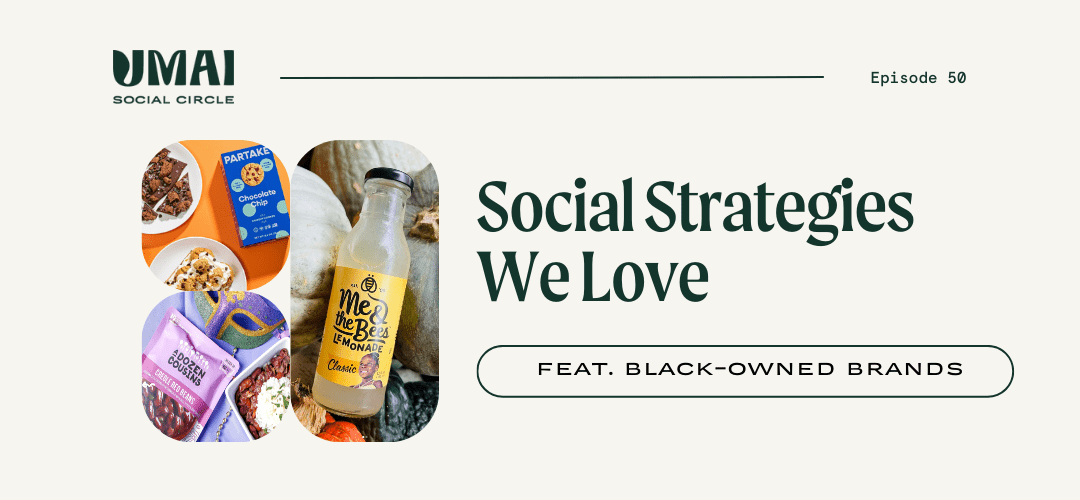
Welcome to Podcast #50: Social Strategies We Love featuring Black-Owned Brands! Today, we’re delving into a special episode dedicated to Black History Month with co-founder of UMAI Marketing, Karin Samelson. Join her as we explore standout Black-owned brands, including Partake, A Dozen Cousins, and Me & the Bees Lemonade. Discover what sets these CPG brands apart and how their organic social media strategies help them to stand out from the crowd. Let’s dive in! 🤓

Let Us Break It Down For You…

[0:58 – 1:29] Black-Owned Brands Spotlight: Social Media Strategies
[1:30 – 1:59] Partake Origins: A Journey from Food Allergies to CPG Leadership
[2:00 – 9:07] Partake’s UGC, Founder Posts, Collabs, & Retail Focused Social Media Approach
[8:08 – 9:07] From Childhood Inspiration to Wholesome Convenience: A Dozen Cousins Story
[9:08 – 14:00] Exploring Social Series Strategies
[14:01 – 15:12] Me & the Bees Lemonade’s Sweet Journey
[15:13 – 18:47] A Fresh Perspective on Organic Engagement and Storytelling
[18:48 – 19:20] Outro and DM @umaimarketing for Marketing Support!
 

Mentions from this episode: 

Partake Foods, Instagram
A Dozen Cousins, Instagram
Me & The Bees Lemonade, Instagram
 

Learn more and Start growing with us 

UMAI Marketing socials  –

Access the Digital Marketing Tools Collection, SHOP NOW!
 

Stay in touch:

Join UMAI’s Facebook Group: CPG Marketing CORE 3 Inspo: Organic Social, Social Ads & Email with UMAI

#50: Social Strategies We Love featuring Black-Owned Brands

 
Alison Smith: [0:17]
Howdy, listeners. We’re Alison.
 
Karin Samelson: [0:18]
And I’m Karin.
 
Alison Smith: [0:19]
And we love growing CPG brands.
 
Karin Samelson: [0:22]
We’re the founders of a digital and social media marketing agency, UMAI Marketing, and creators of The Consumer Goods Growth Course, where we’ve helped grow dozens of brands to six and seven figures.
 
Alison Smith: [0:32]
We’re former in-house marketers turned consumer goods marketing educators, who’ve set off on a mission to provide CPG founders and marketers with actionable strategies that drive community and sales. We’re talking real results.
 
Karin Samelson: [0:46]
If you’re wanting to learn simple, actionable, step-by-step strategies needed to drive real brand growth, without breaking the bank or sacrificing your social life, then this is the podcast for you. Let’s get into today’s episode.
 
Karin Samelson: [0:58]
Welcome to the UMAI Social Circle, where we taught consumer goods tips to help business owners and marketers grow. I’m Karin, co-founder of UMAI Marketing, and today we’re sharing an extra special episode in honor of Black History Month, where we’re looking at a few of our favorite Black-owned brands and discussing what we love about their organic social media strategies. The brands we’re going to be diving into today are Partake, A Dozen Cousins, and Me & the Bees Lemonade.
 
[1:30]
So, first up is Partake. Partake was founded by Denise Woodard for her daughter who was diagnosed with multiple food allergies, so that she could still enjoy treats like cookies, pancakes, and waffles. Denise is also the founder of Black Futures Fellowship, which is a fellowship program that mentors students from historically Black colleges and universities to help them secure internships and jobs in CPG. We’ll link the fellowship in the notes so that you can check out her amazing work there as well.
 
[2:00]
For now, we’re going to jump into strategy and our thoughts on what they are doing on social. So, up first is Instagram. So, we’re seeing a really good mix of UGC-style content, some studio shoot content, a good amount of founder-forward posts, and a lot of collabs, too. So, both with like-minded brands, other like-minded brands, other stack brands, influencers, and even bigger partners like Kevin Hart and his restaurant, Hart House. So, they got a little budget here as we can see.
 
[2:38]
And another thing we really wanted to touch on is a very healthy amount of retail-specific content. So, some brands will only talk about retailers when there’s an announcement to share, like a new retailer has picked them up or there’s a new skew available at a certain retailer or there’s a sale going on at a retailer. But Partake talks about retailer any chance they can get, which is really cool. They do this with graphics. They do this with in-store shoots and on-shelf content. They share about demo content. They even have some influencer partnerships for retail announcements and other news. And this is really cool.
 
They’ve built a following that is super engaged and is just rooting them on. So, while retailer posts don’t generally do that well for other brands, it does really well for them and they continue to do it, which is really, really, really a positive sign that you guys should be posting about all of your wins in retail as well, even when you’re just visiting a store and see your product on the shelf. Grab a quick clip. Take a photo. You worked so hard to get there, share about it as much as you want and let your audience engage with you and root you on as well.
 
[3:57]
Other things we see very, very typical but really high quality, we see a lot of recipe reels. We see some behind the-scenes and team-focused posts. We always love to see this because people love to see that face. They like putting the face to the brand. And Denise does a really good job about showing up. But want to give her team props as well because it’s always a plus if your team is willing to be in front of the camera for content purposes, because people like seeing that type of content. They want to see the behind the scenes of how the brand functions, who does the work, who makes all the magic happen. So, very cool to see all of those things happening on Instagram.
 
[4:41]
And then jumping into TikTok, one thing we’d like to note here is that we would love to see all of the amazing reels from Instagram repurposed on TikTok and vice versa. You’re doing all of the work, so you might as well put it in as many places as you can. So, all the content posted at TikTok could be repurposed on Instagram, too. All you got to do is use a third party website like SnapTik is one that you can use to download your TikTok videos that have already been published. You can download it to your computer without the watermark and then you can post it to Instagram. So, definitely use that cross reposting across channels so that you don’t have to do the work twice, you already did it. Spread it as far and wide as you can.
 
[5:27]
On LinkedIn, which is always really interesting to see how brands are engaging on LinkedIn, especially when it comes to when they’re trying to make new retailer partners or investor opportunities. And if you’re a public brand, it’s really important to have a really good presence on LinkedIn, but how they’re using it is, Denise comes on, there’s a lot of good founder posts, definitely a lot of retailer posts. So, any of those wins that you have in retailer, put it on there. Show how big and amazing your brand is and all of the work you’re putting in.
 
[6:06]
And they also put a lot of effort into sharing about their philanthropies. So, they are sharing about Hunger Action Month, Eat, Learn, Play Foundation. So, all of the good that they’re doing in the background that they might not talk about too much across all platforms, they’re definitely posting on LinkedIn.
 
[6:23]
And then last but not least for Partake is Pinterest. They have saved several really, really, really popular boards from other creators centered around best healthy recipes, healthy foods, things that their demographic would like to see and would get people into the fold and learning about Partake from those boards. And a good curation of boards with things that relate to the brand like healthy snacking are taking in parties, getting cute with that pun, better for you treats, things like that.
 
[6:58]
But then also, obviously they’ve created a handful of recipe and product focused pins from their own brand. And a lot of that photography and those pins and across their social and website is super high contrast with bright, colorful backgrounds that really help to stop the scroll, which is something you can always consider depending on your brand identity when doing your own photo shoots. Always be thinking about how to grab a viewer’s attention right off the bat. They’re consuming so much content, how can you get them to stop? And with Partake, it’s a lot of high contrast, brightly colored imagery. And linking back from Pinterest to the recipe content on their site is always a super smart idea and it looks to be really effective for them based on their 72,000 monthly pin views, which we’re sure results in a good amount of clicks to their site, too. And hopefully a lot of sales. So, really, really like their entire social strategy across all of these different platforms. They’re doing a really incredible job here and we’d love to see it. Love to see a good brand that does good, doing good.
 
[8:08]
Okay, so A Dozen Cousins is up next. A Dozen Cousins is a healthy take on convenience sides and meals influenced by Creole, Latin American, and Caribbean recipes. Founder Ibraheem Basir grew up eating Black and Latin cuisine, but as he got older found it difficult to find convenient and authentic foods in this category at the grocery store that also use wholesome ingredients that was good for you. So, he went and created what you see on shelves now. The name A Dozen Cousins, it rolls up the tongue so nicely, it’s named after his daughter and her 11 cousins. And we just love that mental image that the brands name evokes thinking of a big family getting together for a warm meal, it’s just so cozy and lovely. His team’s mission is to provide underserved communities with convenient food that doesn’t compromise on taste or quality ingredients, a mission we can all get behind.
 
[9:08]
So, on social, we’re going to dive into their three main social channels, Instagram, TikTok, and Facebook. So, a quick few thoughts on these strategies here. So, for Instagram, we love when the founder comes on, shows face and creates content. We talk about it all the time. We will never stop talking about it because unless you have humongous budgets, unless you’re the big dogs playing on this field, it is so helpful for your brand to build that relationship with your customers so that they know, like, trust you and want to purchase from you. So, when budgets are a little slim with these smaller and emerging brands, it’s such a good opportunity to reach more people and to make that connection and to drive more sales. So, we really, really love when Ibraheem comes on and does a deep dive on the history of our favorite foods through their series, Dishes Deconstructed. He has videos for the history of things like bone broth, the history of Black cake or rum cake, the history of coconut rice, jerk chicken, and just so much more.
 
And this is so cool for so many reasons. And one being founder-forward content is always a win. Like we just said, it’s always a win to come on and feature your founder. And making it a recurring series, so, this is a recurring series, the Dishes Deconstructed. They post about it occasionally. They share about it pretty consistently. It gives the founder structure. We love a series, especially for this reason. It gives the founder structure, which will save them time when … That’s something they’re always looking for more of. If you’re a founder listening to this, you can definitely relate with that.
 
And if you’re a marketer that wants to get their founder involved, you know how busy they are and how hard it is for them to sit down and create content. So, making it a series makes it just so much easier for them to wrap their head around it, know what to expect, have a “recipe or template” to success. And that’s really, really helpful. And it’s also an opportunity here to tap into the founder and their culture. We’re not just learning about the history of the foods, we’re getting a peek into Ibraheem’s culture through food that we all love to eat. And that’s really cool because that’s what the brand is all about.
And we really love when a brand takes time to curate and show its customers how to use products, use their products with really yummy recipes. So, creating recipe content can be utilized in so many ways and they do such a good job of this. So, it can also be used as blog posts to help with web traffic and organic surge. It can help increase engagement for your social channels through sharing and saves.
 
Sometimes recipe content isn’t always a hit, but repurposing it, making it short, making it long, having voiceovers, having a different hook, having a different call to action. You can utilize the same recipe content across social so that you don’t have to create something new every single time. Not only creating something new every single time, but only having it live in one place once, you can have it live in so many places. You can also make step-by-step recipe emails and share them with your biggest advocates that are signed up for your emails. So, really, really love all of the recipe content, all of the founder-forward content and the series especially that they’re doing on Instagram.
 
[12:47]
And then for TikTok, same as our recommendation with Partake, repurpose, you guys, repurpose. There are so many cool videos on Instagram that would do great on TikTok, including all those Dishes Deconstructed videos. So, at the very least, you can even choose the highest performing videos from each channel and repurpose everywhere. So, if it’s too much for you to be like, “Okay, I have all of these videos on Instagram that I did. I don’t want to have to post all of them to TikTok, I don’t have time for that.” You can just say, “Okay, here are my highest performing videos on Instagram.” Post them to TikTok, see what happens and vice versa.
 
[13:24]
And then for Facebook, what we’re seeing here is a lot of graphics and static images and we want to tell all of you guys to not be afraid to post video content, especially recipes on Facebook, too. You’re already doing the work, like we said, so might as well share it as many places as you can. Try to get the biggest reach out of everything that you can. Using a scheduling software is really helpful for this. Just get it out everywhere. Okay, really love what A Dozen Cousins is doing. Their website is so gorgeous, check them out. Highly recommend the product as well. So, so tasty.
 
[14:01] 
Okay, and so last but not least is Me & the Bees Lemonade. This brand was created by a four-year-old, yes, a four-year-old, who combined her great grandma’s flaxseed lemonade recipe and subbed the recipes called for sugar with honey. So, at nine years old, Mikaila became the youngest supplier to Whole Foods. And with each sale of the product, Mikaila who is now 19, donates a percentage of profits towards saving the bees. So, a lot of good philanthropy with this brand as well.
 
And perhaps the biggest factor to Me & the Bees’ success is their ability to tell a great story. So, not only is the young founder’s story incredibly inspiring and interesting, but the brand’s mission to help balance our ecosystem by saving honeybees is super sweet. And she was on Shark Tank at a very, very young age with her father and the story resonated really well. She got a deal. It’s all a very really lovely story. And I mean, her face is on the bottle. Storytelling is paramount with this brand.
 
[15:13]
So, a couple of our thoughts on their organic social strategy. So, with Instagram, it’s proof that you don’t need a picture perfect feed with thousands and thousands and thousands of dollars invested in professional imagery in order to create a profile that is really highly engaged with. Their engagement rate is really, really good. Mikaila’s brand is built around her as the founder and that’s definitely the case when we’re looking through her Instagram feed. It would be really disappointing honestly to have a product where the founder has her photo on the bottle and then going to her social channel and she’s nowhere to be seen. So, they don’t disappoint us a bit. She is all over here. The content heavily surrounds her endeavors both in business and her personal life, which is just a testament to the storytelling they’ve continued to build around this young founder and her brand. And it’s proof that building, again, that know, like, trust with your audience, it’s what’s going to get your product off the shelves for an emerging brand. There are so many different drinks to choose from on the shelf, but there’s not as many founders that you know of that you want to actively support. So, building that know, like trust, being a founder that people really want to connect with and support and love is such a big deal. 
 
[16:34]
And that kind of translates to what we’re going to talk about on TikTok, too. So, it doesn’t look like they have a TikTok channel created, but they have so many mentions, so much love on TikTok of the brand. So, some of these videos have 65,000, 37,000, one even had 760,000 views over 87,000 likes on it, almost 400 comments, almost 2,000 saves. That’s such amazing and free brand awareness built all around having a young Black female founder of this CPG product. It looks like even though they don’t have a TikTok, they do reshare some of that tagged content on Instagram, but it would be so great to just create a TikTok, repost what you do on Instagram to TikTok so that you can respond to these folks, too. So, when a big mention like this happens and it’s a dream come true, honestly, when a brand has an influencer that posts about them or has just an everyday person who goes viral posts about them. And when that happens, a brand should and, well, could and should be going into those comments and responding to everybody individually. Obviously, if there’s what, 400 comments, that might be hard, but it’s a good time investment to go in there, appreciate people, at the very least like their comment. If they say something really sweet, respond to them and just again, build that relationship. It is all about community building, community on social. That is our goal here.
 
A lot of people are like, “Okay, what’s the ROI on organic social? How many sales are we getting on organic social?” Let’s take a step back and always, always, always remember that organic social is about building community. It’s about entertaining people with educational and engaging and entertaining content. I said entertaining a couple times, but it’s so true that that is a really great way to build your brand on social and it will generally result in higher sales, too. We love that brand awareness, we love that community and we love sales. Let’s be real.
 
[18:48]
So, three amazing brands that we got to do a little bit of a dive into, three brands that we purchase from and love and we’ll continue to, and hopefully you all got a little bit of something that you can get inspired by and take from this episode. So, thanks so much for listening to today’s episode covering some of our favorite Black-owned brands in honor of Black History Month.
 
If you are a brand or marketer looking for extra support with your marketing, shoot us a DM on Instagram @umaimarketing. We’d love to chat. All right, thanks y’all. We’ll talk to you next time.
 
Karin Samelson: [19:21]
Thanks for listening to the UMAI Social Circle y’all. We’re here to support you in your CPG journey, so be sure to subscribe so you don’t miss any new podcast episodes. And while you’re at it, please leave us a review on your listening platform of choice. Shoot us a DM @umaimarketing on Instagram if you have any topics you want us to cover on new podcast episodes.
 
Alison Smith: [19:39]
And don’t forget to access our free masterclass, where we’re showing you how to create a solid marketing strategy. You can access that at umaimarketing.com/masterclass and we’ll meet you back here for the next episode.
 

Join below for marketing inspo & trends 👇👇👇

Posted on Leave a comment

Amazon Ads Best Practices

ads
ads

Mastering the Amazon E-Commerce Landscape: A Comprehensive Guide to Running Amazon Ads for Consumer Goods Brands

In the ever-evolving world of e-commerce, consumer goods brands are in a constant battle for visibility and market share. Amazon presents a unique opportunity to reach your ideal audience and drive sales because Amazon is the preferred shopping platform for almost 200 million active users every single month. And it’s not going anywhere anytime soon.

However, navigating the complexities of Amazon Ads can be daunting, so we whipped up this handy guide that is going to equip you with the essential tactics and insights to conquer the Amazon e-commerce jungle and gain quality sales.

Tip 1: Understanding Your Audience

The basis of any successful ad campaign starts with a deep understanding of your target audience. If you don’t have it already, conduct research to gather insights into your target audience’s demographics, interests, buying habits, and online behavior.

Once you have this knowledge, you can craft focused campaigns that resonate with potential customers by solving their core pain points and appealing to their desires. Utilize tools like Amazon’s Audience Targeting Manager and Market Basket Analysis to build precise buyer personas and tailor your advertising accordingly.

Tip 2: Keyword Mastery: Unlocking the Search Engine Gatekeepers

How do you gain visibility on Amazon? Keywords. It’s wise to employ a strategic mix of broad, phrase, and exact match keywords to cast a wide net while capturing high-value search terms. You can conduct in-depth keyword research using Amazon Keyword Research Tool and third-party platforms like Keywordtool.io and Ahrefs.

Optimize your product listings and ad campaigns with relevant keywords, ensuring your brand appears when customers search for products like yours. Implement the same strategy in your advertising when bidding on these same broad and exact match keywords.

Tip 3: Compelling Images and Descriptions: Crafting the Perfect Product Story

You can utilize professional product images along with lifestyle photos and videos to enhance your brand story and connect with customers on a more emotional level (remember: solve their pain points and highlight your unique selling propositions!).

Craft clear, concise descriptions that highlight key features and benefits. Optimize your titles and descriptions with relevant keywords to improve search engine ranking and organic visibility.

Tip 4: Targeted Precision: Reaching the Right People at the Right Time

Amazon Ads offer an array of targeting options, allowing you to refine your campaigns and reach your ideal customers with targeted precision. Utilize demographic targeting, interest targeting, and product targeting to ensure your ads appear in front of the most relevant audience. Leverage advanced targeting features like retargeting and in-market audiences to re-engage past visitors and reach customers actively considering similar products.

Tip 5: Bidding Strategies: Optimizing Your Budget for Maximum Impact

Setting the right bid is crucial to maximizing your ROI. Start by establishing realistic bids based on your budget, goals, and competition. Utilize automated bidding strategies like Dynamic Bids-Down Only to optimize your bids in real-time and ensure you are always competing for the most relevant keywords at the most competitive prices. All the while, monitor your campaign performance and adjust your bids accordingly to achieve optimal results.

Tip 6: Data-Driven Decisions: Tracking and Analyzing Your Campaign Performance:

Data is your most valuable asset. Always! Don’t forget it. Regularly track and analyze key metrics like impressions, clicks, conversions, and ACoS (Advertising Cost of Sales). Leverage Amazon’s Seller Central dashboard and other analytics tools to gain deeper insights into your campaign performance. Identify areas for improvement and optimize your targeting, bids, and ad creatives based on your data.

Tip 7: Experimentation and Adaptation: Embracing Innovation in a Dynamic Marketplace

Embrace the spirit of exploration and testing! Experiment with different ad formats, targeting options, and budget allocations to discover what works best for your brand. Consider testing new ad formats like Sponsored Brands Video and Amazon DSP to expand your reach and engage customers in new ways. Be willing to adapt your strategies based on your data and market trends to ensure your campaigns remain competitive and effective.

Navigating the complexities of Amazon Ads can be a time-consuming and challenging process. Partnering with a reputable CPG Marketing Agency can provide invaluable expertise, resources, and support. Leverage our experience in e-commerce marketing, Amazon Ads management, and campaign optimization to achieve exceptional results for your brand.

By following these essential tactics and partnering with a trusted CPG Marketing Agency, you can transform your Amazon Ads into powerful drivers of sales and brand growth. Embrace the journey of e-commerce advertising, constantly learn and adapt, and let’s secure those sales!

Ready to create a 7-figure Consumer Goods Brand without wasting money on strategies that don't work?

Then it's time you join the Consumer Goods Growth Course & start driving the results you've been wanting!

Book a call with us now & learn how you can start making consistant, 7-figure sales!

Posted on Leave a comment

#49: Executing a winning brand refresh with Meghan and Sam

brand
UMAI social circle cpg podcast

#49: Executing a winning brand refresh with Meghan and Sam

Welcome to episode #49! In this episode, we’re diving into executing a winning brand refresh. Our co-founders, Alison and Karin, team up with the dynamic duo: Meghan Martin, UMAI’s Strategy Director, and Sam Laubach, UMAI’s Creative Director (previously the founders of boutique branding & package design agency, Here & Now Creative). With years of expertise in bringing strategic and eye-catching branding to the CPG world, Meghan and Sam share their insights on creating shelf appeal, their favorite brands in the space, and how to align your brand identity with consumer perception. Join us for an exploration of branding decisions, trend pitfalls, and the art of a refresh vs. a rebrand. Welcome to the world of brand success and reinvention! Start listening! 🎧

Let Us Break It Down For You…

[0:17 – 1:56] Introduction
[1:56 – 10:58] Exploring Shelf Appeal — Unveiling Our Favorite Brands
[10:59 – 12:15] Aligning Consumer Perception with Brand Identity
[12:16 – 14:22] Strategic Branding: Deciding When to Invest in a Branding Agency vs. Opting for a Rebrand
[14:23 – 16:37] Navigating & Avoiding Trends
[16:38 – 19:06] How to Stay Relevant
[19:07 – 20:35] Rebrand vs. Refresh – Clearing the Confusion and Knowing When to Hit Refresh
[20:36 – 25:38] Identifying Brands in Need of a Fresh Perspective
[25:39 – 28:04] How to Choose the Right Branding Agency for Emerging or Established Brands
[28:05 – 29:53] Analyzing Brand Success: Standouts, Strugglers, and Key Factors for Brand Reinvention
[29:54 – 32:21] Closing
 

Mentions from this episode: 

Learn more and Start growing with us 

UMAI Marketing socials  –

Access the Digital Marketing Tools Collection, SHOP NOW!
 

Stay in touch:

Join UMAI’s Facebook Group: CPG Marketing CORE 3 Inspo: Organic Social, Social Ads & Email with UMAI

#49: Executing a winning brand refresh with Meghan and Sam

 
Alison Smith: [0:17]
Howdy, listeners. We’re Alison.
 
Karin Samelson: [0:18]
And I’m Karin.
 
Alison Smith: [0:19]
And we love growing CPG brands.
 
Karin Samelson: [0:22]
We’re the founders of a digital and social media marketing agency, UMAI Marketing, and creators of The Consumer Goods Growth Course, where we’ve helped grow dozens of brands to six and seven figures.
 
Alison Smith: [0:32]
We’re former in-house marketers turned consumer goods marketing educators, who’ve set off on a mission to provide CPG founders and marketers with actionable strategies that drive community and sales. We’re talking real results.
 
Karin Samelson: [0:46]
If you’re wanting to learn simple, actionable, step-by-step strategies needed to drive real brand growth, without breaking the bank or sacrificing your social life, then this is the podcast for you. Let’s get into today’s episode.
 
Alison Smith: [0:59]
Welcome to the UMAI Social Circle where we talk consumer goods tips to help business owners and marketers grow. We’re Alison and Karin, co-founders of UMAI Marketing. We’re being joined by Meghan Martin and Sam Laubach, our new strategy director and creative director leading our branding and packaging efforts here at UMAI. How are y’all?
 
Sam Laubach: [1;20]
Good. Thanks for having us.
 
Meghan Martin: [1:22]
Heaven.
 
Alison Smith: [1:24]
Welcome. This is our second episode as part of a little series to dive into Sam and Meghan. If you guys are interested in hearing on how they got started, the brands that they’ve worked with in the past, how they started their own agency, you can listen to the episode before, episode number 48. I definitely recommend giving it a listen. But for today, we have a few questions that we want to ask y’all and wrap up this little series.
 
Karin Samelson: [1:56]
So one that we really like to ask people in all different facets of CPG, but specifically for branding and packaging reasons, what are your favorite brands currently on the shelf, either in-person shelf or online shelf, and why?
 
Sam Laubach: [2:15]
I think my all time favorite… I mean, all of the brands that I really like, I love all of their products along with their brand. I think that’s usually a big… I need to both the product and the brand itself and I think all of them are trendsetters in a way. I think that’s usually the ones that I usually gravitate towards. I would say BAGGU is definitely number one all time fave. They can do no wrong. Take all my money. Every collaboration, I’m like, “All time fave.” But I also really like Tower 28 is a new one that I’m really liking lately. And then, Graza I always love, Amika, Ghia. There’s another one. Oh, Piecework Puzzles, that’s another one that I really like. All of them I really like. They’re fun, a lot of colors, not afraid to be who they are.
 
Karin Samelson: [3:02]
Piecework Puzzles? Is it like an actual puzzle company?
 
Sam Laubach: [3:06]
Oh, yeah. They do a playlist for every puzzle they do. It’s so good. It’s so good.
 
Alison Smith: [3:10]
Love a good puzzle.
 
Karin Samelson: [3:13]
So wait, why can BAGGU do no wrong?
 
Sam Laubach: [3:17}
I feel like ever since they launched, they are so clear on who they are. It’s like every social post, every email, even new product, every collaboration, it’s so on brand for them. They’re so just clear on who they are. I think that I really like that. I really admire that because they’re current without being trendy. They don’t waver who they are at all just because a new trend comes up. If it’s social or something like that, they’ll hop on it, but it’s like they don’t change who they are; they’re not rebranding every three years. They’re just so good and I love their products. I’ll buy their products forever.
 
Karin Samelson: [3:56]
I wear the bag every day. I gave my husband my backup one. He wears it every day now, and I completely agree. It’s like anytime I get an email or an SMS, or anything from them, I instantly know it’s them, so it’s always a good sign. Meghan, what about you?
 
Meghan Martin: [4:14]
All right. I think I have a top two right now. Seed is always number one for me. First of all, the way they educate is just so great. They do such a good job of educating in a way that’s really exciting on stuff that’s not a super exciting topic, so I think they do a really great job of that. Also, their sustainability efforts I think are great and that’s a passion point of mine. So I always like to see what they’re doing and how they’re leading that. And then, my other top right now that I’ve been really looking at a lot is Wooden Spoon. I think I like the products, but also their branding’s super fun. Their copy’s super fun. The way they’ve created this whole cohesive world, they’ve just done a really great job through and through. So those are probably my top two right now.
 
Sam Laubach: [5:05]
Gander did such a good job with their rebrand. It is so good.
 
Meghan Martin: [5:10]
Yes, It’s good.
 
Sam Laubach: [5:10]
It is so unique and they’re such trendsetters.
 
Karin Samelson: [5:14]
Wait, who? Wooden Spoon?
 
Sam Laubach: [5:17]
Yeah. Gander, they’re an agency. They did their rebrand. I think it was last year or the year before. I remember when they launched, it was so good. It’s so-so good. They did such a good job.
 
Karin Samelson: [5:27]
What’s so good about it?
 
Sam Laubach: [5:33]
Looking at Wooden Spoon’s mission and values, and doing it in a way that’s different than what’s in their category. I would say their category, you get into that crunchy granola, which I would say their identity almost leans into that without going too far down that road, if that makes sense. It’s like a slight nod to it in a way that’s current. Oh, it’s so good.
 
Karin Samelson: [5:58]
So, when you Google, if someone’s trying to find a wooden spoon and I have no idea-
 
Alison Smith: [6:04]
I just got it. It took me in…
 
Karin Samelson: [6:06]
You got it? You got it? What is it?
 
Alison Smith: [6:08]
I was like… because there’s this band called Wooden Shjip, or I think it might just be Shjips. They spell it with a J so you can Google it. I was trying different variations of how you would spell… It’s woodenspoonherbs.com and-
 
Karin Samelson: [6:23]
Herbs.
 
Alison Smith: [6:24]
Yep. Dead gorgeous. I am very into this.
 
Meghan Martin: [6:30]
They’ve done such a good job of making everything consistent. All of their emails look exactly like the website. All of their social posts, everything is so through and through consistent and branded and then they left no stone unturned. So, that is I think also why they’re so high in my book too because they’ve done such a good job of just building the brand throughout every touchpoint.
 
Karin Samelson: [6:54]
A lot of their typeface, it’s so distinct.
 
Sam Laubach: [7:01]
It’s so memorable now. You look at it and you’re like, “Oh.” It’s every touchpoint then you already know it’s them. Everything is so consistent and it’s so branded.
 
Karin Samelson: [7:12]
This is going to be a really silly question, but I am really curious. How often are these typefaces created versus they just find them and buy them and custom created for the brand?
 
Sam Laubach: [7:27]
I feel like it depends on budget too like, what’s the client’s budget? Because to create a typeface is takes a lot of work and a lot of time. Agencies will do it for a specific brand. If they’re like, “I have very specific vision in mind and nothing’s even going to come close to that,” or if the client’s like, “I want full custom head to toe brand,” typeface could definitely go along with that. I feel like it’s more common now, but you still don’t see it super-super often.
 
Alison Smith: [7:56]
Meghan, your examples are so polar opposite to me at first glance, but I think that’s the beauty of what y’all’s expertise is because Seed is it’s so scientific and bare bones minimalist and education. And then, looking at Wooden Spoon Herbs, it’s words and color and illustration, but that’s important. It’s cool. Your brand is like a person. You get to decide on are they going to be the scientific doctor or are they going to be the chill herbal girl? I don’t know.
 
Meghan Martin: [8:43]
And that, I feel like a lot comes from the founder too, is I think that’s why branding can be personal in that way because you have to build something that the brand can carry out. For example, if Wooden Spoon had created this gorgeous brand and then handed it over, or if Gander had created this gorgeous brand for Wooden Spoon and then handed it over to Wooden Spoon, and they couldn’t execute it or couldn’t keep up with it because it felt too different from who they are, or how they would talk to their audience, or how they would go about it, then it would be totally lost. So that’s I think where it comes also down to getting to know the business and who they are and pulling the brand out of that. Because otherwise, you’re going to create something that has a disconnect and the audience will feel that as well, so it’s a fun process branding in that way.
 
Alison Smith: [9:36]
Awesome.
 
Sam Laubach: [9:37]
Like getting clear on what the brand wants to be known for, that’s a really big thing when you’re developing a brand. It’s like, “All right, who do you want to be in five years?” Sometimes that changes, but when you’re developing a brand, especially a really distinct visual identity, it’s like do you want to be known as this master educator, then you go this more scientific route and then everything should reflect that, or you want to be known as trendsetters like, “We don’t care. We’re just going to do whatever we want and have fun.” It really can depend.
 
Meghan Martin: [10:10]
And how much you need to do. So, for example, I think with Seed there was education on probiotic, so it’s not like it was a totally new category, but some brands will have to come out. They have to educate entirely because this is a brand new product; it’s a brand new category. It’s something people have never heard of, so they have to do a lot of education. So then, it becomes such a core pillar of the brand. So, how do you execute that in a way that’s branded I think is really interesting too because I’d say both of those, Wooden Spoon and Seed, have to do a good bit of explaining their product. So, seeing how they take such different approaches is interesting when you look at them side by side. Obviously, different categories, but still both educating in completely different ways.
 
Alison Smith: [10;58]
Could you just assume by looking at these two that the consumer is really of huge… there’s going to be a huge difference between the two? Is that the deciding factor on even if the founder or the marketing team is one way, if your end research shows that the consumer is someone totally different, how do you meld the two or decide on that?
 
Meghan Martin: [11:26]
I actually see there being some overlap. I have a Venn diagram in my head. You’d have probably someone whose way on the outskirts of one and on the other, and then there’s probably some overlap in-between, but that’s a good question. I think it’s a blend of both, the founder marketing team, the business, and the audience because both of those things have to come together to create the brand. So it’s definitely a blend of both.
 
Alison Smith: [12:01]
Well, speaking of Wooden Spoon, just you said they just had a recent rebrand. Is that right?
 
Sam Laubach: [12:10]
I think it was in the last year maybe. Maybe early this year. I can’t remember. It was pretty recent though.
 
Alison Smith: [12:16]
How can a brand decide when the right time is to invest in a branding agency or if it’s time for a rebrand?
 
Meghan Martin: [12:28]
That’s a good question. There’s a couple timing points that I would say to look out for, for when it’s time to invest in a rebrand in particular. Rebrand’s not always the answer, so I think that’s also something to touch on. But when it is time to rebrand, I think the biggest ones I would say to look at are if you’re no longer reaching or connecting with your target audience, if you’re seeing that your audience is falling off and what you’re putting out is no longer resonating. That’s a good time to look at your branding. And then if your audience has aged out also. 
 
So, for example, if you are targeting women 35 to 40 and when you started they were millennials, and now millennials have aged out of that age group, that’s not accurate. But whatever the case is, you might need to look at your branding: is it still relevant to an audience who has a totally different perspective than the age group you were talking to before? And then, if your visual identity is outdated is always a good time. If you got something that was really trendy, it’s been a few years and now that looks just not so hot anymore, that’s definitely a good time.
 
And then, the last one I’d say is my favorite because it’s probably the one we see the most often, and that is you started your business off, you got your brother’s girlfriend’s niece to design you a logo in Canva, and it was great. There is a time and a place for that, so I will never knock that. I’ll be the first one to say that there’s a time and a place for it. But now, you’ve been around for a few years; you’re trying to get into retail; you’re trying to be a little bit bigger of a business, and you have to really look at taking a step in a… leveling up is what I’m trying to say… so that you are more cohesive, more credible, you have a full brand identity as opposed to just that logo you originally got.
 
Karin Samelson: [14:22]
That brings a question that I always have to my mind where it’s like we don’t want to get too trendy with our branding. But things that you see now, and examples you see now, are technically trending, right? It’s popping up everywhere because people like it a lot and people want to purchase these products. And so, how do you avoid going too quote-unquote “trendy”? It’s just your opinion, man. It’s so hard to pinpoint what is “trendy,” so how do we avoid that so that we don’t have to do a rebrand in a couple of years?
 
Sam Laubach: [15:08]
I think there’s a fine line between being current and being trendy. I would say current is like, can you compete in the current market? What are the global design trends like bright color, lots of negative space, clean type. Those are standard markers. You can do that in any way you want, but trendy is certain styles of font, like a 70s retro font that everybody’s launching with, or certain shapes. Arches were really trending for a while, gradients, like we mentioned in the last episode. Trying to think what else.
 
There’s certain design assets that are used largely across the board, and sometimes trends you can’t escape. Sometimes it’s just like it’s everywhere you look: every product that is launching has trends everywhere. But I think there’s a fine line between being current and being trendy and I think that’s up to the agency or designer you’re working with and if they’re doing all super trendy stuff. I would say if you’re going to go in the trendy route, I would personally avoid that just in terms of investment time and money, but I think you can be current and there’s a fine line…
 
Alison Smith: [16:27]
Thank you for explaining that there is a difference, but it’s funny that Karin asked that because that’s exactly where my head was going. It seems like all the brands that everyone gets excited about, there’s a five-year cycle, maybe even less. They’re trendy. I don’t think it’s the other. I think that they’re trendy and it’s like if you have the budget, is that a good idea and just know that in five years you’re going to have to phase out and hop on the next trend in order to say current? What do y’all think about that?
 
Sam Laubach: [17:09]
If you have the money to keep doing it every five years, agencies are going to take your money. Unfortunately they will, but I would say you want to find an agency that… Again, it’s the strategy, that’s where it comes down to. It’s like, who are you? Wooden Spoon Herbs, perfect example: current. Some would argue that it’s trendy because of certain styles of font, but they did it in such a unique way where it’s like they’re able to compete in the current market, they’re memorable, they’re unique. Unfortunately it comes down to the agency and you want to make sure that they’ll really focus on the intention behind it and who are you as a brand? What is your mission? What do you want to be known for? What are your values? And then, everything’s to reflect that. You can change certain things like if you want to update your color palette in three to five years, that’s easier to do. I would not be changing your whole visual identity, your logo, all of that. That is a lot of money and time.
 
Meghan Martin: [18:07]
Every brand, if you’re going to have a long life is going to update at some point. So you will have to keep updating things. It’s an interesting question though because Gen Z loves trends. So it’s like, who are you talking to? What do they care? Do they do they want the trends all the time? Maybe they do.
 
Sam Laubach: [18:28] 
Are you going to sell your business? Are you going to sell in five years, then go for it, be trendy. It depends on, again, what’s your long-term goals?
 
Karin Samelson: [18:36]
I guess you can always pull in trends in a less brand-heavy way when it comes to social and jumping on random trends that happen, CapCut templates that happen, or trending audio, or trending… just messaging. So you can always jump on that and still reach that younger audience that is obsessed with trends without having your whole brand identity be surrounded by it, which is fun. I also was thinking about… So you were saying there’s a difference between a rebrand and a refresh. So can you detail the difference there and when it makes sense for a brand to do a refresh?
 
Meghan Martin: [19:19]
So, for example, you have to look at brands that have been around for 100+ years, so even brands like Coca-Cola, you can see their logo iterations over time and what they’ve done to change and update. They haven’t changed their identity. You know who they are. They’re still using their… I think their red is trademarked, to all of those things. But you see them make those updates to stay current so that they don’t feel dated; or sometimes they’re playing on the nostalgia, which has been really popular lately and they’re pulling back old styles, which is fun to see. But so I think that would be something that’s considered a refresh, right? So you’re just taking your existing identity, your core identity, and updating it to feel more modern.
 
What also I think you can do is, essentially, it’s not a rebrand, but you might just need to innovate or come up with fresh ideas, or a campaign to make you more relevant to remind your audience that you exist and that you’re still current with what’s happening in the world even though you’ve been around for a while. You see a lot of big brands do that where they’re going to create a campaign, so that they’re reminding the audience that they exist and that they still are important. So I think there’s a couple of different things and depending on what your problem is that you’re trying to solve, then it’ll direct what the right solution is.
 
Karin Samelson: [20:36] 
Can you think of a brand that you think needs a little bit of a refresh or a new perspective? Don’t hold back.
 
Sam Laubach: [20:47]
Pop Secret Popcorn.
 
Karin Samelson: [20:48]
What was that?
 
Sam Laubach: [20:50]
Pop Secret. We just recently bought it. I looked at it and I was like, “I think they did some sort of update.” Like here, the old school one is that darker blue and yellow. It was very old school, which I actually don’t remember, but I feel like they updated it to stay current. But I think that they could really use a fresh take, especially campaign, I think there’s just so much opportunity for it. Anyone who watches movies at home, there’s so much opportunity.
 
Karin Samelson: [21:20]
At first I was like, “Pop Secret Popcorn, what is that? What is this tiny brand?” No, this is the popcorn at home popcorn brand. Got it.
 
Meghan Martin: [21:30]
The number one.
 
Alison Smith: [21:32]
What would you do, Sam? You’ve obviously thought about this.
 
Sam Laubach: [21:35]
I don’t know. I was looking at their social and I think they just do a lot of UGC, but I’m like, “They could do so…” It’s a good way of staying current is they could do a whole campaign. I’m thinking lifestyle photography, different kinds of people like families at home. You have the movie night in of a couple. There’s so much opportunity in terms of campaign and photography and how the product fits into so many people’s lives because you don’t just always eat popcorn when you’re watching movies. Sometimes it’s like, I don’t know, some people eat popcorn as just a regular snack when you’re working or… I don’t know. There’s so much opportunity for that.
 
Karin Samelson: [22:13]
Oh gosh, their Instagram. Pop Secret…
 
Meghan Martin: [22:17]
I know, right? I know, right?
 
Karin Samelson: [22:19]
No! They obviously had an agency around. Oh, my gosh. I was scrolling and I thought this was last year because I wasn’t really scrolling for that long, but it’s 257 weeks ago. Wow, Pop Secret.
 
Alison Smith: [22:35]
Not the filters on everything.
 
Meghan Martin: [22:41]
They’re due. They’re due for a agency coming in and giving them a fresh take.
 
Alison Smith: [22:44]
This is like 10 years ago. Come on.
 
Karin Samelson: [22:49]
Oh, well we’ll be reaching out. Don’t worry. We’ll let to do some stuff. This is wild. What else you got? What other brand could use a refresh?
 
Meghan Martin: [23:03]
I have one that I have just wanted to rebrand for a year now. It’s not a product. It’s a much larger thing. It’s recycle-
 
Alison Smith: [23:15] 
I feel like you’re gossiping here. 
 
Meghan Martin: [23:17]
The entire idea of recycling.
 
Alison Smith: [23:19]
Oh, recycling as a whole?
 
Sam Laubach: [23:23]
As a concept, as a practice.
 
Meghan Martin: [23:25]
As a whole concept. It’s all a lie that they’ve fed us. None of it’s real. It’s not actually… There’s so much distrust happening between recycling and the world, and everyone. So let’s look at this. Let’s rebrand recycling. That is just as a whole concept, I would like to rebrand recycling.
 
Sam Laubach: [23:48]
She’s trying to rebrand recycling.
 
Alison Smith: [23:50]
I agree. Once I put my recycling in the recycling bin, I’m like, “Where are you going? How did I know-“
 
Karin Samelson: [23:57]
To the trash.
 
Alison Smith: [24:00]
Because I’m sure I did-
 
Meghan Martin: [24:02]
It’s all going to one place.
 
Alison Smith: [24:04]
Oh, okay. That one feels a little less critical and soloed in on a single entity.
 
Karin Samelson: [24:14]
Who thought of this recycling thing?
 
Alison Smith: [24:16]
Meghan, how would you rebrand recycling?
 
Meghan Martin: [24:21]
It would be a lot of research. I think we’d have to really look at what’s actually happening. How can we make it better? How can we build trust with the audience? What do people want to see out of recycling? You’d have to really do a lot of consumer data on this one, and also figuring out the system as a whole. So this might be a bigger fish to fry, but there’s so many issues. I think about it all the time.
 
Alison Smith: [24:51]
The whole logistics side, someone else can handle that. Right?
 
Meghan Martin: [24:59]
Yeah. And it’s messaging first. Messaging, but I think the identity could be really awesome as well and would get people interested and excited again, if you were to update the visual identity and the messaging and be like… I think you’d have to really own it. I think what they’d have to do is really be like, “Well, we messed up, so here’s…” I think they’d have to own that and then go at it from that perspective because that’s just the reality.
 
Sam Laubach: [25:28]
Let’s start from scratch. Start over.
 
Karin Samelson: [25:31]
Who do we pitch this to? Who do we even talk to?
 
Meghan Martin: [25:34]
I don’t know.
 
Meghan Martin: [25:36]
I wish I knew because I’ll probably be sending them an email.
 
Karin Samelson: [25:41]
We’re going to rebrand Pop Secret Popcorn and recycling, and we’ll get back to everybody on what that looks like soon. So how do emerging and smaller, or even larger, CPG brands, how do they find the right agency to work with for a rebrand or a refresh?
 
Sam Laubach: [26:04]
Portfolio. Well, first, I would say you can always ask for recommendations. If you have a colleague that just went through the process, you can always ask around because referrals are a big thing. But I would also say once you find, or once you have a list of a couple, go through their portfolio. You want to not only look at obviously the quality of work, but also have they worked with brands similar to yours? If you’re a cosmetic, have they worked with other cosmetic brands?
 
And then, another thing I would also is you can sometimes find reviews for agencies. Shout out to Clutch. You can literally just Google an agency name and type reviews with it. I’m a review person, so I feel like I would find that extremely helpful, but a lot of people don’t know that. And you can even go to Clutch and SearchAgent. There’s tons of agencies on there, so you can always find reviews.
 
Meghan Martin: [26:58]
The Clutch reviews are detailed from the client because we have our clients give us referrals on Clutch. We’re not involved in the process at all. So they can be as honest as they want with the Clutch representative. They put the referrals together, and the testimonials together, so those are pretty honest.
 
Sam Laubach: [27:20]
They’re good.
 
Karin Samelson: [27:21]
Nice.
 
Sam Laubach: [27:21]
Those are budget on there too.
 
Meghan Martin: [27:24]
Budget, yeah. I think also it’s trust is a big thing as well, which goes I think to looking at their creative work, but also do you trust the person that you’re working with to understand your vision? And do you trust them to understand your target audience and what you’re trying to accomplish? A lot of times if you like the work that they’ve done in the past, you’re probably going to like the work that they do for you, but that trust factor I think is big too.
 
Karin Samelson: [27:52]
Hey, we say that for all customers, for everything. You got to know, trust them, and then that’s where when you finally purchase from them. Love that. Well, is there anything else you would like to share about brands that are killing it, brands that are not so much killing it, or what to look for when you’re going to make the jump and actually start to elevate your brand again?
 
Sam Laubach: [28:24]
It’s never too late. Just do it.
 
Meghan Martin: [28:31]
That’s a good one. And you don’t have to rebrand all the time. I think that rebrand feels very scary, sounds expensive, but there’s options to refresh or do campaigns, or things like that, where you’re not rebranding and it’s not always the answer. So I think that’s a big takeaway too. We have the mini brand session or mini brand workshops that are really small things just to elevate your brand if you’re feeling like it needs a refresh.
 
Alison Smith: [29:00]
I just want to add to that because Meghan and Sam just did one of those for one of our clients who went down the road of rebranding and decided it just wasn’t the right time for them, for whatever reason at that point. It can be a big endeavor. It was also during Q4, so we all know how that goes. They came in and took the elements that were already there and just refined it, and created the most beautiful deck that allowed the rest of every single person on the marketing team, the director of marketing, everyone on this brand is now able to have a cohesive look that’s much more elevated using the exact same color schemes, the exact same typography. Just knowing how it worked together helped everyone. Do y’all have anything to add to that? Because y’all actually did it, but it was perfect.
 
Sam Laubach: [29:59]
It was fun. It was like problem solving in such a way that it’s like you already have all the pieces together, but it’s like once you figure out what the problem is and you’re like, “Well, why don’t we try this? What if it’s like this instead? What if it’s this combination? Or what if we use this style of imagery or what if it’s in a unique shape?” It’s like using all the things that are there in a new way. It’s a very fun problem solving, like a puzzle. It’s very fun.
 
Meghan Martin: [30:24]
Sometimes the pieces aren’t wrong, it’s just how you’re putting them together that’s wrong, right?
 
Sam Laubach: [30:29]
Yep.
 
Meghan Martin: [30:29]
It’s like you have all the tools, everything’s already there, maybe you’re just not applying it right.
 
Karin Samelson: [30:36]
That’s exactly right.
 
Alison Smith: [30:39]
We just got our tagline for the podcast.
 
Karin Samelson: [30:44]
Sam and Meghan aren’t going to toot their own horns like crazy, but we will. That brand that we’re talking about was investing tens and dozens of thousands of dollars on a full rebrand, and then had to stop after paying a lot of that money with nothing to show, and then came to us, said, “Hey, we just need something.” In the interim, we were like, “This is a good solution, this refresh. It’s not going to take very long at all, but you’re going to be able to get so many actionable design elements and guidelines to be able to activate all of your marketing channels.” They could not be happier and it was just a fraction of the investment. So, like Sam said, it’s never too late. We’re going to fill in on all those details shortly. Thanks for being here y’all.
 
Meghan Martin: [31:39]
Thanks for having us.
 
Sam Laubach: [31:41]
We love doing these podcasts. It’s fun. Talk about branding all day, so we do.
 
Karin Samelson: [31:50]
Yeah, round three soon.
 
Thanks for listening to the UMAI Social Circle, y’all. We’re here to support you in your CPG journey, so be sure to subscribe so you don’t miss any new podcast episodes. And while you’re at it, please leave us a review on your listening platform of choice. Shoot us a DM @umaimarketing on Instagram if you have any topics you want us to cover on new podcast episodes.
 
Alison Smith: [32:08]
Don’t forget to access our free masterclass where we’re showing you how to create a solid marketing strategy. You can access that at umaimarketing.com/masterclass and we’ll meet you back here for the next episode.

Join below for marketing inspo & trends 👇👇👇

Posted on Leave a comment

#48: Refining your brand strategy with Meghan and Sam

UMAI social circle cpg podcast

#48: Refining your brand strategy with Meghan and Sam

Welcome to episode #48 where we’re diving into branding for your consumer goods brands. Our co-founders, Alison and Karin, have teamed up with dynamic duo: Meghan Martin, our Strategy Director, and Sam Laubach, our Creative Director to bring you this episode. Meghan and Sam, cousins and business partners, started Here and Now Creative Co. years ago to bring strategic and eye-catching branding and packaging to the CPG world. Fast forward 5 years, and their work has graced Forbes, Shark Tank, Vogue, and beyond, AND they’ve now partnered with UMAI to provide branding and packaging offerings under the UMAI umbrella. Get ready to talk about brand strategies and packaging expertise, folks. Let’s dive in! 🎧 

Let Us Break It Down For You…

[0:59 – 5:05] Introduction to Meghan and Sam
[5:07 – 6:12] The decision to team up with UMAI
[6:13 – 9:23] Exploring essential brand strategy elements and their significance 
[9:24 – 11:30] Effective visual identity strategies for brand differentiation
[11:31 – 15:14] Brands and trendy visual identity: fad or strategy?
[15:15 – 19:04] Optimizing brand visual identity: strategies for success
[19:05 – 22:26] Common branding pitfalls
[22:27 – 23:52] Branding advice for small and emerging businesses
[23:53 – 25:33] Closing + affordable Mini Brand Guide for startups and emerging brands
 

Mentions from this episode: 

Learn more and Start growing with us 

UMAI Marketing socials  –

Get the Black Friday Cyber Monday Kit, here
 

Stay in touch:

Join UMAI’s Facebook Group: CORE 

#48: Refining your brand strategy with Meghan and Sam

 
Alison Smith: [0:17]
Howdy, listeners. We’re Alison.
 
Karin Samelson: [0:18]
And I’m Karin.
 
Alison Smith: [0:19]
And we love growing CPG brands.
 
Karin Samelson: [0:22]
We’re the founders of a digital and social media marketing agency, UMAI Marketing, and creators of The Consumer Goods Growth Course, where we’ve helped grow dozens of brands to six and seven figures.
 
Alison Smith: [0:32]
We’re former in-house marketers turned consumer goods marketing educators, who’ve set off on a mission to provide CPG founders and marketers with actionable strategies that drive community and sales. We’re talking real results.
 
Karin Samelson: [0:46]
If you’re wanting to learn simple, actionable, step-by-step strategies needed to drive real brand growth, without breaking the bank or sacrificing your social life, then this is the podcast for you. Let’s get into today’s episode.

Karin Samelson: [0:59]
Welcome to the UMAI Social Circle, where we talk consumer goods tips to help business owners and marketers grow. We’re Karin and Alison, co-founders of UMAI Marketing, and we’re being joined by Meghan Martin and Sam Laubach, our new strategy director and creative director leading our branding and packaging efforts here at UMAI. Thanks for being on the podcast today, y’all.

Meghan Martin & Samantha Laubach: [1:24]
Thanks for having us.

Karin Samelson: [1:26]
Yeah. How’s your day been?

Meghan Martin: [1:28]
Good. Good.

Samantha Laubach: [1:31]
Good, good. Excited to have our chat today.

Karin Samelson: [1:32]
Yes, we’re talking branding.

Alison Smith: [1:37]
Branding is so exciting. I’m excited for this.

Karin Samelson: [1:41]
Yeah, and honestly, we have partnered … We now have branding and packaging at UMAI, but Meghan and Sam have a lot to teach us, as they’re the experts. So we’re going to kind roll through some of that and hopefully learn alongside of you guys. But before we start, we’d love to get a little bit of background on how you came into these roles. So Meghan, do you want to start?

Meghan Martin: [2:03]
Yeah, absolutely. I’ll kick it off. For me, I had started my branding career pretty much right out of school. Was working at a creative agency, and then after that went in-house for a tech company. And then I remember working in that tech company, we were sitting in a meeting with a creative agency and I was like, “Wow, I really would like to be back on the other side of the table.” So not long after that, Sam and I started freelancing together and then we decided to go for it full time. Now we’ve had here now for the last five years and have built brands for lots of different types of businesses and been able to work with clients pretty much all over the world.

Karin Samelson: [2:42]
Nice. Yeah, that’s such an interesting thought of being on the other side of the table and just being like, “This isn’t right. This doesn’t feel right.” So glad you could get back onto the creative side, agency side.

Meghan Martin: [2:55]
Yes. It was eyeopening for sure.

Karin Samelson: [2:58]
Sam, what about you?

Samantha Laubach: [3:01]
So I had some in-house experience when I was still in school. And then when I graduated I had another in-house job. And I remember being, for lack of better, I was unfulfilled with what I was doing. I was doing a lot of websites, a lot of more digital work. And I remember at that point I think I had dabbled a little bit in branding. And I remember Meghan texting me one day being like, “Why don’t we join forces?” And at first I was like, “I don’t know. I mean, I don’t know how that would work.” And then eventually we went for it and then the rest was history. Basically we went full time, and five years later our work’s been featured in Forbes and Vogue and we had a client on Shark Tank. It’s been a wild ride. Many twists and turns. And now we’re here.

Alison Smith: [3:48]
Yeah, y’all are just so creative and killing it. I love it. I mean, Forbes, Vogue, Shark Tank. That’s amazing. How did y’all feel when those publications and media happened? How does that feel?

Samantha Laubach: [4:05]
It’s so satisfying. I remember the Shark Tank being … Because we’re cousins also, so our whole family knew, everyone was watching it. It was a really big deal. It was very, very cool.

Meghan Martin: [4:16]
Yeah, Shark Tank was probably the biggest, because it was TV. We could actually watch it in real time. So that was probably the biggest one. That was pretty awesome. And then the others were media publications, so they’re still exciting, but not quite as fun as being able to watch it on TV.

Karin Samelson: [4:32]
Sorry, I have to say, the Sharks have seen your work. That is so crazy. That’s a big deal.

Samantha Laubach: [4:38]
It is so crazy. Yeah.

Alison Smith: [4:43]
Were any deals made? Did anyone … Who made the deal?

Meghan Martin: [4:47]
Yeah. Think it was Mr. Wonderful.

Alison Smith: [4:50]
Love it. And now, I mean we’re so excited to join forces, with just such an amazing talented duo. So let’s give everyone a bit of a background on how we decided to just team up.

Meghan Martin: [5:07]
Yeah, I think we’ve known each other for a while. We’ve worked with the same clients, we’ve referred work back and forth to each other for quite some time, and then the conversation kind of started of why don’t we see if it makes sense to just actually work all under one roof? And then you guys kind of brought that to the table and we were like, “Yes, let’s try it.” And it made a lot of sense. A lot of our clients have asked, “How do we continue working on our end?” It’s hard to just give a client a finished project and be like, “Okay, that’s it.” And not be able to help them continue to grow that brand. So it made a lot of sense on that end to be able to continue seeing how the brand can grow beyond just initial launch.

Alison Smith: [5:50]
Yeah, absolutely. I mean, it just makes so much sense that the continuation of how the brand should look goes more into the strategy on how we continue to present the brand to actual consumers, whether it be retail, or D2C, e-commerce, what have you. So makes a lot of sense. We’re super excited about it. Let’s now get into the nitty-gritty and teach everyone your ways. So tell us first a bit about what’s included in a brand strategy. Why is it important for brands to really nail that down?

Meghan Martin: [6:32]
Yes, brand strategy is super important. Brand strategy is the why behind everything that you do. It’s essentially the foundation of your brand. And it allows you to answer the questions, does doing this thing make sense for my brand? Does talking to this audience or following this trend even makes sense for my brand? So that’s where strategy comes in. And what’s included varies depending on who you’re working with and what their process looks like. But for us, the process includes mission, vision, brand statement, your brand assets or idea, your target audience positioning and your unique selling point, and then also your brand values. Those are kind of the core things that we focus on, on brand strategy. And then all of those allow us to then make the right decision for design and for the creative work.

Karin Samelson: [7:24]
Yeah. And what does the brand risk if they don’t establish this at the beginning?

Meghan Martin: [7:34]
Inconsistency.

Samantha Laubach: [7:34]
Everything. Yeah.

Meghan Martin: [7:37]
A lot of things for sure. But I’d say the biggest is inconsistency. And that is the thing that everyone asks us for. That’s what everyone wants out of their brand when they come to us is how do I create something cohesive? How do I create consistency across all of everything that I’m putting out into the world? And that strategy is what allows you to do that, especially that core essence of who you are. That’s what creates that consistency. And without it, you’re going to kind of be guessing a little bit. You don’t have any filter for, again, that question of does this make sense?

Karin Samelson: [8:11]
And so a brand that maybe is a little bit down the road, they’ve been in business for a few years and they think that they have that bund up. Is it ever too late to reflect back on it, to work on it again, to breathe new life into it?

Samantha Laubach: [8:31]
I would say no. I feel like it’s- You really should be evaluating it, if not every year, I would say twice a year, just making sure, are we still talking to the same target audience? Has that shifted? Do we need to make any changes in our messaging? Are we staying true to our brand values? Say you’re launching a new product, does this even make sense for who we are as a brand, or are we just trying to appeal to all these different people? So I would say it’s never too late.

Alison Smith: [8:58]
Yeah. And if you really are noticing those cracks and inconsistencies, then I mean it’s the same with marketing. We bring on a brand and we notice certain channels aren’t making sense, the ROI is not there. We go back to the foundations and really think about the basics and what’s really going to work. So same with marketing really aligns there.

Alison Smith: [9:24]
So tell us how new and existing brands can use their visual identity to really stand out in their space. I mean, there’s so many categories like ready-to-drink coffees and things like that that can seem overcrowded. So how can that brand stand out on the shelf?

Samantha Laubach: [9:48]
I would say do a competitor analysis. That’s the biggest thing and that’s part of the strategy. And also figure out what makes you different. That’s again, that big part of the strategy is how are you unique from your competitors? Is it your story? Honestly, it all goes back to strategy. Our design is so intentional that we don’t do any creative or design without making sure that it’s super, super intentional.

Meghan Martin: [10:12]
Yeah, I’d agree. It all comes back to strategy at the end of the day. And your values again are going to help your unique selling point compared to your competitors. And also your values, I would say are your biggest points to refer back to when you’re trying to figure out how do I stand out, and what makes me unique.

Karin Samelson: [10:31]
Yeah. So standing out isn’t just what’s on your pretty packaging, what it looks like on the shelf? Well, that’s a big part of it. There’s a lot that goes on in the backend. And honestly, I can’t tell you how many times that we’ve had discovery calls with people that were interested in marketing and we say like, “Okay, who are your biggest competitors? Just so we can jog our memories, have a good idea, write it down so we can do some research later.” And some brands will say, “We don’t have any competitors,” or, “We don’t know who they are.” And so that’s honestly, it’s not a red flag because we’re all learning, but it’s a moment to reflect and be like, you do have competitors. Somewhere along the line you have somebody that’s doing something similar unless it’s completely new innovation, but how often does that happen? So that’s a really good reminder to do that analysis and do all that upfront strategy work to make sure you stand out.
So let’s talk a little bit about trends in branding. We see it a lot where a lot of packaging, a lot of branding kind of looks all the same because it’s following this super Gen Z trendy stuff that’s going on, but it’s cute and it’s nice for now, but what are your thoughts about brands hopping on these trends when it comes to their visual identity and their brand identity?

Meghan Martin: [11:57]
Yeah, I think that’s where, again, favorite word of the day strategy comes in because, again … Yeah, I think, and a lot of founders get Shiny Object Syndrome as well where they’re like, “Oh, we like what this brand’s doing and this brand’s doing.” And as you said, it’s a trend right now, but is that going to last the length of time? And that’s again, we’re coming in, what are your values? What is your story? What makes you unique? And then that influences the design. So we’re not just looking at the trends we’re looking at, yes, we obviously want you to look current and modern, but also beyond that. What happens in five years when gradients are no longer popular, or whatever the current trend is? You have to be able to think long-term, and think deeper than just, “Okay, this is pretty right now.”

Alison Smith: [12:49]
I love that you talked about ingredients too, and I love that y’all dive that deep. I recently had a conversation with someone in the keto space and their branding was all about keto. And that was huge, and they probably made a ton of money when keto really was at its peak, but if you go to Google Trends right now, it’s slowly on the decline and now they’re like, “Oh, shoot. We have to rebrand and rethink not only our packaging, but our messaging and who we’re targeting as well, because it’s now not the biggest thing in the world.” We’ve moved on. So it’s just really huge that y’all actually dive in that deep to really consider things like that as well.

Karin Samelson: [13:34]
I really like that you brought that up, Alison, because Meghan said gradients like color gradients.

Meghan Martin: [13:43]
Gradients. So true. It’s true.

Samantha Laubach: [13:44]
Which is so true.

Meghan Martin: [13:45]
It trends across the board.

Alison Smith: [13:48]
Meghan, you said gradients?

Meghan Martin: [13:50]
Yes, gradients, yeah. Like the design. Yes. But ingredients too. Because your brand is more than your product as well. Actually really good brands, the product doesn’t matter. People go in, you see these brands that are super successful and it’s because they’re selling beyond their product. They’re selling something that people want to be part of beyond the product. So that’s something always we push founders to think about as well is, who are you? What do you stand for beyond just this product? Especially if you’re starting new in a category, this is kind of an interesting place to be because right now, yeah, you might not have competitors in that category to Karin’s point, but you will, especially if you’re first in your category, and then they’re going to come in and do it better. So how do you keep that expectation and keep your recognition and your own space, your own lane in that category when you’re no longer the only one in it?

Alison Smith: [14:55]
Yeah. Well, sorry for not hearing you correctly, but I’m glad we got to talk about that as well. We’ve dug really deep into kind of the behind the scenes, the strategy, the messaging, and you did speak on Shiny Object Syndrome, but I really want to hear y’all’s thoughts about the actual end product, whether it be the packaging or just their overall typography, visual identity, things like that. How can a brand really execute their best visual identity? What are the most important things? What goes on the packaging? Let’s talk about really the pretty stuff.

Samantha Laubach: [15:43]
I mean, pretty packaging always wins. It’s always going to, so I think it’s just, again, staying true to who you are, and all of those pieces are part of the puzzle of what makes up your brand. So I feel like you don’t have to have the most interesting looking font. You can have a really simple clean font, but if it’s done really well and it communicates what your product is really well, and people can understand what it is on the shelf automatically, people don’t want to have to work to understand who you are and what you’re selling. So being able to communicate it in a way that’s clear and looks really good, they don’t have to waste any brain calories on it. That’s the biggest thing.

Meghan Martin: [16:20]
That is something I think a shift in packaging that is definitely happening. Having a ton of call-outs on the front of packaging used to be so important, and that’s how everyone did it. And now I think you’re really seeing this change, this shift into just simplicity. And it’s interesting because, and it’s a question we get a lot of, what do I need to put on my packaging? How much stuff should I have on the front where it’s visible? And I think it really depends on the impact that you want to make. I’ve seen brands that do really well, that actually have literally nothing but their logo on the front. They have no information about the product, but when they’re sitting on a shelf already in category, you already have that context of, I know what this product is because it’s sitting with these other products and it’s in this place in the store. So it’s interesting, and I think it just goes back to strategy as everything does. But, yeah.

Alison Smith: [17:21]
Yeah, I mean, we love that y’all are strategic minded. Just another anecdote, back in the day we worked with a brand and their consumer was most definitely women who were 65 and up. And they decided to rebrand. They did not work with y’all, even though we asked them to work with y’all, they worked with someone else. Not going to name names. It was a beautiful rebrand, but it had gradient, actually, I’m pretty sure it had gradient. It was going after the Gen Z category, which is fine. You do want to expand your user base. Absolutely. But it just did not fit whatsoever, and we had a hard time really going after the actual consumers. It was a fairly new brand. And that just goes to say, if you are going to work with a branding or packaging agency, and you decide not to go with us, that’s totally fine, but just make sure that strategy is equally as important as creativity with that agency. Otherwise, you’re kind of set up for failure down the line when you go to actually market your brand.

Karin Samelson: [18:41]
That was a tough one. We really loved the brand so much, and it was so fun marketing to this older crowd. And they are purchasers, they have the money, they could buy whatever they want, whatever they want. And then it was like, “Oh, okay. This just isn’t the same.” Yeah, womp-womp. But yeah, that’s upsetting.

Alison Smith: [19:05]
Yeah. Okay. Well, let’s close this out with a big question that I think every brand really wants to know, is maybe on their mind. What is the biggest mistake that you see brands make when it comes to their branding? Or we can talk about packaging.

Samantha Laubach: [19:22] 
Not adhering to your brand guide or style guide, and jumping on every single trend. Because again, it’s not going to be consistent. No one’s going to know who you are. You need brand recognition. That’s one of the most important things. And brand loyalty. And not adhering to your brand guide is one of the biggest mistakes you can make.

Karin Samelson: [19:41]
Can you give an example of that, Sam? Yeah.

Samantha Laubach: [
Say you’re on Canva and you want to start using this new template, and it’s every other week, it’s a new template. And no shade to Canva at all, I think it’s a great tool, but it’s more of like when you’re using pre-made designs that weren’t designed for you with your brand, and your fonts and your colors and even your imagery, then you’re designing these new things every single time. And when someone’s on their Instagram or whatever and they land on this post, they’re not going to know that that’s your brand because it’s like, “Oh, this doesn’t even look like what their brand looks like.” So we see it all the time, and it’s a shame. As brand designers, it’s a shame.

Meghan Martin: [20:23]
Yeah, it’s tough, especially if you’ve designed the brand and all of a sudden you’re like, “What are you doing?” Yeah, that’s a big one. Mine would be similar, but not having your core essence of who you are defined and trying to piece things together or just, again, I think early stage, if you’re not thinking bigger picture, you start thinking, I need a logo, I need fonts, I need a color palette. And you’re not thinking about the full picture. And that’s again, where inconsistencies come in to play because you don’t have that full vision defined ahead of time. So similar to Sam’s, but more in the core essence of who you are beyond your visuals.

Alison Smith: [21:06]
Yeah, I mean, we are all for Canva templates. Use Canva templates, just upload your typography and your colors first, use the template and then click one button and it’s your typography. I mean, that’s the only thing. Just make sure that you’re actually using what your branding agency gave you.

Meghan Martin: [21:30]
Yeah. And repeat them. I think that’s the other thing is, again, it’s the, “Oh, we’ll put a new template, and a brand new thing.” And it’s something else new. Reuse and repeat and create consistency because that is how you get that recognition. And you can keep using the same layout per se, or you can keep using same elements to create that consistency without changing it completely every single time.

Karin Samelson: [21:54]
Yeah, I think that’s a big thing that we see with marketing too, is that there is no need to reinvent the wheel all the time. And we tend to over complicate things as humans all the time because we want to be better, we want to perform better, we want it to look better. But it’s just a reminder that if your brand identity is strong and your visual identity is strong, then there’s no need to reinvent it all the time. It’s lean in to what was built for you with your brand and product in mind. So I love that advice.

Is there anything else that you would like to leave our audience with in terms of a lot of folks listening have smaller brands, emerging brands, and if they have been using Canva templates and not following their brand guidelines, or they maybe haven’t even started creating their branding yet, what would a big piece of advice be for them?

Samantha Laubach: [22:53]
Get really clear on who you are, what makes you different. And if you don’t have a visual identity yet, then pick four colors that you want to use for every single asset you create and stick to them. And then choose one or two fonts, and just keep it simple. I think when in doubt, just keep it simple. I think people over complicate it and it doesn’t have to be at all. But I would say the biggest thing is get clear on who you are and what makes you different.

Meghan Martin: [23:!19]
Yeah, that would be mine as well is … Well a little bit more to it. Get clear on who you are and also, who are you beyond? What do you want to be known for and what do you want to stand for beyond your product?

Alison Smith: [23:36]
Love it. I feel like everyone should ask their self that too.

Meghan Martin: [23:41]
It is. It’s kind of the same. Yeah.

Samantha Laubach: [23:42]
Branding is very personal and it’s kind of like a person. It really is like a person.

Alison Smith: [23:48]
Treat your brand like it’s a human being. Love that.

Samantha Laubach: [23:51]
Yes.

Karin Samelson: [23:52]
Well, all right. Thank you so much Meghan and Sam for being here during this episode and talking about branding and educating us. And thank you everyone for tuning in. And we want to share something that we are now offering to a exclusive group of founders each month. We are introducing a mini brand guide offering for early stage and emerging brand founders at a very, very reduced price point. So you guys know we love giving back where we can and we talk to dozens of founders every single month who have the same pain point. Their product ideation and development is super strong, but their branding needs a lot of support and guidance to gain consumer interest and sales down the road. So as mentioned in this episode is the importance of a well constructed and thought out brand guide before you start on anything else, including your marketing.

And that’s why we’re opening up applications for our mini brand guide. To help you refine your brand’s visual identity, we’ll be taking on only three brands a month and in only one week, we will help you define your brand direction, including color palette, type, hierarchy, imagery, use and direction, brand voice and examples and strategic elements, as well as application mock-ups so that you can see this direction in action for your emails and social posts and all of your marketing. So if you’d like to apply for an exclusive spot, go to umaimarketing.com/brand to learn more and apply now. And we can’t wait to help you refine that visual identity.

Karin Samelson: [25:34]
Thanks for listening to the UMAI Social circle, y’all. We’re here to support you in your CPG journey, so be sure to subscribe so you don’t miss any new podcast episodes. And while you’re at it, please leave us a review on your listening platform of choice. Shoot us a DM at UMAI Marketing on Instagram, if you have any topics you want us to cover on new podcast episodes.

Alison Smith: [25:53]
And don’t forget to access our free masterclass where we’re showing you how to create a solid marketing strategy. You can access that at umaimarketing.com/masterclass, and we’ll meet you back here for the next episode.

Join below for marketing inspo & trends 👇👇👇

Posted on Leave a comment

Branding and Packaging Case Studies

branding

Branding and Packaging Case Studies

Branding and packaging play a crucial role in the success of consumer packaged goods (CPG) brands. These elements aren’t just cosmetic additions, they are strategic tools that directly impact a brand’s ability to stand out on the shelf, connect with consumers, and drive those sales!!

In a highly competitive marketplace, where consumers are bombarded with choices, effective branding and packaging can make the difference between a product’s success and failure. It’s about conveying value, building trust, and influencing purchasing decisions.

CPG brands must start with, and continuously leverage, quality branding to remain relevant and competitive in today’s fast-paced consumer landscape.

[[ Interested in branding and packaging services? Book a call HERE. ]]

Let’s take a look at some of our branding and packaging case studies for CPG brands…


MONARCH: NON-ALCOHOLIC SPIRIT

Services provided: 

  • Brand Strategy 
  • Visual Identity 
  • Packaging Design 
  • Creative Direction

Objective: To create a conceptual, non-alcoholic aperitif brand that’s meant to be enjoyed simply with no end result in mind.

Brand Inspiration: Although ethereal in design, the intention for this not-so-boozy libation is to enjoy where you are. It is a moment of bliss created by nothing other than the partaker’s willingness to embrace it.

For the brand’s inspiration, we set our scene in a garden where you see a butterfly gently flap its wings and float around the flowers. It is a reminder to stop and appreciate the moment. The brand’s visual identity is an ode to this scene. Each flavor takes on a specific theme with a specific flavor profile – allowing you to be fully present when partaking.

Branding:

  1. Simplicity: Monarch’s essence lies in its simplicity. No lofty promises, just an invitation to revel in the present.
  2. Mindfulness: The brand’s very soul encourages mindful living, an antidote to our hectic world.
  3. Nature’s Elegance: The garden and butterfly evoke nature’s grace, harmonizing with Monarch’s calming presence.
  4. Indulgence in the Now: Monarch is more than a beverage; it’s a moment of bliss, born from your willingness to embrace it.
  5. Music and Experience: The Monarch playlist enhances the experience, offering a sensory journey that aligns with each flavor.

Packaging:

  1. Ethereal Design: The packaging design mirrors the garden scene, creating a tangible connection with Monarch’s inspiration.
  2. Flavor Themes: Each Monarch flavor carries a unique visual theme, enhancing the anticipation and enjoyment of the drinking experience.
  3. Present-Centric: The packaging communicates the brand’s focus on the present, encouraging a pause in the chaos.
  4. Uncomplicated Luxury: Monarch’s packaging embodies luxury without pretension, celebrating simplicity.
  5. Invitation: The packaging is an open invitation to sit back, sip slowly, and savor the moment.

HI, SKIN

Services provided: 

  • Visual Identity 
  • Creative Direction
  • Social Assets

Objective: To elevate the existing Hi, skin brand by creating a seamless experience that blends the interior design of the studios with all other customer touchpoints.

Brand Inspiration: From the terrazzo floors to the bold color palette, and even the fun music, this place is completely unique to any other facial studio. Taking inspiration from the one-of-a-kind interior design of the studios, we developed an identity that carries this uniqueness throughout all brand applications.

Branding:

  1. Unique Interior Design Integration: Elevating the Hi, skin brand meant seamlessly merging the distinctive studio interior design with all customer interactions. Step into a Hi, skin studio, and you’ll dive headfirst into an unforgettable experience.
  2. Studio-Inspired Identity: Our branding journey drew inspiration from the inimitable studio aesthetics, crafting an identity that extends this distinctiveness across all brand touchpoints. In collaboration with the innovative minds at Willa Creative, we elevated the brand experience, inviting individuals not just to greet their skin but to forge a lasting relationship with it.
  3. Playful Brand Personality: Our brand personality and messaging embrace a playful and welcoming tone. The use of circles, lines, and negative space layouts mirrors the very elements that grace the physical studio space, weaving the studio’s essence into every aspect of Hi, skin.

MAGICDATES

Services provided: 

  • Visual Identity Design
  • Product Naming
  • Creative Direction
  • Packaging Design

Objective: To reimagine and revamp the brand identity and packaging design by telling the unique story of MAGICDATES through its authentic values and voice.

Brand Inspiration: MAGICDATES draws its inspiration from the rich tapestry of Middle Eastern culture, where the date holds a cherished place in tradition and nostalgia. Founder Diana Jarrar’s own upbringing in Damascus, Syria, and her deep-rooted connection to both Syrian and Palestinian heritage serve as the brand’s wellspring of authenticity. By fusing the allure of dates with the power of storytelling, MAGICDATES not only honors ancient culinary traditions but also invites consumers to embark on a sensory journey, where every bite is a taste of culture, love, and cherished memories.

Branding:

  1. Authenticity: MAGICDATES embodies the authentic values and traditions of Middle Eastern cultures, celebrating the timeless appeal of dates.
  2. Cultural Connection: The brand leverages Diana’s background to connect with consumers through the rich heritage of Syria and Palestine.
  3. Storytelling: MAGICDATES uses its packaging to tell a unique story of culture, love, and food, fostering a deeper connection with customers.
  4. Emotional Appeal: The brand taps into nostalgia and fond childhood memories associated with dates, creating an emotional bond with consumers.

Packaging:

  1. Immersive Experience: The packaging design aims to immerse consumers in the brand’s story and inspiration.
  2. Artistic Collaboration: Zeindee Designs, an illustrator, collaborates with the brand to create stunning ingredient artwork featured across all product variations.
  3. Homage to Homeland: The packaging design incorporates layered landscapes inspired by the beauty of the Middle East, particularly the homeland of the sweet treat’s origin.
  4. Mosaic Patterns: Mosaic tile patterns adorn the packaging’s gusset, paying homage to the region’s artistic traditions.
  5. Line Differentiation: To help consumers easily distinguish between product lines, the original line features a daytime scene, while the chocolate-covered line showcases a night scene.

GWELL

Services provided: 

  • Creative Direction
  • Content Strategy
  • Social Media Content Creation
  • Imagery Direction

Objective: To create a curated social media direction that accurately reflects the brand’s personality and appeals to its target audience.

Brand Inspiration: Gwell draws its inspiration from the profound belief that well-being should be an everyday privilege, not a distant aspiration. Founded on a personal journey of resilience and self-discovery, Gwell embodies the spirit of inclusivity, authenticity, and approachability. It aspires to disrupt the wellness industry’s high standards and unreachable price tags, instead offering functional snacks infused with humor, relatability, and a dash of playfulness. Gwell’s vibrant color palette and down-to-earth imagery reflect a brand that celebrates the beauty of individuality and promotes accessible wellness for all. In every bite and interaction, Gwell aims to inspire others to live better and embrace a balanced, wholesome lifestyle.

Branding:

  1. Brand Identity: This encompasses the overall personality,values, and mission of Gwell, which revolves around promoting wellness and making it accessible for all.
  2. FounderStory: Highlighting Fawziyya’s personal journey and the origin of Gwell’s products, which adds a human touch to the brand and conveys authenticity.
  3. Target Audience Segmentation: Understanding and catering to two distinct audience segments, health enthusiasts, and aspiring health seekers, is a critical part of the branding strategy.
  4. Uniqueness: Emphasizing Gwell’s unique approach to wellness compared to other brands in the industry, characterized by a laid back attitude.
  5. Playful Color Palette: The use of colors in branding to evoke a light-hearted and approachable image.

AFTER HOURS

Services provided: 

  • Brand Strategy
  • Visual Identity
  • Creative Direction
  • Product Photography Art Direction

Objective: To reimagine the idea of a ‘spiritual’ brand – stepping away from the boho, witchcraft, new age brand directions that overwhelm the market, and instead imagine an entirely different approach that speaks to an audience looking for a unique experience. 

Brand Inspiration: Basic Ritual Supply Co. draws its inspiration from the captivating duality of simplicity and boldness. Like the serene surface of a calm lake concealing the depth beneath, our brand combines straightforward accessibility with unapologetic uniqueness. We’re driven by the spirit of the ’90s, where nostalgia meets modernity, and where the ordinary transforms into something extraordinary. Our identity celebrates individuality and empowers practitioners to express themselves freely, all while making the world of crystals and candle magic refreshingly basic, approachable, and absolutely unforgettable.

Branding:

  1. Unveiling the Duality: Basic Ritual Supply Co. artfully balances the abstract and practical aspects of spirituality. Our brand makes the esoteric accessible.
  2. Simple and Iconic: Brand identity hinges on ‘basic’ elements. Typography, colors, and icons prioritize simplicity while incorporating distinctive details.
  3. 90s Nostalgia: Infused with ’90s nostalgia, our visual identity captures attention and resonates with individuals who embrace uniqueness.
  4. Color Palette: Our palette blends primary colors with vibrant accents, creating a harmonious yet attention-grabbing visual tone.
  5. Typography System: A clean sans-serif font is complemented by occasional script fonts, underscoring the brand’s duality and approachability.

BASIC RITUAL SUPPLY CO.

Services provided: 

  • Brand Strategy
  • Visual Identity
  • Packaging Design
  • Creative Direction

Objective: To create a conceptual beer brand that creates a unique experience for the alternative target audience.

Brand Inspiration: After Hours Alcoholic Beverage draws its inspiration from the laid-back vibes of the California beach lifestyle. It’s all about embracing the alternative, youthful spirit that comes alive when the sun sets and the night begins. The brand is punchy, captivating, and designed to resonate with those seeking unique experiences. With a conceptual approach that speaks to potential partners and a packaging that features vibrant beach-inspired graphics and bold typography, After Hours aims to be the go-to choice for those seeking a taste of the after-hours adventure.

Branding:

  1. Lifestyle Branding: The brand is centered around a California beach lifestyle, appealing to a youthful and alternative audience.
  2. Youthful Appeal: Designed to attract a young and alternative audience.
  3. Conceptual Branding: The brand is conceptual but has garnered significant attention.
  4. Attractive Visuals: The branding is captivating and attention-grabbing.

Packaging

  1. Vibrant Label Design: The label design is vibrant and eye-catching.
  2. Beach-Inspired Graphics: Graphics on the packaging draw inspiration from California beaches.
  3. Bold Typography: Typography on the packaging is bold and distinctive.
  4. Shelf Appeal: The packaging stands out on the shelf and attracts attention.
  5. Alluring Visuals: Visual elements on the packaging are alluring and enticing.

SHOFER

Services provided: 

  • Visual Identity Design
  • Creative Direction
  • Website Design
  • Social Media Content Creation

Objective: To build a brand identity and lifestyle around Storica’s newest wine, a fruity, dry rosé.

Brand Inspiration: Inspired by the vibrant and mystical tapestry of Armenian culture, SHOFER Rosé redefines the world of rosé wines. It celebrates the rich heritage of Armenian winemaking, blending tradition with a fresh, modern perspective. SHOFER invites wine lovers to explore a global community connected by a shared respect for ancient wine traditions, all while savoring the refreshing, red-berried flavors of Armenia’s finest grapes. With a timeless style and an immersive design, SHOFER Rosé encapsulates the essence of Armenia’s wine culture, inviting consumers to embark on a sensory journey with each sip.

Branding:

  1. Brand Identity: SHOFER Rosé aims to establish a strong and unique brand identity that sets it apart from other rosé wine brands. The brand identity is deeply rooted in celebrating Armenian culture and heritage.
  2. Cultural Celebration: SHOFER Rosé positions itself as a wine brand that goes beyond style, focusing on substance by celebrating the vibrancy and mystique of Armenian culture. This cultural celebration becomes a central element of the brand’s identity.
  3. Heritage Respect: The brand values ancient winemaking heritage while presenting it with a fresh, modern perspective. This respect for heritage is a core tenet of SHOFER Rosé’s identity.
  4. Typography: The brand employs a classic thin-weighted serif font for a timeless and elegant style, consistent with the label design. The typography creates a cohesive and recognizable look for the brand.
  5. Color Palette: SHOFER Rosé’s color palette prominently features rosé pink, aligning with its product and creating a visual connection with the wine itself. Additional colors from the label design are used to maintain consistency.
  6. Logo Variations: The brand has developed four distinct logo variations, including a unique handwritten script version. These variations add versatility and character to the brand identity.
  7. Illustrative Elements: Elements from the label illustration are integrated into the brand and website design, reinforcing the idea of a journey to Armenia through the wine. This immersive approach adds depth to the brand identity.

EMBER & BEAM

Services provided: 

  • Brand Strategy
  • Visual Identity Design
  • Digital Marketing Material
  • Print Marketing Material
  • Packaging Design
  • E-commerce Website
  • Design and Development
  • Social Media Strategy
  • Creative Direction
  • Brand Consulting

Objective: To create a memorable candle brand that stands out in an increasingly saturated market.

Brand Inspiration: It draws its inspiration from the untamed beauty of Colorado’s rugged mountains and lush forests. Rooted in the belief that candles should kindle joy and make any place feel like home, the brand exudes simplicity, sincerity, and timelessness. It aspires to encourage customers to savor life’s simple moments with all-natural ingredients and candles named after specific times and places. The visual identity, characterized by a classic serif font and muted earth tones, mirrors the brand’s honest and inviting nature, ensuring a memorable and heartfelt experience for all who encounter it.

Branding:

  1. Design Inspiration: Draws from the rugged beauty of Colorado’s mountain terrains and dense forests.
    Logo: Features a classic serif font, offering a warm and inviting feeling. The stenciled effect in the letters adds a touch of nostalgia.
  2. Color Palette: Utilizes muted earth tones, echoing the natural world.
  3. Typography: Classic and inviting fonts complement the brand’s sincerity and simplicity.
  4. Messaging: Sincere, Down-to-Earth. Emphasizes natural ingredients and encourages customers to cherish simple moments.
  5. Candle Naming Strategy: Each candle is named after a specific time and place, inspiring customers to savor the present moment.

Packaging:

  1. Concept: A memorable, branded experience that resonates with the brand’s essence.
  2. Visual Elements: Incorporates branded details and captures the simplicity of life’s moments.
  3. Color Palette: Aligns with the muted earth tones of the overall brand, creating consistency

UNWRAPPED LIFE

Services provided: 

  • Creative Direction
  • Packaging Design
  • Package Sourcing

Objective: To design a packaging solution that reflects the brand’s mission of being free from single-use plastic without compromising quality.

Brand Inspiration: Unwrapped Life is a beacon of hope in the beauty industry’s sea of excess. Rooted in a profound commitment to sustainability, it’s a brand inspired by nature’s purity and the belief that true beauty starts with conscious choices. Unwrapped Life empowers individuals to embrace clean beauty without compromise, challenging the status quo with products that are as environmentally responsible as they are effective. Their inspiration lies in the simplicity of nature and the elegance of minimalism, as they redefine luxury, proving that the true essence of opulence resides not in extravagant packaging, but in the radiant results of their plastic-free, eco-conscious offerings.

Branding:

  1. Eco-Conscious Branding: Unwrapped Life positions itself as an environmentally responsible brand committed to reducing plastic waste in the beauty industry.
  2. Clean Beauty: The brand focuses on clean and natural ingredients, emphasizing a commitment to product quality.
  3. Luxury Perception Shift: Unwrapped Life challenges the conventional notion of luxury being associated with extravagant packaging, aiming to redefine luxury through product quality.
  4. Minimalist Branding: The branding leans towards minimalism, emphasizing simplicity and sustainability.
  5. Embossed Logo: The use of an embossed logo on the tin lid adds a premium and branded touch to the packaging.

Packaging:

  1. Eco-Friendly Packaging: The packaging is designed with sustainability in mind, with a focus on minimizing waste and being fully recyclable and compostable.
  2. Custom Inserts: The custom insert in the sliding box enhances product presentation and secures the tins.
  3. Color Coding: Differentiating product variants with colored bands on the outer box and inner tray aids in product identification and adds visual interest.
  4. Matte Finish: The choice of matte finishes on the kraft material contributes to a sophisticated appearance while maintaining recyclability.
  5. Reusable Tin: The design of the reusable tin is a key component of the packaging, allowing customers to use it repeatedly.

HUSTLE & CASHFLOW

Services provided: 

  • Brand Positioning
  • Visual Identity
  • Web Design &
  • Development
  • Print Design
  • Digital Marketing Material
  • Ad Design (Digital and Print)

Objective: To create a progressive financial brand and an educational platform that inspires millennial and BIPOC womxn to take a hold of their finances and build the life they desire. This brand will provide educational content that is current, approachable, and visually vibrant.

Brand Inspiration: It draws its inspiration from the vibrant tapestry of pop culture, the rhythmic beats of music, the unstoppable force of female empowerment brands, and the personal journey of its founder, Nyibol. With a mission to empower millennial and BIPOC womxn, this brand’s vision is a fusion of modernity and timelessness, captured in dynamic typography and bold colors. It symbolizes the evolution of personal finance, aiming to be a relatable best friend in the financial world rather than a traditional banker. Hustle & Cashflow thrives on celebrating individuality, embracing feminism, and inspiring confidence on the path to financial independence.

Branding:

  1. Brand Vision: Empower millennial and BIPOC womxn to achieve financial independence. Pop culture, music, female empowerment, and the founder’s personal story. Relatable, approachable, like a trusted friend.
  2. Visual Identity: Modern, feminine, and empowering. Bold color palette. Dynamic typography. Unique brand imagery. Unapologetic bold serif in the wordmark. Abstract letters in the wordmark.
  3. Target Audience: Millennial and BIPOC womxn. Focus on Canada. Addressing gaps in financial education and representation.
  4. Competitor Analysis: Existing brands use sterile content, dry copy, intimidating language, and gimmicks.
  5. Core Message: Hustle & Cashflow is the modern womxn’s guide to personal finance.

Testimonials of the work:

Branding for a Nutrition Brand:

“Working with Here and Now Creative Co felt super natural, personal, and specific to what our brand is all about. I feel like we got more value than we paid for.

Branding for Investment Company:

“This was the first time I had ever worked with a branding and strategy company, and we loved that they were an all-female team. What really stood out about Here and Now was that they listened and heard us out. It was a wonderful experience.”

We also felt that they were really creatively inspired. They didn’t show us anything that we had already seen before. Everything stemmed from their own design and impressively captured who we were as founders.”

Branding for Skincare Company:

“Here and Now did everything professionally. They never took over, and they only tried to guide me — they listened to everything I wanted and implemented it well.

Branding Services for Snack Company:

“I loved their reassuring energy and confidence. I felt like they were really going to make sure I got what I’ve envisioned. They were SO patient and great at taking feedback. Big branding agencies often have a lot of ego attached to their process. I loved that they’re a small team and I got to communicate with both of them every time. They were a small agency with tremendous skills and expertise!

We’re delighted to provide branding and packaging solutions tailored to consumer packaged goods brands. Our goal is to deliver practical, effective solutions that enhance your product’s identity, is results-driven, and chock full of market appeal. Let’s work together to make your brand stand out on the shelf and ultimately increase those sales!. 

Any questions? Book a call

Ready to create a 7-figure Consumer Goods Brand without wasting money on strategies that don't work?

Then it's time you join the Consumer Goods Growth Course & start driving the results you've been wanting!

Book a call with us now & learn how you can start making consistant, 7-figure sales!

Posted on Leave a comment

#47: 3 Tips to Training your Marketing Team

marketing
UMAI social circle cpg podcast

#47: 3 Tips to Training your Marketing Team

Welcome to episode 47, where we’ll discuss our top tips for training your marketing team. Our co-founder Alison will dive into the importance of ongoing education and training in the agency and marketing space. At UMAI, our approach has always been to hire & train bright individuals with potential and focus on ongoing education for our team. We’ve developed our own comprehensive training course, drawing from our decade of experience as in-house marketers, as well as in our marketing agency. In this episode, Alison will share key insights to elevate your marketing team’s skills and help your brand scale. Let’s get started! 🤓
 

Let Us Break It Down For You…

[0:58 – 2:37] UMAI Marketing’s top tips for training marketers
[2:38 – 5:14] Tip 1: Document Everything
[5:15 – 7:52] Tip 2: Incentivize Continued Learning
[7:53 – 10:41] Tip 3: Onboarding and Ongoing training
[10:42 – 11:31] Check out our Marketing Training resources!
 

Mentions from this episode: 

Learn more and Start growing with us 

UMAI Marketing socials  –

Get the Black Friday Cyber Monday Kit, here
 

Stay in touch:

Join UMAI’s Facebook Group: CORE 

#47: 3 Tips to Training your Marketing Team

 
Alison Smith: [0:17]
Howdy, listeners. We’re Alison.
 
Karin Samelson: [0:18]
And I’m Karin.
 
Alison Smith: [0:19]
And we love growing CPG brands.
 
Karin Samelson: [0:22]
We’re the founders of a digital and social media marketing agency, UMAI Marketing, and creators of The Consumer Goods Growth Course, where we’ve helped grow dozens of brands to six and seven figures.
 
Alison Smith: [0:32]
We’re former in-house marketers turned consumer goods marketing educators, who’ve set off on a mission to provide CPG founders and marketers with actionable strategies that drive community and sales. We’re talking real results.
 
Karin Samelson: [0:46]
If you’re wanting to learn simple, actionable, step-by-step strategies needed to drive real brand growth, without breaking the bank or sacrificing your social life, then this is the podcast for you. Let’s get into today’s episode.
 
Alison Smith: [0:58] 
Hello, everyone, and welcome to episode number 47. We’re calling it Our Top Tips for Training Your Marketing Team. Alison here, and I’m here to talk to you about something that is near and dear to our heart, and really something that every single one of our team members values as well. That is ongoing education and training. It’s very important if you’re in the agency or marketing space. So when we started UMAI, Karen and I knew that we wanted to find talented, smart individuals with potential, but not necessarily experts in their field. We’d rather hire someone smart and savvy rather than, say, field experts who may not be a great culture fit, and give them the training and education that they need to develop their skills.

So from the beginning, we drilled building out SOPs for everything, and even created our own course to train anyone, including our team, how to be a great marketer. We put everything we knew in this training course that we learned from the past 10 years of being in-house as well as in our own marketing agency serving multiple CPG brands at the time. So in today’s episode, we’re going to be sharing a few of our best tips on how to train your new marketing hire or get your marketing team to the next level to help your brand scale. All right, let’s get into it.

[2:28]
Tip number one, document everything, especially anything that is repeatable or anything that you know is the best way to do something that you want the rest of your team to follow, or something that is inherently difficult or the average person would need direction. Documenting it is going to speed up that process for anyone on your team. Most of these documents come in the form of a written SOP, or standard operating procedures, or we use a lot of video, so video captures using Loom or a screen recording via QuickTime Player is great. As you start collecting all of your SOPs, all of your video how-tos, create a library of them. For example, ours is stored in a Google Drive folder, and we have sub-folders with all of the different marketing levers that we pull, so like one for social media, one for email, and we try to use keywords so someone can come into our internal SOP Drive folder and quickly search for exactly what they need.

These have become super handy, obviously when we bring and onboard someone new to our team, but also with interns. We have generally three-to-six-month intern contracts, and it could get overwhelming retraining every quarter, so instead what we do is we give them exactly the SOPs that they’re going to need, exact videos that they’re going to need, and they can get started right off the bat. And final thing about documenting everything. This was something that Karin and I ingrained in our team, every single person that came on, our first hire, we said, “Everything you do, we want to see an SOP for it,” and this just made it super streamlined. We could review those SOPs instead of shadowing that person for a week. We could just look at their SOP and say, “You should do it this way. This way would be faster,” or we’d learn something new. And then if that person went on to a different role and we hired someone else, they had everything that they needed upon onboarding, so a huge thing to do when you’re starting a company or an agency is to drill that into your team, “Do it yourself. Write as many SOPs. Do as many videos as you can,” as you go through different processes.

[5:15]
Okay, tip number two is incentivizing continued learning. Sometimes, the education and the value of learning alone are incentive enough for marketers. Generally, marketers love learning. It’s really part of our job. But if you can find out what incentivizes your team beyond just the value of education or beyond just getting better at developing their skills, then you can better ensure that your team is constantly learning, improving, and evolving, which is only going to be great for your own business.

For example, we give our team a yearly stipend for them to spend on any new course to take, so they’ll just know that they have a certain amount of money a year. Sometimes we go over it, but they will just come to us and be like, “Hey, I think I really need a course on project management. I think I’m taking too long to get things moving through a Basecamp, or our project management system. I think if I took the time to learn more, then we could be even more streamlined as a team.” And it’s like, “Okay, do it. Let’s go. Here’s your money. We’ll buy it for you,” and generally, more of the team members step up and also take someone’s course too.

We also have no-call Fridays, because Fridays, for us, if you do need to take Friday off, go for it, but having a quiet Friday allows our team to reserve some of that time to learning, online learning through courses, reading, email newsletters, blogs, et cetera, so Fridays are generally our time to learn. 

And then the final thing I’ll say about incentivizing continued learning is we do a quarterly anonymous survey to our team. If you have a small team, it might be difficult to know, to be anonymous, but making it anonymous just helps people know that they can be as honest as possible, and we simply just ask them, “What motivates you to do a good job?” And a few other questions. And the answers are all over the board. Some people, it’s money. Some people, it’s just words of affirmation. Some people just need to know that they’re supported by the team, and that they are supporting their own team, which is awesome. So really try to dive in and understand what each person needs to be better, work harder, et cetera, because it’s not always what you think it’s going to be.

[7:53]
And then finally, tip number three is onboarding and ongoing training, so ensure your onboarding is the best user experience possible. Onboarding your team, you should spend a good chunk of your time making sure it is streamlined and easy to comprehend, so take your time onboarding new employees, and let them shadow the person who is currently doing that role for as long as possible. For our team, onboarding lasts eight weeks, so what happens in week one is just getting a deep dive, downloading all of the materials. We have an onboarding deck, with videos and links to everything, just getting familiar, meeting the team, things like that. And then shadowing starts, and shadowing lasts around four weeks, so they’re going to shadow the person who is currently doing that job for four weeks. If you can do that on your team, the more time they get to see how the job has been done, the better, and during that shadowing period, they also start providing feedback on what they think could be improved, what could be better. It’s always great to get new eyes on a role that’s been in existence for years, and maybe hasn’t changed that much or evolved.

And then after that four-week period, the next four weeks are them kind of stepping into a leadership role, stepping into that role, and having the person who previously had that role shadow them. So they might be on any client-facing calls or team calls, but silent, and then providing feedback after the call, and then they’ll also have a weekly call, usually with the person whose role they’re taking over, just to talk through any questions, or any feedback, or anything that they think could be better with the role.

But it also doesn’t stop at onboarding your team, especially for marketers. As things change constantly in this space, so if you want your team to stay current and optimized, it’s important that you provide ongoing training or continued learning, so sending your team to things like marketing conferences, having them sign up for webinars or other virtual events, or doing like we do and giving them a stipend or purchasing a online course for them. While this is maybe an additional upfront cost, it is absolutely worth the investment in not needing to rehire and onboard again. That takes a lot of resources to do, and it’s better to have retention with your employees, so having to rehire and onboard is obviously losing a lot of valuable time, and we all know that time is money.

[10:42]
All right, y’all. That is it for our top three tips for training your team to stay current and continue to create better and better marketers. Investing in your team is investing in your business, so if you’re ready to make an investment in training or continued marketing education, you absolutely should check out the Consumer Goods Growth Course. It’s the digital blueprint that will allow you to train your marketing team and drive consistent sales for your CPG, and you can do it all in just six weeks. It’s what we use to train every single person that comes on our team. If you want to learn more about it, you can go to umaimarketing.com/training, and as always, you can DM us on Instagram @umaimarketing if you have any questions after listening to this episode.

Karin Samelson: [11:32]
Thanks for listening to the UMAI Social Circle, y’all. We’re here to support you in your CPG journey, so be sure to subscribe so you don’t miss any new podcast episodes. And while you’re at it, please leave us a review on your listening platform of choice. Shoot us a DM @umaimarketing on Instagram if you have any topics you want us to cover on new podcast episodes.

Alison Smith: [11:50]
And don’t forget to access our free masterclass, where we’re showing you how to create a solid marketing strategy. You can access that at umaimarketing.com/masterclass. And we’ll meet you back here for the next episode.
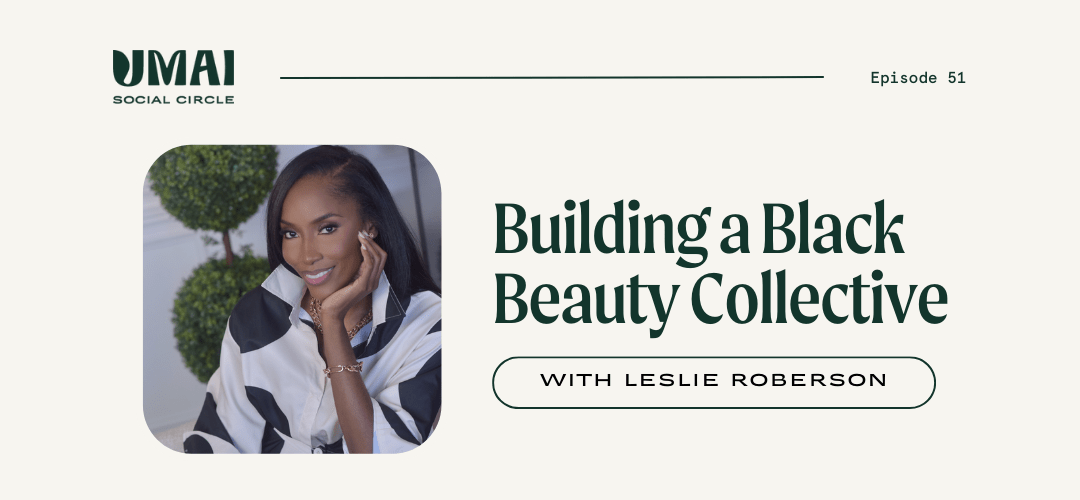
Posted on Leave a comment

Celebrating Five Years of Growth and Success: Lessons from Building Our Consumer Goods Marketing Agency

Celebrating Five Years of Growth and Success: Lessons from Building Our Consumer Goods Marketing Agency 

We’re raising a toast to our five-year biz anniversary, y’all. Time flies when you’re making dreams come true! (That is, ours AND our clients of course!) 

And, man how it’s FLOWN by… During those early days you could find us coworking out of our favorite local coffee shop, Cosmic Coffee, cranking out work while sipping on lattes and riding on the buzz of the fellow work-from-homers, contractors, and creatives using the same space to help make their dreams come true (or less dramatically, simply just getting shi* done).

Now, we’re surrounded by a talented team of hardworking marketers, have helped dozens of brands generate millions in revenue, and work on the same amazing brands, albeit a few more on our roster.

What started as a theoretical question over a sushi lunch break from our previous day jobs has evolved into a thriving, growing agency, and we’re thankful for the journey.

As we reflect on the past five years, through all the failures, successes, and overall growth – we’re excited to share some insights that have shaped who we are and how we work today:

**1. Embrace Innovation and Adaptability

The only constant in digital marketing is change. Whether it’s adopting new strategies or marketing channels, keeping up with emerging trends, or exploring AI technologies, our ability to pivot and evolve has been vital in achieving results for our clients.

**2. Building a Strong Team is a Non-Negotiable

From just the two of us to a powerhouse team, our agency’s growth has been propelled by the incredible individuals who share our vision and live our mission to build better CPG brands. Investing in the right talent and nurturing a collaborative work environment can make all the difference.

**3. Relationships: Cultivate, Nurture, Thrive

At the heart of our success lies the relationships we’ve cultivated with not only our clients, but the strong network of CPG professionals we’re lucky enough to surround ourselves with in our hometown of Austin, TX. Taking the time to truly understand the journey, values, and goals of our clients and course members has helped us lay the foundation for impactful marketing strategies, and being a part of this tight knit consumer goods community has truly allowed us to grow year over year.

**4. Harnessing the Power of Systems and Training

One of the most significant lessons we can share is the importance of setting up systems and providing comprehensive training for our team. When we launched, we stressed the importance of standardized processes to streamline workflows and ensure consistency in our deliverables especially as our team grew. Developing a range of highly effective systems and standard operating procedures (SOPs) have become integral to our efficiency and training.

**5. Continuous Learning and Evolution

The past five years have been one long learning experience. Staying curious and committing ourselves to personal and professional growth is something we try to instill in all of our teammates. Whether it’s taking an occasional course (we provide a $1k yearly stipend to anyone who wants to take a course), seeking out mentorship, or devouring the latest marketing news like we haven’t eaten a good meal in days, our dedication to evolving alongside this fast paced industry has been instrumental in getting us to five years (and beyond)

And with all of that – we’re happy to offer you our meticulously crafted systems and SOPs to help train YOUR teams and elevate your marketing game so that you can celebrate your continued success.

Something that was lacking in some of the in-house positions we’ve had was proper training and (any) systems – so if you’re finding yourself in the same boat, check out our collection of training materials so that your marketing teams can feel set up for success.

The lessons we’ve shared here are a testament to the dedication, hard work, and passion of all the people we’re lucky enough to work with and alongside.

To our clients, team members, and partners, thank you for being a part of this journey. Here’s to five years of growth, and to the next five.

Alison + Karin

Ready to create a 7-figure Consumer Goods Brand without wasting money on strategies that don't work?

Then it's time you join the Consumer Goods Growth Course & start driving the results you've been wanting!

Book a call with us now & learn how you can start making consistant, 7-figure sales!

Posted on Leave a comment

#46: Mary Ruth’s Promo Email Deep Dive

promo email
UMAI social circle cpg podcast

#46: Mary Ruth's Promo Email Deep Dive

We’re talking about boosting your Q4 profitability! 🤑 As we gear up for the exciting holiday season, including Black Friday and Cyber Monday, now is prime time to start laying the foundation for your most successful sales quarter ever. And guess what? It’s time to start planning your promo emails!

In this episode, we’re going to talk about how to create promo emails that get you results; we’re talkin’ opens, clicks, and SALES! We’ll look at a successful example from MaryRuth’s Organics, and we’ll share three key tips for writing effective promo emails: urgency, social proof, and simplicity. 

Let’s dive into the world of promotional emails and seize the sales that lie ahead. Success is just a few clicks away – so let’s get started! 📩
 

Let Us Break It Down For You…

[0:58 – 1:47] Introduction to promo emails
[1:48 – 3:25] Mary Ruth’s Organics killer promo email strategy
[3:26 – 5:15] Tips for creating effective promotional emails
[5:16 – 7:50] Three promo email must-haves
[7:51 -9:06] Closing + BFCM Kit is now available!
 

Mentions from this episode: 

Learn more and Start growing with us 

UMAI Marketing socials  –

Get the Black Friday Cyber Monday Kit, here
 

Stay in touch:

Join UMAI’s Facebook Group: CORE 

#46: Mary Ruth’s Promo Email Deep Dive

 
Alison Smith: [0:17]
Howdy, listeners. We’re Alison.
 
Karin Samelson: [0:18]
And I’m Karin.
 
Alison Smith: [0:19]
And we love growing CPG brands.
 
Karin Samelson: [0:22]
We’re the founders of a digital and social media marketing agency, UMAI Marketing, and creators of The Consumer Goods Growth Course, where we’ve helped grow dozens of brands to six and seven figures.
 
Alison Smith: [0:32]
We’re former in-house marketers turned consumer goods marketing educators, who’ve set off on a mission to provide CPG founders and marketers with actionable strategies that drive community and sales. We’re talking real results.
 
Karin Samelson: [0:46]
If you’re wanting to learn simple, actionable, step-by-step strategies needed to drive real brand growth, without breaking the bank or sacrificing your social life, then this is the podcast for you. Let’s get into today’s episode.
 
Karin Samelson: [0:58]
Hi, y’all. I’m here to keep sharing tips on how to make Q4 your most profitable quarter yet. Black Friday, Cyber Monday planning is in full swing and it’s the perfect time to dive in and start setting up the groundwork for the biggest sales of the year. In today’s episode, we’re going to be talking all about promo emails. So to start, we’re just going to talk about what a brand that we really love, who kills it with e-commerce did, and then give you some tips on what to do with your emails coming up. So we are going to be talking about MaryRuth’s Organics. It’s a supplement company that has supplements for babies, toddlers, adults, just about everybody, and their e-commerce really crushes it.
 
[1:48] 
What they did, they had four daily emails over four days, hyping the sale on Black Friday through Cyber Monday. So Friday, Saturday, Sunday, Monday. They didn’t have an early sale or anything like that, they just did it for those four days last year. The emails were super short and sweet and contained large headlines detailing the promo, included lots of social proof in the form of testimonials and they had plenty of product blocks to encourage folks to click through and purchase. Product blocks meaning pulling in from Klaviyo and it’s your product in it, it shows the pricing and it has a button to click and shop now. Subject lines were really straightforward and three of the four subject lines featured the promo really prominently. They also included some urgency, with language like, “Limited time,” and “Extended,” and the use of the hourglass timer and alarm clock emojis to really just push opening it right now, getting the product right now and utilizing the sale. The CTA buttons, the call to action buttons were really active. They used active language like, “Shop sale now,” and “Bundle up,” to encourage increasing average order value and bundling and, “Last days to save,” again with the urgency and, “Save now.” So that is a really high look at what they sent last year. 
 
[3:26]
But you’re asking, “Hey, what am I going to do this year?” So here are some additional tips. How many emails should I send during my promo? What we generally say is it depends on how long your promo is. So for shorter promos, send an email every day, if you’re able, just like MaryRuth’s did, they had a four-day promo and they sent an email every single day. For longer promos with a longer duration, send a reminder email at least every two to three days, depending on how long it is.
 
You want to make sure that it’s top of mind for your customers and they’re getting reminders often, especially it’s longer. And you might be asking yourself, when should I send these emails? What we want you to do is test your sends throughout the year and find the typical day and time that you get your highest opens and clicks. So there is some preliminary work that you need to do. You need to be testing a lot during the entire year to make sure that you know the data, you know you have the analytics that tell you, “Hey, send it on Mondays. Send it on Wednesdays. Send it in the mornings. Send it in the afternoons to be able to get the highest opens, clicks and revenue from your emails.” Make sure at the very least though that you have an email going out the day your promo launches, an email going out 24 hours before it ends and then make sure to resend your emails to non-openers. That first and last one are super important to sending to non-openers. So you can do that on the backend, you can toggle and segment based on if they’ve opened, clicked or just generally engaged with your emails. 
 
[5:16]
And what should be in those emails? The three things that we want you to focus on with your promo emails is urgency, as we’ve discussed. Social proof, like testimonials showing that other people like your product and the people that are reading your email will as well. And keep it simple, a simple design. You want to make sure that everything is above the fold. A click to your website, all of the important details, no one has to keep scrolling through their email to be able to figure out exactly what you’re offering them.
 
And then a few subject line recommendations. Keep it straightforward and direct. You don’t need to get all fancy with your language here, just keep that copy super straightforward and direct and put the promo details front and center. If you’re offering 50% off, 40% off, 30% off, make it very clear in your subject line that that’s what you’re doing. And then again, I’ve said it once, twice, three times already, I’m going to say it a fourth time, add in some urgency, especially for those last couple of emails you sent. “Last chance to get this deal. Last chance to get the biggest deal of the year.” And then there’s an option to add in a first name field to really make your customer feel special. Think of yourself as a consumer. When I get an email in my inbox that says, “Hey, Karin, open this for 50% off.” I’m like, “Oh my gosh, no problem. I will. I’ll get on it.”
 
And then some call to action recommendations. Again, use active language. You can also test using second person pronouns like you, your, yours. And an example of that is, “Get your discount now.” It just has that personalization and connection to the person reading your email. You can also test using your most bold, branded colors and make sure the color contrast is really there. So for example, try to avoid using a yellow call to action button with white font on it. You want to make sure it’s bold and super easy to read. And add those call to actions throughout the email. Put them everywhere, put them in buttons, put them in hyperlink in the plain text, put call to actions everywhere to get somebody to click through and purchase. And of course, as mentioned, make sure to have at least one call to action above the fold. So that can be a tiny, thin banner at the very top of the email, it can be a hyperlink if it’s a plain text email, it can be a call to action button right underneath a header text.
 
[7:51]
So those are some super basic examples of how to send, what to put in your subject line, how to design the email. And never forget those three things that we mentioned, it’s that urgency, social proof and simple design for your promo emails and you’re going to crush it. So if you want to make Q4 the most profitable quarter yet without the headache of not knowing what to share and when, we’ve made it super easy on you, you now have access to the Black Friday, Cyber Monday kit. It’s a comprehensive checklist that details all of the assets that you need in order to execute a high converting profitable holiday promo. Or just about any promo really.
 
It’s the same strategies we’ve implemented to make our clients millions in revenue over the years. The kit also contains done-for-you templates that allow you to plug in your brand info, export and schedule with a few clicks of a button. Check it out now at umaimarketing.com/bfcm-kit. That’s umaimarketing.com/bfcm-kit. Now let’s go get those sales.
 
Karin Samelson: [9:07]
Thanks for listening to the UMAI Social Circle y’all. We’re here to support you in your CPG journey, so be sure to subscribe so you don’t miss any new podcast episodes. And while you’re at it, please leave us a review on your listening platform of choice. Shoot us a DM at UMAI Marketing on Instagram if you have any topics you want us to cover on new podcast episodes.
 
Alison Smith: [9:25]
And don’t forget to access our free masterclass where we’re showing you how to create a solid marketing strategy. You can access that at umaimarketing.com/masterclass. And we’ll meet you back here for the next episode.