Posted on Leave a comment

#51: Building a Black Beauty Collective with Leslie Roberson

black beauty
UMAI social circle cpg podcast

#51: Building a Black Beauty Collective with
Leslie Roberson

Welcome to episode #51 of the podcast, where we get the chance to chat with Leslie Roberson, founder and CEO of Black Beauty Collective.

With previous success in diversifying corporate teams and starting (and selling) a luxury linen rental company, Leslie’s journey reflects a commitment to social impact and leveraging her recruiting, marketing, and networking skills for the greater good.

Leslie founded The Black Beauty Collective, aiming to empower marginalized founders by providing opportunities and representation in the beauty industry. Through practical experiences and a dedication to inclusion, Leslie drives the collective’s mission to support Black founded brands’ success on and off shelf.

Curious to learn more? Let’s hear today’s episode! 🎧

Let Us Break It Down For You…

[0:58 – 10:58] Black Beauty Collective: Entrepreneurship and Diversity
[10:59 – 15:17] Exploring the Journey: Early Days, Current Retail Sites, and Future Expansion Dreams
[15:18 – 20:41] Leslie’s Online Marketplace and Recruiting Methods
[20:42 – 22:26] Marketing and Business Strategy
[22:27 – 28:18] Key Attributes of Successful Founders
[28:19 – 32:50] Some of Leslie’s Favorite Black-Owned Brands
[32:51 – 43:35] Advice for Small Brands from an Industry Expert
[43:39 – 45:06] Future Plans for The Black Beauty Collective
[45:07 – 46:36] Final Notes
Β 

Mentions from this episode:Β 

Leslie Roberson, InstagramΒ 
Black Beauty Collective: Instagram &Β Website
Β 
Brands mentions on the pod:
  • Bixa Beauty, here
  • Marle Rene, here
  • Natural Radiant Life, here
  • postmodernform luxe home goods, here

Learn more and Start growing with usΒ 

UMAI Marketing socialsΒ  –

Access the Digital Marketing Tools Collection, SHOP NOW!
Β 

Stay in touch:

Join UMAI’s Facebook Group:Β CPG Marketing CORE 3 Inspo: Organic Social, Social Ads & Email with UMAI

#51: Building a Black Beauty Collective with Leslie Roberson 

 
Alison Smith: [0:17]
Howdy, listeners. We’re Alison.
 
Karin Samelson: [0:18]
And I’m Karin.
 
Alison Smith: [0:19]
And we love growing CPG brands.
 
Karin Samelson: [0:22]
We’re the founders of a digital and social media marketing agency, UMAI Marketing, and creators of The Consumer Goods Growth Course, where we’ve helped grow dozens of brands to six and seven figures.
 
Alison Smith: [0:32]
We’re former in-house marketers turned consumer goods marketing educators, who’ve set off on a mission to provide CPG founders and marketers with actionable strategies that drive community and sales. We’re talking real results.
 
Karin Samelson: [0:46]
If you’re wanting to learn simple, actionable, step-by-step strategies needed to drive real brand growth, without breaking the bank or sacrificing your social life, then this is the podcast for you. Let’s get into today’s episode.
 
Karin Samelson: [0:58]
Welcome to the Umai Social Circle, where we talk consumer goods, tips to help business owners and marketers grow. We’re Karin and Allison, co-founders of Umai Marketing, and we’re being joined by Leslie Roberson, CEO and founder of the Black Beauty Collective, a beauty retailer that features exclusively Black-owned brands. Hi Leslie, how are you?

Leslie Roberson: [1:20]
Hi, thank you for having me today.

Karin Samelson: [1:22] 
Thanks so much for being here, Leslie. First, let’s get started. We want to hear about your background, how the idea of Black Beauty Collective came to you.

Leslie Roberson: [1:33]
Okay. Let’s see. So my background, let’s start there and then I’ll work my way into how this came to me. So I have been working under three verticals, probably like the last 15 years or so. And so I’ve been an entrepreneur. And so my most recent business was a linen rental company, a luxury linen rental company. And so I was fortunate enough to make a pretty decent splash in the Chicago market where I worked with a lot of amazing event designers. I was in a lot of the magazines. It was called the Velvet Collection. You can literally look it up and see my face all over the place. And it was really cool because I love textures, I love fabrics, I love all the things, and I was able to make great strides in a very short period of time.

And so the second vertical I’ve been under is I’ve been in talent acquisition. So that’s been my corporate career. And I specialize in diversifying teams. So it absolutely matters to me if there are no veterans on a team or if there are no women on a team or there’s no minorities on the team. All those things I look at when I’m building the profile of the candidates that we’re going to go after and helping identify opportunities for diverse candidates that they may not otherwise have access to. And I’m going into those untapped markets where that talent base lies. And the third vertical I’ve been working under is I have a modeling contract with an agency here in Chicago. I do catalog modeling. So your Sears and your Bonton and your Kohl’s and Myers and whomever has some version of catalog. I’ve probably done some work for them over the last 15 years or so.

And so those are the three spaces I’ve existed in. And so that’s where I come from. So when I had the linen rental company, I was feeling restless. Even though I was in it for a short period of time, I loved it, but I was feeling restless because I felt like I wasn’t making enough of an impact and I wasn’t fully using my skills and what I do well to serve others. Even though everybody loves a beautiful event, don’t get me wrong. But I thought that I could do more. And so I landed on a place where I was going to sell the company and I did. And I actually sold it to my very first customer that rented linen from me.

They rented hundreds of times from my company and when they called to place an order one day I go, “Oh, I’m going to be sunsetting the company. This is probably going to be the last order that I’ll take.” And they go, “Man, I wish we could buy it.” And literally it is history since, because they bought the company, they are living their best lives in the event design space. And so I decided because I was like, okay, I don’t have a side hustle anymore, because that’s how this entrepreneur spirit was utilized, as a side hustle next to my corporate career, I decided to just go out and see and I was just talking to people and one of my friends go, “You should open up a beauty supply store.” And I was like, “I would never open a beauty supply store,” because I had come from this luxury white glove linen space. This is high-end fabric so all of my customers are like… I did events for Jennifer Hudson and Magic and Cookie Johnson and Michael Jordan’s daughter.

I’m doing these large scale events because I’m working with these amazing designers who have this crazy client roster. And so I come from this white glove space, but traditionally in Black communities, a lot of the retailers are Asian owned and they’re like box stores. It’s like a very similar model in most of the cities you go into. It’s not just here in the United States, but it’s like globally. It’s a very specific model you could walk into. And for the most part it’s not like that high end and white glove experience. It’s a store, they offer product, very simplistic basic. It’s to the point, and I respect it a thousand percent because I get it. But I go, I would would not open up a beauty supply store. But what it did do is it got my wheels rolling and I decided to go into other beauty retailers in other communities like your Sephora and your Credo and your Blue Mercury and just ask questions.

And so that’s where my recruiting background came into play. I started asking lots of questions like, what is your brand ethos and what are your core values? And what do you guys do here? Outside of just offering product, what do you do as a brand? So that’s how I started traveling down this road. And I was in one particular store, and this is a thousand percent a true story. The manager, as I’m asking questions, she holds up this box and she goes, “All of the brands inside of this box are Black women owned.” And I was like, “Oh, that’s great. Are these founders in other places around the store?” She was like, “Nope, they’re all in this box.” And so as a Black woman, I remember thinking to myself, okay, so that’s interesting. And why are we only in this box? What is the story behind this?

And so I started doing this research online, trying to find articles and reports and the demographics of the beauty industry. And I came across the report that McKinsey did several years ago, maybe about two years ago. They did a report on the state of the beauty industry and who were the founders. And they had Tracy Ellis Ross who owns Patterns. And all these different founders chime into the conversation and they ran numbers and stats. So of course at the time the industry was like a $60 billion industry and it’s growing rapidly. However, Black founders only represent about one and a half percent of the ownership in this beauty industry, even though Black consumers spend about 11% of that $60 billion. And so I remember thinking that, wow, it’s quite an opportunity here, but why is there such a discrepancy in ownership? And so in that article, that same article, they talked a bit about not only the discrepancies, but from a consumer’s perspective, we have to drive, I think it’s on average 13 additional minutes on average to gain access to CPG products that will suit our hair and skin.

And the likelihood is like three to one if someone will be there to answer baseline questions, to match your makeup color, to understand your hair texture, some very baseline things. But for me, because an in talent acquisition, my brain instantly, it doesn’t say, oh, it’s missed opportunity. My brain goes, oh, you’re hiring people who aren’t qualified to do the job because that’s how it resonates with me. Why not build a space that has more inclusivity and that is considering the different kinds of people that exist in the world? And so when I peeled the layers back a little bit more, I found that Black founders have received less than, I think it’s 1% of VC funding. And our access to capital looks vastly different than their counterparts. And so the reality is we’re creating amazing products, not just good products, but amazingly clean beauty products, great branding, great packaging, we have all the pieces, but we don’t have the capital the same way as our counterparts to scale our brands.

So that is the knowledge and the information that I’m working with. So I decided how can I help utilize the skills that I have that I’ve horned in on over the years from grad school and all my years in corporate because I’ve worked for the big boys, I’ve been with Arson Young and Wayfair and CNO Financial and most recently Meta. How do I use all the skills that I’ve obtained over this bit of time and to leverage that in this modeling thing, right? Because another piece, I got this face, how do I use these things to get these opportunities for all these other people? And so I created this collective and it is a thousand percent a collective model where entrepreneurs pay to be a member of the collective, but they get a 100% of their retail sales in return. And so I create this platform where they have access to retail space, which gives them access to a customer base.

They can come and engage with their customers, they can host unlimited activations at the store. We have a team of beauty advisors that are cosmetologists and estheticians and people from the industry that can answer baseline customer questions, help you match your makeup, help you understand different hair textures of what’ll work, what’ll be too much weight, cause you to be greasy, all these different things and variances that come with different kinds of hair patterns. And we have all these clean beauty brands. And so I created this retail store and it’s known as the Black Beauty Collective. So that’s how I got here.

Karin Samelson: [10:38]
Gosh. It’s such an incredible and empowering story. The second time we got to talk to you, you were in the airport, you’re on the way to an event. To me it was just like… It’s just really incredible really.

Leslie Roberson: [10:54]
That it was my entire first eight months of the business.

Karin Samelson: [10:59]
And so how long has the business been running and where is the retail location?

Leslie Roberson: [11:05]
So we launched April 2023, so it has not been a year yet. It will be a year April 8th this year. And the first location is located in Hyde Park, Chicago. Same area where the Obama Library is coming up, the University of Chicago is there. So it’s this amazing eclectic, diverse community of folks educationally and background wise. You get the legacy families, you get the traditional families, you get the university students. It’s all in the hodgepodge of a community. I think Hyde Park is on the top 10 best neighborhoods in the global list, which is interesting, a fun fact about Hyde Park. So we are over there amongst the best at the brightest.

Karin Samelson: [11:51]
Amazing. Do you have dreams of having retail locations in other cities too?

Leslie Roberson: [11:57] 
So yes, I do. And it’s not really a dream, it’s happening. So our second store launch will be in LA and the launch will be April 6th. I know, it’s so cool. It’s Playa Vista. So the area Playa Vista outside of LA. And the location is perfect, right? And so I don’t know if you know anything about Playa Vista, but it is like the tech area outside of LA. So you get this extremely diverse population of people there because Meta has an office and a couple other tech companies have offices. So you have all these people coming in from around the globe and local to the area and they’re there and it’s a beautiful area, tons of marketing support. And I am beyond excited about this and launching a second store. So yes, I have great ambitions to grow.

I’ll tell you why it matters if the collective grows into other markets. So a lot of small business entrepreneurs, when you don’t have a big budget to run multiple state marketing, what tends to happen is they become hyper-local in their market. I’m a small business, I’m in Kansas City, I go to all the popups, everybody knows my product. Maybe I have a Shea butter, I am the Shea butter lady in Kansas City. You go two cities over, no one has ever heard about this brand. And it is because they’re able to drive a local marketing presence because that’s where they are. So what I’m doing with these collectives, entrepreneurs become a member of the collective and now their brand is featured in a store. So customers can come and gain access, they can smell, they can utilize, which is really important for a lot of customers to be able to…

I’ll tell you something about Black consumers, one of the things that I noticed, we need to see the weight of stuff because depending on what it is and how heavy it is, it changes our curl pattern. It changes the way our hair responds. And same thing for our skin. There are certain products that’ll sit on your skin versus going in from a moisturization stance. I’ve literally seen my skin ashy and the product is sitting where it doesn’t seep into the skin. So we need to touch, feel, smell, all that jazz.

So I’m a small brand and I am in Kansas City, I joined the collective. I now have my brand, my products in store. I can now run targeted ads to get people to come into the store and try my products. I can now come in without having to pay a whole bunch of extra costs and I can set up shop in the store and meet customers. The beauty advisory team can now interact and engage with you. And so now you can become hyper-local in the second major metropolitan city, and then there’s a third and then there’s a fourth, and you get an opportunity to scale without breaking your marketing budget on running this huge multi-state campaign and also not having some starting point essentially is what it is that I’m building. So yes, the next store, LA coming up in April.

Alison Smith: [15:07]
Huge congrats. Absolutely killing it. And I’m just imagining you jet-setting across the country. You were just making these calls at the airport. So tell us more about how you recruit or find the brands that… And Leslie also has an online store as well. So if you’re not in LA or Chicago, you can also go to our website and see all these brands. But tell us more about who these people are, how you find them, all of that.

Leslie Roberson: [15:38]
That is my knack being a recruiter, I will find anybody. Early on when I first started, I actually ran ads that I was coming to different states and I physically flew to the state and I said, “Hey, I went to a peer space, I found space.” And I’m like, “I’m going to be at this address, bring your brand in, pitch a brand. If you want to be acquired of this store, you’re ready to scale into retail.” That is literally how I started this. And I think when I launched, I did a seven city tour, I think it was good seven cities that I went to. And then alongside with that, I was running virtual meetings, same thing, running tons of ads. People are coming into these virtual meetings like interest meetings and they would bring their products and they would showcase.

And then there’s an application process. So now everything is a bit more streamlined. I’d usually do virtual meetings. Sometimes I’ll fly to an area, especially if I have a partner in it and they can get all the people in the city to come together and there’s 15, 20 folks there, I’ll come into that and talk about it. So I think that’s when you guys caught me when I was going out to maybe Las Vegas or something. And so I’ll go, I’ll talk to groups of entrepreneurs. I attend events, I go to trade shows, pass out my business cards. If I see brands that I really like and I like what they’re pitching and how they’re talking about their brand, I’ll go and I’ll pitch to at trade shows. I do all sorts of stuff to find entrepreneurs.

But application process wise, so all brands are required to attend our informational section. And no matter how big my team is, I actually run those myself because it’s important for me that entrepreneurs see me as the thought leader behind this initiative and understand why and what they’re joining and what’s expected of them. This is not a passive place where you can drop your products off and see what happened. This is something I almost said that I’m not going to say. This is a very active place where you have to be intentional to drive your brand and we’re giving you a platform to do it. And so entrepreneurs have to attend our informational session. From there they’ll receive an email so they can look back at that slide deck just in case I move too quickly and they want to absorb the information a little bit better. There’s an application process where they have to complete this application. It includes all the nuts and bolts of your business, what your sales revenue were for the last three years, your headshot.

I want to see your resume, I want to see everything about you and this business so I can really understand the depth. And then the third phase is they have to ship their products in for them to be reviewed, I need to make sure it contains all the components of being on the shelf, the shelf life, the ingredients. What does your branding look like when it’s packaged? Is it done in a concise and cohesive matter where it can sit on the shelf and customers can receive it without a whole lot of hoopla? And then I also have different folks on my team that try the products, that review the products. So you’re a cosmetologist, your estheticians, making sure that the products or they do whatever they say they’re going to do. Dermatologists, a bunch of folks that we pass products off to so that they can give us active feedback and looking at the ingredients.
The great part is a lot of these brands are organic brands, and so we’re not talking heavy chemicals like lye or anything like that in these products. Most of them are organic and most of them work with a manufacturer or chemist that have developed and curated these products. 

And so that is the final step actually, that is the last step that’s on the entrepreneur. From there, I invite entrepreneurs to have a meeting with me individually. And so you attend the actual informational, but now I want to talk to you individually because I really want to understand who you are as an entrepreneur, what transferable skills do you have? How you’re thinking about scaling your business? What’s your strategy? What are your goals? How does this fit into the goals? I really want to understand who the person is because I’m intentional about who I work with because I work hard, I work really hard and I don’t stop. And if I’m out here working hard and this authentically for the brands that are in the collective, I need to work with people that are working hard too.

And so that’s why I do that. So I meet with the entrepreneurs and then from there they receive a yes or no if they’re invited into the collective.

Alison Smith: [20:11]
I love that you specifically mentioned that if there is any note of this founder or brand that they’re not going to work hard, they’re not going to do their marketing, then it’s an immediate no. This category, this niche in CPG is not an easy place to play. It’s not a passive business, so to say. And we know that you work hard as well. And so the Black Beauty Collective is helping with marketing. It sounds like you’re also helping with their overall business strategy and plans and things like that as well. Is that right?

Leslie Roberson: [20:53]
You do. And what I’m finding is I’m becoming almost like a partner. I am rolling out a new product, I need a second thought. I am going into a pitch competition, I need help with that. And so, one of the things that I’ve implemented this quarter is I met with all the brands in the collective because I want to understand what are your goals? How does the Black Beauty Collective help you achieve those goals? Is it an introduction? Is it, you need to partner with or what is the strategy? Because what I’m noticing is a lot of founders, they’ll spend all of their time going after grants and then they’ll be disappointed if they don’t come here. That’s number one. And then they’ll spend all their time thinking about how to get into Target or into Sephora or Ulta or whatever the measure is.

But they’re not thinking about, I’m a very small brand and I have very small following, going into Target is going to require X. And so how do you begin to close that gap with driving, whether it’s wholesale opportunities, increasing your marketing budget or understanding what it takes to have a marketing budget, like all the pieces. And you guys know about that. And how when you’re talking to founders who get it but don’t get it. And so I become that person for a lot of the brands that are in the store and they’re like a thought partner. And so that’s what I spend a lot of time doing when it comes to meeting with and talking to the founders that are in the collective.

Karin Samelson: [22:27] 
When you think of the founders who are performing the best or their brands are selling well and doing well in the store, what would you say are some of the main attributes outside of hardworking that you see in all of them?

Leslie Roberson: [22:48]
So the brands that are always going to perform well, not always, but do a little bit better, they’re consistent. That’s one of the main things. You’re consistent with your marketing, you’re consistent with your social media posts, you’re consistent with your email marketing. You’re consistently engaging with your target audience. You’re visible, you’re making sure you get out and communicate and you’re not passively standing behind the scenes waiting for a miraculous miracle to occur. You’re literally actively doing it. So consistency is going to win at the end of the day. And whatever consistency look like, whatever you set in motion, it doesn’t mean that you’re posting on social media every single day. It means I post Monday, Wednesday, Friday, and I stick to that plan. That could be consistency. Or I send a newsletter out on the first of the month and I send my newsletter out on the first of the month. That’s what consistency looks like.

So the brands that I see that are hitting their target and their goals, that are doing well, they’re consistent. That doesn’t mean that every day is a, what’s the thing? If you do $75 in sales a day or $52 in sales a day, you can make a million dollars, whatever this thing is. It doesn’t mean that they’re always doing that. It just means that they’re constantly consistently engaging their audience. And the audience will remember. If you knew how many people that come into the store that go, “I saw X here online, I saw it three times and now I’m going to come buy it.” That’s the consistency. But if you only did it once, the customer may not remember consistently. So that’s the thing.

Alison Smith: [24:29]
I love that you said that because that’s something that we tell our community all the time as well, because it’s so easy to get overwhelmed as a solopreneur, a founder, et cetera, et cetera. It’s easy to get overwhelmed in general. But you just have these ideas and you want this fast growth, so does everyone. But just being very honest with yourself, especially when you’re at the beginning stages of your brand on what you can actually get done in a day because it’s so multifaceted. There’s not going to be a ton of room all the time for actually marketing the brand because you’re dealing with everything else. So just being honest with what you can do and that is good enough until you can get extra support. And it’s slow and steady, I guess I could say

Leslie Roberson: [25:24]
The gift and the curse of being an entrepreneur. Entrepreneurs dream lofty. They dream real big and they dream of an immediate success story because when you look out on social media, everybody feels like an immediate success story. It happened just like that. You only really feel the overnight sensation, the one opportunity that you went viral or the one thing that shifted everything. But a lot of times the story that’s untold is the marathon that the person has been on, and knowing that it’s a marathon and not a sprint. And if you can be consistent long enough, it will happen. Literally, it will happen if you keep at it and you set the plan, this is the plan, and just roll with it. Be agile along the way, but staying consistent and true to the cause, it’ll happen.

Alison Smith: [26:09]
It will absolutely. It might not happen when exactly you wanted it to, but if you stick with it for sure. And we actually love seeing, it’s become a movement. I think it started happening over COVID when everyone was stuck at home and not really having glamorous lives anymore, where founders specifically just started getting a lot more real on things that they’d post. So don’t be afraid if you are a founder, a solopreneur, listening to this, to actually just share the struggle as well, and not just the wins, because that is super relatable to people. And people do really like that kind of thing.

Leslie Roberson: [26:53]
A thousand percent. And the gift and the curse of being a founder is you can have wins and losses all in the same day. You like, yes. Oh no, all in the same breath. And the beautiful part is that it’s absolutely okay and it’s true to the path. And so people see me and they’re like, “Oh my God, Leslie.” I’m like, “If you guys knew how I don’t sleep, and literally ever, you would be amazed.” They’re like, “Well, how do you wake up looking like this?” It’s the lipstick. It’s not because I’m refreshed.

Karin Samelson: [27:28]
Are you selling that lipstick in the store?

Leslie Roberson: [27:31]
Of course we are.

Karin Samelson: [27:32]
Nice. It’s gorgeous.

Leslie Roberson: [27:35]
This is Bixa Beauty. Le me see. I think it’s called Mary Jane. So Bixa is a plant over in Ghana, and it was previously used by natives and they would color their lips with it. It literally leaves a red stain. And the founder of Bixa Beauty is Deida Massey. She actually is a MUA. She grabs some of the plants. She was just on vacation. She grabbed some of the plants, brought it back to the States, worked with a chemist in color theory, and they were able to create her line Bixa Beauty. And she has a collection of lip whips, all vegan. I know, Bixa, B-I-X-A. So that is one of the amazing brands of the collective.

Karin Samelson: [28:18]
Awesome. Let’s give some other brands a little bit of a shout-out. Could you name a couple more that maybe you have your eye on? You don’t have to say they’re your favorites, but ones that are doing really great work.

Leslie Roberson: [28:31]
There will never be a time where I talk about any brand and I won’t say, “Hey, this is my favorite,” whatever. Because literally they’re my favorite all for different reasons. It’s like kids, you love them all, but they’re your favorite for different reasons. So my favorite honey and turmeric cleanser is created and curated by Marla Renee. And when I tell you guys that this product is amazing, it is probably our number one seller in terms of cleansers in the store. So turmeric is great, and people don’t think honey and turmeric as a cleanser is a thing. It is absolutely a jam because it’s great for discoloration. So like me, I break out during my cycle time, I always get the blemish or whatever it is, and it always leaves a mark on my face or whatever the case is when it goes away, I use the honey turmeric because it rebalances your skin. It’ll help that blemish go ahead and go away. So within weeks I’ll see it’ll start to fade. Especially with melanated skin when you blemish, sometimes it’s harsh and it’ll just stay there forever. But this turmeric and honey actually helps the process move along a little faster. So that’s my favorite honey and turmeric cleanser. I’m actually using that now. 

Let’s see what else is in there. Oh my God, look, I looked up here and I have three candles sitting on this shelf, and one of them is burning. Let’s see, Postmodernform. Her candles are amazing. It’s like the blend, like a nice, not too hot, not too cool a day and the breeze is just right. That is how her candle line is. It’s like super airy, feels good when you walk into the space. Anybody who comes in, they’re like, “Oh, it smells good in here. What is that?” It was her candle burning yesterday, literally is the vibe of this candle. And all of her candles come with these affirmations. The one that’s burning now is called Living in the Moment. And so I’m here for all of that, especially as an entrepreneur I need some of that in my life because I am always… In August, we’re going to be living my life in the future. And so living in a moment is a jam. 

Let’s see, what else is my favorite in the store? Natural Radiant Life, especially for the girlies who are 35 plus-ish, that are moving into the more fine mature years. It’s called Natural Radiant Life. They have a skincare collection that is for the anti-aging skin. Well, not really anti-aging. We can age, we just want to age gracefully and beautifully. And so their entire collection, they have the AM moisturizer, PM moisturizer, the cleansers, the exfoliant. They actually put their exfoliant into a bar, which I loved because when you’re scooping a lot of times, especially in the shower, you’re like, it’s running everywhere. Versus a bar, which is a little bit more controllable, which is awesome. Everyone who buys this bar, it comes back from more and they’re like, “Oh my God, I use it on my elbows, my knees, whatever.” Great bar. So Natural Radiant Life is absolutely a jam. 

Who else? There’s people all in this store. I can do this all day. Oh my God. Shamika Brunette is a great one. She makes products with sea moss. So she’s from the Caribbeans and her son had severe eczema all of his childhood, and she was taking him to the doctor, and they were putting him on a steroids to try to get rid of it because it was impacting his ability to go to school. It was so bad. And she decided because she was Caribbean and her mom and her grandmother made their own shea butters and their own soaps and all these things. She tapped into, asked her parents like, what was the recipe? And she literally began creating it, and she was able to help her son and all these other moms. She joined all these other groups and was hearing the same issue with all these parents. “My kid has this eczema, I don’t know how to get rid of it. Hydrocortisone isn’t working.” All the things. And so she began selling it. That’s how she jumped her business off. And I love all of it because those that love her product, especially with the sea moss and the turmeric and the oatmeals and all that jazz, they’re a fan.

Alison Smith: [32:43]
I love that last one because hopping into mama Facebook grooves is key. That’s so smart. So you talked earlier about some of the biggest challenges that you’re seeing, the brands that work with you and you work with them and how you’re specifically addressing them. What would be your biggest piece of advice for these small brands?

Leslie Roberson: [33:12]
What I always say, so there’s nothing wrong… It comes back to setting the goals for your business and how you’re setting goals. So number one, always set goals. If you don’t have something you’re targeting, you’re just shooting at the dark to see what happens. Be intentional about setting your goals, make them realistic, make them smart goals. Make sure you have a specified amount of time that you want to accomplish it, what the actions that you’re going to take, how you’re going to measure it, give yourself an appropriate timeline or make them smart goals. But when you’re thinking about higher scaling, scaling your business, a lot of entrepreneurs, especially in this particular category, they’re targeting your targets, your Walmarts, and it’s an active goal. My goal is to get into Target. So what’s the game plan to get there?

I oftentimes talk to entrepreneurs about starting smaller, especially when you don’t have a huge budget because if you’re fortunate enough to go into a target and they put you in, I’ll be modest, 50 stores and they’re in two states, that means you’re going to have to have a marketing campaign to run advertisement in two states so that people know to go into Target to buy your product. So as opposed to necessarily going that route right away, think about the smaller mom and pop stores. Maybe there’s another founder out there that owns 10 boutiques in three states or two states or in one state that you can have access to the owner of the business. You can pitch them on wholesaling your product. You can negotiate marketing into that contract by saying, “Hey, I’ll give you X number of dollars off your first order if you include me in your marketing.” So their social media page, their newsletter, negotiate your way into these smaller opportunities.

Maybe each store is, maybe they’re ordering a hundred units each store, there’s 10 stores, that’s a thousand units. It feels like you can achieve that versus going a order for 10,000, which if you don’t have the pieces in place to fulfill that order, it’ll actually work against your business. And so starting smaller and smarter and having multiple versions of those. You get a couple founders, three stores here, five stores here, 10 stores here, a bunch of different places across the United States where you’re negotiating and marketing where it is beneficial to that founder where you’re offering them a discount on a wholesale order. And it’s beneficial to you because you’re getting in front of all these other customers starting smaller because now you’re getting consistent orders coming in that you don’t necessarily have to work as hard for. So by the time you get to your Target, your Sephora, you can afford to be there.

And so I talk to founders often about thinking about where their product should show up. Is it a spa? Is it a place that sells wholesale products to other business owners? Is it fair? Where is your space? Is it the gym? Is it the spa inside the gym? Is it yoga studio? Think outside of the box on who could house your products, where it would make sense in terms of offerings where customers would buy it. Because the same customer that if you reach out to a customer that you find on TikTok is also the same person that might go do Pilates tomorrow. So what are other avenues that don’t always look and feel like Sephora or a TikTok shop? What are other verticals you can tap into that feel a little bit more non-traditional? And thinking about even if it’s a vertical life, say if you’re going after spas.

You go, okay, I’m going to go after spas. That’s my goal this year is to identify five spas that I can get contracts with. Is there a spa convention that you can set up a booth at? Maybe there’s not a lot of views that play in that space versus going into a space where there’s nothing but haircare and beauty care products. Maybe go into a hotel convention that you can set up shop at and reach a different audience than what you would in another space. So I always push the entrepreneurs to think outside of the box, don’t think the traditional way because there are brands out there that only service hotels. There are brands out there that only service spas. It’s all B2B. Think about it that way because that could be an opportunity for your brand.

Alison Smith: [37:40]
A 100%. And actually one of our first clients that we worked with, Karin found them. Was it Pilates, Karin, or it was a bar studio? Yeah. And they were in the bathroom I think there, and we just fell in love with it and reached out. But as consumers, we fell in love with it. And really with that model that you’re speaking about, these people are likely not getting hit up as much as a buyer. Let’s be honest, they are not getting hit up as much as a buyer at Ulta, Sephora. So this is likely a good way to practice your negotiation as well. And it’s probably a higher probability of getting into.

Leslie Roberson: [38:32]
That’s right. And the other element is when you get to a Sephora level where you’re in front of the buyer, all of these things that are “smaller wins” will come into play because they will ask you about where else have your products been and what kind of orders are you getting? And they’ll ask you questions about your KPIs and these other spaces. So these are all the things that you do, the small wins incrementally. And I call it building out your business resume. That’s how I look at it, because I’m a recruiter, that’s what I do. Everything you do from point A to point B is about building out your resume so that by the time you get in front of your dream client or your dream buyer, you can say, these are all the things I’ve done. I have proof of concept, I have a customer base. I got all the pieces I need to be successful here.
So that is how you’re thinking about it. And so most entrepreneurs had some career prior to becoming an entrepreneur or did something. When you start a company, you don’t just walk in as the CMO at a company, you start off as the intern, or you start off as the entry level. You graduate into these different levels of your career, and all the experience that you rack up beforehand are the things that make you the best candidate for the job. Think about your business the same way starting incrementally and growing incrementally, so then you could begin to building the team that you need to be successful. I actually met an entrepreneur that was still a solopreneur, and she was already in Walmart, 236 Walmarts, and she was still by herself. Can you imagine the work that they would require an entrepreneur to be able to keep up with that kind of volume as an individual? It was insane.

And I’m going, how are you managing? And then I found out later that she was struggling in that space because it was almost overwhelming. She got an opportunity, some program Walmart was running to get more diverse brands into their store, which was great in theory, but there was a huge gap. She didn’t have the followers. It was just so many things. And so for me when I talked to founders, is build out your business resume, build out your experience, gradually scale your team. Don’t try to rip the bandaid off and go too big too fast because it can work against you and what you’re attempting to build. So gradually scale, and the way you do that is going by after smaller retail outlets initially, and then gradually increasing size.
So maybe your first win is like a person with one store. Maybe the second win is a person with three stores and then 10, and then continue on and get a bunch of those. And then you can fulfill these different orders and it’ll give you the consistent revenue to run more marketing for your B2C customers. And so it’ll all work in unison once you start putting the eggs in place. That’s my favorite advice to give.

Karin Samelson: [41:37]
It’s such a good… It’s so smart. I love how your corporate recruiting experience is. So in line with this, start small. You’ll get to where, you’ll get to the job, you’ll get to the retail, you’ll get to everything you want to get to as long as you start small. And I also love the message that we’ve shared before where it’s just like, it’s okay to say no, too. It’s like Walmart wants you to go into 400 stores. That sounds awesome, but should you? So great, great, great piece of advice here.

Leslie Roberson: [42:11]
Here’s the reality, and the one thing I’ve learned, the longer you can hold off saying no, the better position you’ll be in when you say yes. Because along the way, you’ll get better, your processes will improve, your SOPs will be there, the underbelly of your business will be supported. So when you take on that opportunity, you actually get to call more of the shots. And just like my recruiting analogy, if you wait until you have all the experiences, you can go in and you can negotiate your salary, you can negotiate your bonuses, you can negotiate all the pieces. If you’re going to have an assistant, what your title is, the leverage, because you built up a book of business and a background to support. “Hey, I can do this.”

So it’s the same thing in this space. The longer you say no, until your brand is ready for the big box stores, the better position you’ll be in terms of the number of stores, what kind of marketing support you’ll get, because they’ll be in a position where they want you, so they will be throwing all the stops out to get you in versus you having to make a lot of adjustments to get in.

And so I say, say no as long as you can and build as many… Your customer base, your annual revenue, all the pieces, keep building and then say yes when your brand is a thousand percent ready.

Karin Samelson: [43:35]
I love it. Such a good piece of advice. Thank you so much, Leslie. Well, what’s coming up for the Black Beauty Collective outside of that LA Store launch?

Leslie Roberson: [43:45]
Oh my gosh. Okay. So we are doing the things. Actually, so we’re going to be launching, I said it earlier, April 6th for the LA store. I believe the store opens at 11:00 AM. So we’ll be open for public that day. On April 8th, we’re going to be launching Amazon store too, which is interesting in itself. Amazon is like, “Look, we think what you’re doing is amazing. We think you can have a great platform here on Amazon. We don’t have any stores like this that are business owners with this objective featuring these brands.” And so I’m like, “Why not? Let’s try it and see how it goes.” It’ll be like, “Oh, you missed our grand opening. Get us on Amazon.”

That’s literally what the messaging is going to be. Catch us on Amazon. So that’s probably the next thing that’s happening. And then the rest of the year, I am all over the place doing a lot of awesome things. Awesome things I can’t talk about just yet, but I’m just doing some awesome things.

Karin Samelson: [44:50]
We don’t doubt that. That’s awesome. 

Alison Smith: [44:53]
Yeah. Well, Leslie, we enjoyed this so much and so much valuable advice. You shared so many good nuggets. Absolutely love it. I have so many notes as well, and I can’t wait to check out all the brands that you mentioned. If anyone listening is in LA April 6th, right?

Leslie Roberson: [45:12]
April 6th.

Alison Smith: [45:13]
And it’s Hallow Vista, right?

Leslie Roberson: [45:15]
Oh my God. It’s Playa Vista. It’s the Runway Shopping Center is in that plaza. It is adorable. You hear me? And it is going to be an amazing experience for all of our shoppers that come in that day. And so just come check us out. If you guys are in an area swing by, I’ll be there. Come meet me, of course. And just tell me you saw me here or heard me here. And we will chop it up all about this right here.

Alison Smith: [45:43]
Love it. Well, thank you, Leslie. Is there anything else you want to leave our audience with, how they can reach you, find you, anything like that?

Leslie Roberson: [45:51]
Absolutely. You guys can check me out on Instagram, Facebook, all socials @blkbeautycollective. And you can follow me on my personal page @theLeslieRoberson. All right. Thanks you guys. I appreciate your time today.

Karin Samelson: [45:06]
Thanks for listening to the UMAI Social Circle y’all. We’re here to support you in your CPG journey, so be sure to subscribe so you don’t miss any new podcast episodes. And while you’re at it, please leave us a review on your listening platform of choice. Shoot us a DM @umaimarketing on Instagram if you have any topics you want us to cover on new podcast episodes.

Alison Smith: [46:23]
And don’t forget to access our free masterclass where we’re showing you how to create a solid marketing strategy. You can access that at Umaimarketing.com/masterclass, and we’ll meet you back here for the next episode.
 

Join below for marketing inspo & trends πŸ‘‡πŸ‘‡πŸ‘‡

Posted on Leave a comment

#49: Executing a winning brand refresh with Meghan and Sam

brand
UMAI social circle cpg podcast

#49: Executing a winning brand refresh with Meghan and Sam

Welcome to episode #49! In this episode, we’re diving into executing a winning brand refresh. Our co-founders, Alison and Karin, team up with the dynamic duo: Meghan Martin, UMAI’s Strategy Director, and Sam Laubach, UMAI’s Creative Director (previously the founders of boutique branding & package design agency, Here & Now Creative). With years of expertise in bringing strategic and eye-catching branding to the CPG world, Meghan and Sam share their insights on creating shelf appeal, their favorite brands in the space, and how to align your brand identity with consumer perception. Join us for an exploration of branding decisions, trend pitfalls, and the art of a refresh vs. a rebrand. Welcome to the world of brand success and reinvention! Start listening! 🎧

Let Us Break It Down For You…

[0:17 – 1:56] Introduction
[1:56 – 10:58] Exploring Shelf Appeal β€” Unveiling Our Favorite Brands
[10:59 – 12:15] Aligning Consumer Perception with Brand Identity
[12:16 – 14:22] Strategic Branding: Deciding When to Invest in a Branding Agency vs. Opting for a Rebrand
[14:23 – 16:37] Navigating & Avoiding Trends
[16:38 – 19:06] How to Stay Relevant
[19:07 – 20:35] Rebrand vs. Refresh – Clearing the Confusion and Knowing When to Hit Refresh
[20:36 – 25:38] Identifying Brands in Need of a Fresh Perspective
[25:39 – 28:04] How to Choose the Right Branding Agency for Emerging or Established Brands
[28:05 – 29:53] Analyzing Brand Success: Standouts, Strugglers, and Key Factors for Brand Reinvention
[29:54 – 32:21] Closing
Β 

Mentions from this episode:Β 

Learn more and Start growing with usΒ 

UMAI Marketing socialsΒ  –

Access the Digital Marketing Tools Collection, SHOP NOW!
Β 

Stay in touch:

Join UMAI’s Facebook Group:Β CPG Marketing CORE 3 Inspo: Organic Social, Social Ads & Email with UMAI

#49: Executing a winning brand refresh withΒ Meghan and Sam

Β 
Alison Smith: [0:17]
Howdy, listeners. We’re Alison.
Β 
Karin Samelson: [0:18]
And I’m Karin.
Β 
Alison Smith: [0:19]
And we love growing CPG brands.
Β 
Karin Samelson: [0:22]
We’re the founders of a digital and social media marketing agency, UMAI Marketing, and creators of The Consumer Goods Growth Course, where we’ve helped grow dozens of brands to six and seven figures.
Β 
Alison Smith: [0:32]
We’re former in-house marketers turned consumer goods marketing educators, who’ve set off on a mission to provide CPG founders and marketers with actionable strategies that drive community and sales. We’re talking real results.
Β 
Karin Samelson: [0:46]
If you’re wanting to learn simple, actionable, step-by-step strategies needed to drive real brand growth, without breaking the bank or sacrificing your social life, then this is the podcast for you. Let’s get into today’s episode.
Β 
Alison Smith: [0:59]
Welcome to the UMAI Social Circle where we talk consumer goods tips to help business owners and marketers grow. We’re Alison and Karin, co-founders of UMAI Marketing. We’re being joined by Meghan Martin and Sam Laubach, our new strategy director and creative director leading our branding and packaging efforts here at UMAI. How are y’all?
Β 
Sam Laubach: [1;20]
Good. Thanks for having us.
Β 
Meghan Martin: [1:22]
Heaven.
Β 
Alison Smith: [1:24]
Welcome. This is our second episode as part of a little series to dive into Sam and Meghan. If you guys are interested in hearing on how they got started, the brands that they’ve worked with in the past, how they started their own agency, you can listen to the episode before, episode number 48. I definitely recommend giving it a listen. But for today, we have a few questions that we want to ask y’all and wrap up this little series.
Β 
Karin Samelson: [1:56]
So one that we really like to ask people in all different facets of CPG, but specifically for branding and packaging reasons, what are your favorite brands currently on the shelf, either in-person shelf or online shelf, and why?
Β 
Sam Laubach: [2:15]
I think my all time favorite… I mean, all of the brands that I really like, I love all of their products along with their brand. I think that’s usually a big… I need to both the product and the brand itself and I think all of them are trendsetters in a way. I think that’s usually the ones that I usually gravitate towards. I would say BAGGU is definitely number one all time fave. They can do no wrong. Take all my money. Every collaboration, I’m like, “All time fave.” But I also really like Tower 28 is a new one that I’m really liking lately. And then, Graza I always love, Amika, Ghia. There’s another one. Oh, Piecework Puzzles, that’s another one that I really like. All of them I really like. They’re fun, a lot of colors, not afraid to be who they are.
Β 
Karin Samelson: [3:02]
Piecework Puzzles? Is it like an actual puzzle company?
Β 
Sam Laubach: [3:06]
Oh, yeah. They do a playlist for every puzzle they do. It’s so good. It’s so good.
Β 
Alison Smith: [3:10]
Love a good puzzle.
Β 
Karin Samelson: [3:13]
So wait, why can BAGGU do no wrong?
Β 
Sam Laubach: [3:17}
I feel like ever since they launched, they are so clear on who they are. It’s like every social post, every email, even new product, every collaboration, it’s so on brand for them. They’re so just clear on who they are. I think that I really like that. I really admire that because they’re current without being trendy. They don’t waver who they are at all just because a new trend comes up. If it’s social or something like that, they’ll hop on it, but it’s like they don’t change who they are; they’re not rebranding every three years. They’re just so good and I love their products. I’ll buy their products forever.
Β 
Karin Samelson: [3:56]
I wear the bag every day. I gave my husband my backup one. He wears it every day now, and I completely agree. It’s like anytime I get an email or an SMS, or anything from them, I instantly know it’s them, so it’s always a good sign. Meghan, what about you?
Β 
Meghan Martin: [4:14]
All right. I think I have a top two right now. Seed is always number one for me. First of all, the way they educate is just so great. They do such a good job of educating in a way that’s really exciting on stuff that’s not a super exciting topic, so I think they do a really great job of that. Also, their sustainability efforts I think are great and that’s a passion point of mine. So I always like to see what they’re doing and how they’re leading that. And then, my other top right now that I’ve been really looking at a lot is Wooden Spoon. I think I like the products, but also their branding’s super fun. Their copy’s super fun. The way they’ve created this whole cohesive world, they’ve just done a really great job through and through. So those are probably my top two right now.
Β 
Sam Laubach: [5:05]
Gander did such a good job with their rebrand. It is so good.
Β 
Meghan Martin: [5:10]
Yes, It’s good.
Β 
Sam Laubach: [5:10]
It is so unique and they’re such trendsetters.
Β 
Karin Samelson: [5:14]
Wait, who? Wooden Spoon?
Β 
Sam Laubach: [5:17]
Yeah. Gander, they’re an agency. They did their rebrand. I think it was last year or the year before. I remember when they launched, it was so good. It’s so-so good. They did such a good job.
Β 
Karin Samelson: [5:27]
What’s so good about it?
Β 
Sam Laubach: [5:33]
Looking at Wooden Spoon’s mission and values, and doing it in a way that’s different than what’s in their category. I would say their category, you get into that crunchy granola, which I would say their identity almost leans into that without going too far down that road, if that makes sense. It’s like a slight nod to it in a way that’s current. Oh, it’s so good.
Β 
Karin Samelson: [5:58]
So, when you Google, if someone’s trying to find a wooden spoon and I have no idea-
Β 
Alison Smith: [6:04]
I just got it. It took me in…
Β 
Karin Samelson: [6:06]
You got it? You got it? What is it?
Β 
Alison Smith: [6:08]
I was like… because there’s this band called Wooden Shjip, or I think it might just be Shjips. They spell it with a J so you can Google it. I was trying different variations of how you would spell… It’s woodenspoonherbs.com and-
Β 
Karin Samelson: [6:23]
Herbs.
Β 
Alison Smith: [6:24]
Yep. Dead gorgeous. I am very into this.
Β 
Meghan Martin: [6:30]
They’ve done such a good job of making everything consistent. All of their emails look exactly like the website. All of their social posts, everything is so through and through consistent and branded and then they left no stone unturned. So, that is I think also why they’re so high in my book too because they’ve done such a good job of just building the brand throughout every touchpoint.
Β 
Karin Samelson: [6:54]
A lot of their typeface, it’s so distinct.
Β 
Sam Laubach: [7:01]
It’s so memorable now. You look at it and you’re like, “Oh.” It’s every touchpoint then you already know it’s them. Everything is so consistent and it’s so branded.
Β 
Karin Samelson: [7:12]
This is going to be a really silly question, but I am really curious. How often are these typefaces created versus they just find them and buy them and custom created for the brand?
Β 
Sam Laubach: [7:27]
I feel like it depends on budget too like, what’s the client’s budget? Because to create a typeface is takes a lot of work and a lot of time. Agencies will do it for a specific brand. If they’re like, “I have very specific vision in mind and nothing’s even going to come close to that,” or if the client’s like, “I want full custom head to toe brand,” typeface could definitely go along with that. I feel like it’s more common now, but you still don’t see it super-super often.
Β 
Alison Smith: [7:56]
Meghan, your examples are so polar opposite to me at first glance, but I think that’s the beauty of what y’all’s expertise is because Seed is it’s so scientific and bare bones minimalist and education. And then, looking at Wooden Spoon Herbs, it’s words and color and illustration, but that’s important. It’s cool. Your brand is like a person. You get to decide on are they going to be the scientific doctor or are they going to be the chill herbal girl? I don’t know.
Β 
Meghan Martin: [8:43]
And that, I feel like a lot comes from the founder too, is I think that’s why branding can be personal in that way because you have to build something that the brand can carry out.Β For example, if Wooden Spoon had created this gorgeous brand and then handed it over, or if Gander had created this gorgeous brand for Wooden Spoon and then handed it over to Wooden Spoon, and they couldn’t execute it or couldn’t keep up with it because it felt too different from who they are, or how they would talk to their audience, or how they would go about it, then it would be totally lost. So that’s I think where it comes also down to getting to know the business and who they are and pulling the brand out of that. Because otherwise, you’re going to create something that has a disconnect and the audience will feel that as well, so it’s a fun process branding in that way.
Β 
Alison Smith: [9:36]
Awesome.
Β 
Sam Laubach: [9:37]
Like getting clear on what the brand wants to be known for, that’s a really big thing when you’re developing a brand. It’s like, “All right, who do you want to be in five years?” Sometimes that changes, but when you’re developing a brand, especially a really distinct visual identity, it’s like do you want to be known as this master educator, then you go this more scientific route and then everything should reflect that, or you want to be known as trendsetters like, “We don’t care. We’re just going to do whatever we want and have fun.” It really can depend.
Β 
Meghan Martin: [10:10]
And how much you need to do. So, for example, I think with Seed there was education on probiotic, so it’s not like it was a totally new category, but some brands will have to come out. They have to educate entirely because this is a brand new product; it’s a brand new category. It’s something people have never heard of, so they have to do a lot of education. So then, it becomes such a core pillar of the brand. So, how do you execute that in a way that’s branded I think is really interesting too because I’d say both of those, Wooden Spoon and Seed, have to do a good bit of explaining their product. So, seeing how they take such different approaches is interesting when you look at them side by side. Obviously, different categories, but still both educating in completely different ways.
Β 
Alison Smith: [10;58]
Could you just assume by looking at these two that the consumer is really of huge… there’s going to be a huge difference between the two? Is that the deciding factor on even if the founder or the marketing team is one way, if your end research shows that the consumer is someone totally different, how do you meld the two or decide on that?
Β 
Meghan Martin: [11:26]
I actually see there being some overlap. I have a Venn diagram in my head. You’d have probably someone whose way on the outskirts of one and on the other, and then there’s probably some overlap in-between, but that’s a good question. I think it’s a blend of both, the founder marketing team, the business, and the audience because both of those things have to come together to create the brand. So it’s definitely a blend of both.
Β 
Alison Smith: [12:01]
Well, speaking of Wooden Spoon, just you said they just had a recent rebrand. Is that right?
Β 
Sam Laubach: [12:10]
I think it was in the last year maybe. Maybe early this year. I can’t remember. It was pretty recent though.
Β 
Alison Smith: [12:16]
How can a brand decide when the right time is to invest in a branding agency or if it’s time for a rebrand?
Β 
Meghan Martin: [12:28]
That’s a good question. There’s a couple timing points that I would say to look out for, for when it’s time to invest in a rebrand in particular. Rebrand’s not always the answer, so I think that’s also something to touch on. But when it is time to rebrand, I think the biggest ones I would say to look at are if you’re no longer reaching or connecting with your target audience, if you’re seeing that your audience is falling off and what you’re putting out is no longer resonating. That’s a good time to look at your branding. And then if your audience has aged out also.Β 
Β 
So, for example, if you are targeting women 35 to 40 and when you started they were millennials, and now millennials have aged out of that age group, that’s not accurate. But whatever the case is, you might need to look at your branding: is it still relevant to an audience who has a totally different perspective than the age group you were talking to before? And then, if your visual identity is outdated is always a good time. If you got something that was really trendy, it’s been a few years and now that looks just not so hot anymore, that’s definitely a good time.
Β 
And then, the last one I’d say is my favorite because it’s probably the one we see the most often, and that is you started your business off, you got your brother’s girlfriend’s niece to design you a logo in Canva, and it was great. There is a time and a place for that, so I will never knock that. I’ll be the first one to say that there’s a time and a place for it. But now, you’ve been around for a few years; you’re trying to get into retail; you’re trying to be a little bit bigger of a business, and you have to really look at taking a step in a… leveling up is what I’m trying to say… so that you are more cohesive, more credible, you have a full brand identity as opposed to just that logo you originally got.
Β 
Karin Samelson: [14:22]
That brings a question that I always have to my mind where it’s like we don’t want to get too trendy with our branding. But things that you see now, and examples you see now, are technically trending, right? It’s popping up everywhere because people like it a lot and people want to purchase these products. And so, how do you avoid going too quote-unquote “trendy”? It’s just your opinion, man. It’s so hard to pinpoint what is “trendy,” so how do we avoid that so that we don’t have to do a rebrand in a couple of years?
Β 
Sam Laubach: [15:08]
I think there’s a fine line between being current and being trendy. I would say current is like, can you compete in the current market? What are the global design trends like bright color, lots of negative space, clean type. Those are standard markers. You can do that in any way you want, but trendy is certain styles of font, like a 70s retro font that everybody’s launching with, or certain shapes. Arches were really trending for a while, gradients, like we mentioned in the last episode. Trying to think what else.
Β 
There’s certain design assets that are used largely across the board, and sometimes trends you can’t escape. Sometimes it’s just like it’s everywhere you look: every product that is launching has trends everywhere. But I think there’s a fine line between being current and being trendy and I think that’s up to the agency or designer you’re working with and if they’re doing all super trendy stuff. I would say if you’re going to go in the trendy route, I would personally avoid that just in terms of investment time and money, but I think you can be current and there’s a fine line…
Β 
Alison Smith: [16:27]
Thank you for explaining that there is a difference, but it’s funny that Karin asked that because that’s exactly where my head was going. It seems like all the brands that everyone gets excited about, there’s a five-year cycle, maybe even less. They’re trendy. I don’t think it’s the other. I think that they’re trendy and it’s like if you have the budget, is that a good idea and just know that in five years you’re going to have to phase out and hop on the next trend in order to say current? What do y’all think about that?
Β 
Sam Laubach: [17:09]
If you have the money to keep doing it every five years, agencies are going to take your money. Unfortunately they will, but I would say you want to find an agency that… Again, it’s the strategy, that’s where it comes down to. It’s like, who are you? Wooden Spoon Herbs, perfect example: current. Some would argue that it’s trendy because of certain styles of font, but they did it in such a unique way where it’s like they’re able to compete in the current market, they’re memorable, they’re unique. Unfortunately it comes down to the agency and you want to make sure that they’ll really focus on the intention behind it and who are you as a brand? What is your mission? What do you want to be known for? What are your values? And then, everything’s to reflect that. You can change certain things like if you want to update your color palette in three to five years, that’s easier to do. I would not be changing your whole visual identity, your logo, all of that. That is a lot of money and time.
Β 
Meghan Martin: [18:07]
Every brand, if you’re going to have a long life is going to update at some point. So you will have to keep updating things. It’s an interesting question though because Gen Z loves trends. So it’s like, who are you talking to? What do they care? Do they do they want the trends all the time? Maybe they do.
Β 
Sam Laubach: [18:28]Β 
Are you going to sell your business? Are you going to sell in five years, then go for it, be trendy. It depends on, again, what’s your long-term goals?
Β 
Karin Samelson: [18:36]
I guess you can always pull in trends in a less brand-heavy way when it comes to social and jumping on random trends that happen, CapCut templates that happen, or trending audio, or trending… just messaging. So you can always jump on that and still reach that younger audience that is obsessed with trends without having your whole brand identity be surrounded by it, which is fun. I also was thinking about… So you were saying there’s a difference between a rebrand and a refresh. So can you detail the difference there and when it makes sense for a brand to do a refresh?
Β 
Meghan Martin: [19:19]
So, for example, you have to look at brands that have been around for 100+ years, so even brands like Coca-Cola, you can see their logo iterations over time and what they’ve done to change and update. They haven’t changed their identity. You know who they are. They’re still using their… I think their red is trademarked, to all of those things. But you see them make those updates to stay current so that they don’t feel dated; or sometimes they’re playing on the nostalgia, which has been really popular lately and they’re pulling back old styles, which is fun to see. But so I think that would be something that’s considered a refresh, right? So you’re just taking your existing identity, your core identity, and updating it to feel more modern.
Β 
What also I think you can do is, essentially, it’s not a rebrand, but you might just need to innovate or come up with fresh ideas, or a campaign to make you more relevant to remind your audience that you exist and that you’re still current with what’s happening in the world even though you’ve been around for a while. You see a lot of big brands do that where they’re going to create a campaign, so that they’re reminding the audience that they exist and that they still are important. So I think there’s a couple of different things and depending on what your problem is that you’re trying to solve, then it’ll direct what the right solution is.
Β 
Karin Samelson: [20:36]Β 
Can you think of a brand that you think needs a little bit of a refresh or a new perspective? Don’t hold back.
Β 
Sam Laubach: [20:47]
Pop Secret Popcorn.
Β 
Karin Samelson: [20:48]
What was that?
Β 
Sam Laubach: [20:50]
Pop Secret. We just recently bought it. I looked at it and I was like, “I think they did some sort of update.” Like here, the old school one is that darker blue and yellow. It was very old school, which I actually don’t remember, but I feel like they updated it to stay current. But I think that they could really use a fresh take, especially campaign, I think there’s just so much opportunity for it. Anyone who watches movies at home, there’s so much opportunity.
Β 
Karin Samelson: [21:20]
At first I was like, “Pop Secret Popcorn, what is that? What is this tiny brand?” No, this is the popcorn at home popcorn brand. Got it.
Β 
Meghan Martin: [21:30]
The number one.
Β 
Alison Smith: [21:32]
What would you do, Sam? You’ve obviously thought about this.
Β 
Sam Laubach: [21:35]
I don’t know. I was looking at their social and I think they just do a lot of UGC, but I’m like, “They could do so…” It’s a good way of staying current is they could do a whole campaign. I’m thinking lifestyle photography, different kinds of people like families at home. You have the movie night in of a couple. There’s so much opportunity in terms of campaign and photography and how the product fits into so many people’s lives because you don’t just always eat popcorn when you’re watching movies. Sometimes it’s like, I don’t know, some people eat popcorn as just a regular snack when you’re working or… I don’t know. There’s so much opportunity for that.
Β 
Karin Samelson: [22:13]
Oh gosh, their Instagram. Pop Secret…
Β 
Meghan Martin: [22:17]
I know, right? I know, right?
Β 
Karin Samelson: [22:19]
No! They obviously had an agency around. Oh, my gosh. I was scrolling and I thought this was last year because I wasn’t really scrolling for that long, but it’s 257 weeks ago. Wow, Pop Secret.
Β 
Alison Smith: [22:35]
Not the filters on everything.
Β 
Meghan Martin: [22:41]
They’re due. They’re due for a agency coming in and giving them a fresh take.
Β 
Alison Smith: [22:44]
This is like 10 years ago. Come on.
Β 
Karin Samelson: [22:49]
Oh, well we’ll be reaching out. Don’t worry. We’ll let to do some stuff. This is wild. What else you got? What other brand could use a refresh?
Β 
Meghan Martin: [23:03]
I have one that I have just wanted to rebrand for a year now. It’s not a product. It’s a much larger thing. It’s recycle-
Β 
Alison Smith: [23:15]Β 
I feel like you’re gossiping here.Β 
Β 
Meghan Martin: [23:17]
The entire idea of recycling.
Β 
Alison Smith: [23:19]
Oh, recycling as a whole?
Β 
Sam Laubach: [23:23]
As a concept, as a practice.
Β 
Meghan Martin: [23:25]
As a whole concept. It’s all a lie that they’ve fed us. None of it’s real. It’s not actually… There’s so much distrust happening between recycling and the world, and everyone. So let’s look at this. Let’s rebrand recycling. That is just as a whole concept, I would like to rebrand recycling.
Β 
Sam Laubach: [23:48]
She’s trying to rebrand recycling.
Β 
Alison Smith: [23:50]
I agree. Once I put my recycling in the recycling bin, I’m like, “Where are you going? How did I know-“
Β 
Karin Samelson: [23:57]
To the trash.
Β 
Alison Smith: [24:00]
Because I’m sure I did-
Β 
Meghan Martin: [24:02]
It’s all going to one place.
Β 
Alison Smith: [24:04]
Oh, okay. That one feels a little less critical and soloed in on a single entity.
Β 
Karin Samelson: [24:14]
Who thought of this recycling thing?
Β 
Alison Smith: [24:16]
Meghan, how would you rebrand recycling?
Β 
Meghan Martin: [24:21]
It would be a lot of research. I think we’d have to really look at what’s actually happening. How can we make it better? How can we build trust with the audience? What do people want to see out of recycling? You’d have to really do a lot of consumer data on this one, and also figuring out the system as a whole. So this might be a bigger fish to fry, but there’s so many issues. I think about it all the time.
Β 
Alison Smith: [24:51]
The whole logistics side, someone else can handle that. Right?
Β 
Meghan Martin: [24:59]
Yeah. And it’s messaging first. Messaging, but I think the identity could be really awesome as well and would get people interested and excited again, if you were to update the visual identity and the messaging and be like… I think you’d have to really own it. I think what they’d have to do is really be like, “Well, we messed up, so here’s…” I think they’d have to own that and then go at it from that perspective because that’s just the reality.
Β 
Sam Laubach: [25:28]
Let’s start from scratch. Start over.
Β 
Karin Samelson: [25:31]
Who do we pitch this to? Who do we even talk to?
Β 
Meghan Martin: [25:34]
I don’t know.
Β 
Meghan Martin: [25:36]
I wish I knew because I’ll probably be sending them an email.
Β 
Karin Samelson: [25:41]
We’re going to rebrand Pop Secret Popcorn and recycling, and we’ll get back to everybody on what that looks like soon. So how do emerging and smaller, or even larger, CPG brands, how do they find the right agency to work with for a rebrand or a refresh?
Β 
Sam Laubach: [26:04]
Portfolio. Well, first, I would say you can always ask for recommendations. If you have a colleague that just went through the process, you can always ask around because referrals are a big thing. But I would also say once you find, or once you have a list of a couple, go through their portfolio. You want to not only look at obviously the quality of work, but also have they worked with brands similar to yours? If you’re a cosmetic, have they worked with other cosmetic brands?
Β 
And then, another thing I would also is you can sometimes find reviews for agencies. Shout out to Clutch. You can literally just Google an agency name and type reviews with it. I’m a review person, so I feel like I would find that extremely helpful, but a lot of people don’t know that. And you can even go to Clutch and SearchAgent. There’s tons of agencies on there, so you can always find reviews.
Β 
Meghan Martin: [26:58]
The Clutch reviews are detailed from the client because we have our clients give us referrals on Clutch. We’re not involved in the process at all. So they can be as honest as they want with the Clutch representative. They put the referrals together, and the testimonials together, so those are pretty honest.
Β 
Sam Laubach: [27:20]
They’re good.
Β 
Karin Samelson: [27:21]
Nice.
Β 
Sam Laubach: [27:21]
Those are budget on there too.
Β 
Meghan Martin: [27:24]
Budget, yeah. I think also it’s trust is a big thing as well, which goes I think to looking at their creative work, but also do you trust the person that you’re working with to understand your vision? And do you trust them to understand your target audience and what you’re trying to accomplish? A lot of times if you like the work that they’ve done in the past, you’re probably going to like the work that they do for you, but that trust factor I think is big too.
Β 
Karin Samelson: [27:52]
Hey, we say that for all customers, for everything. You got to know, trust them, and then that’s where when you finally purchase from them. Love that. Well, is there anything else you would like to share about brands that are killing it, brands that are not so much killing it, or what to look for when you’re going to make the jump and actually start to elevate your brand again?
Β 
Sam Laubach: [28:24]
It’s never too late. Just do it.
Β 
Meghan Martin: [28:31]
That’s a good one. And you don’t have to rebrand all the time. I think that rebrand feels very scary, sounds expensive, but there’s options to refresh or do campaigns, or things like that, where you’re not rebranding and it’s not always the answer. So I think that’s a big takeaway too. We have the mini brand session or mini brand workshops that are really small things just to elevate your brand if you’re feeling like it needs a refresh.
Β 
Alison Smith: [29:00]
I just want to add to that because Meghan and Sam just did one of those for one of our clients who went down the road of rebranding and decided it just wasn’t the right time for them, for whatever reason at that point. It can be a big endeavor. It was also during Q4, so we all know how that goes. They came in and took the elements that were already there and just refined it, and created the most beautiful deck that allowed the rest of every single person on the marketing team, the director of marketing, everyone on this brand is now able to have a cohesive look that’s much more elevated using the exact same color schemes, the exact same typography. Just knowing how it worked together helped everyone. Do y’all have anything to add to that? Because y’all actually did it, but it was perfect.
Β 
Sam Laubach: [29:59]
It was fun. It was like problem solving in such a way that it’s like you already have all the pieces together, but it’s like once you figure out what the problem is and you’re like, “Well, why don’t we try this? What if it’s like this instead? What if it’s this combination? Or what if we use this style of imagery or what if it’s in a unique shape?” It’s like using all the things that are there in a new way. It’s a very fun problem solving, like a puzzle. It’s very fun.
Β 
Meghan Martin: [30:24]
Sometimes the pieces aren’t wrong, it’s just how you’re putting them together that’s wrong, right?
Β 
Sam Laubach: [30:29]
Yep.
Β 
Meghan Martin: [30:29]
It’s like you have all the tools, everything’s already there, maybe you’re just not applying it right.
Β 
Karin Samelson: [30:36]
That’s exactly right.
Β 
Alison Smith: [30:39]
We just got our tagline for the podcast.
Β 
Karin Samelson: [30:44]
Sam and Meghan aren’t going to toot their own horns like crazy, but we will. That brand that we’re talking about was investing tens and dozens of thousands of dollars on a full rebrand, and then had to stop after paying a lot of that money with nothing to show, and then came to us, said, “Hey, we just need something.” In the interim, we were like, “This is a good solution, this refresh. It’s not going to take very long at all, but you’re going to be able to get so many actionable design elements and guidelines to be able to activate all of your marketing channels.” They could not be happier and it was just a fraction of the investment. So, like Sam said, it’s never too late. We’re going to fill in on all those details shortly. Thanks for being here y’all.
Β 
Meghan Martin: [31:39]
Thanks for having us.
Β 
Sam Laubach: [31:41]
We love doing these podcasts. It’s fun. Talk about branding all day, so we do.
Β 
Karin Samelson: [31:50]
Yeah, round three soon.
Β 
Thanks for listening to the UMAI Social Circle, y’all. We’re here to support you in your CPG journey, so be sure to subscribe so you don’t miss any new podcast episodes. And while you’re at it, please leave us a review on your listening platform of choice. Shoot us a DM @umaimarketing on Instagram if you have any topics you want us to cover on new podcast episodes.
Β 
Alison Smith: [32:08]
Don’t forget to access our free masterclass where we’re showing you how to create a solid marketing strategy. You can access that at umaimarketing.com/masterclass and we’ll meet you back here for the next episode.
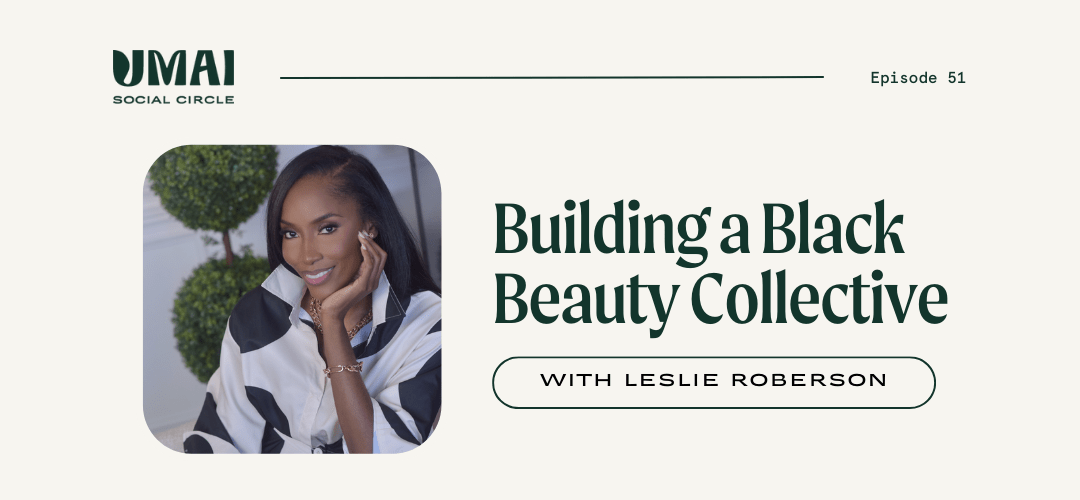
Join below for marketing inspo & trends πŸ‘‡πŸ‘‡πŸ‘‡

Posted on Leave a comment

#48: Refining your brand strategy with Meghan and Sam

UMAI social circle cpg podcast

#48: Refining your brand strategy with Meghan and Sam

Welcome to episode #48 where we’re diving into branding for your consumer goods brands. Our co-founders, Alison and Karin, have teamed up with dynamic duo: Meghan Martin, our Strategy Director, and Sam Laubach, our Creative Director to bring you this episode. Meghan and Sam, cousins and business partners, started Here and Now Creative Co. years ago to bring strategic and eye-catching branding and packaging to the CPG world. Fast forward 5 years, and their work has graced Forbes, Shark Tank, Vogue, and beyond, AND they’ve now partnered with UMAI to provide branding and packaging offerings under the UMAI umbrella. Get ready to talk about brand strategies and packaging expertise, folks. Let’s dive in! 🎧 

Let Us Break It Down For You…

[0:59 – 5:05]Β Introduction to Meghan and Sam
[5:07 – 6:12]Β The decision to team up with UMAI
[6:13 – 9:23]Β Exploring essential brand strategy elements and their significanceΒ 
[9:24 – 11:30]Β Effective visual identity strategies for brand differentiation
[11:31 – 15:14]Β Brands and trendy visual identity: fad or strategy?
[15:15 – 19:04]Β Optimizing brand visual identity: strategies for success
[19:05 – 22:26]Β Common branding pitfalls
[22:27 – 23:52]Β Branding advice for small and emerging businesses
[23:53 – 25:33]Β Closing + affordable Mini Brand Guide for startups and emerging brands
Β 

Mentions from this episode:Β 

Learn more and Start growing with usΒ 

UMAI Marketing socialsΒ  –

Get the Black Friday Cyber MondayΒ Kit, here
Β 

Stay in touch:

Join UMAI’s Facebook Group: COREΒ 

#48: Refining your brand strategy with Meghan and Sam

 
Alison Smith: [0:17]
Howdy, listeners. We’re Alison.
 
Karin Samelson: [0:18]
And I’m Karin.
 
Alison Smith: [0:19]
And we love growing CPG brands.
 
Karin Samelson: [0:22]
We’re the founders of a digital and social media marketing agency, UMAI Marketing, and creators of The Consumer Goods Growth Course, where we’ve helped grow dozens of brands to six and seven figures.
 
Alison Smith: [0:32]
We’re former in-house marketers turned consumer goods marketing educators, who’ve set off on a mission to provide CPG founders and marketers with actionable strategies that drive community and sales. We’re talking real results.
 
Karin Samelson: [0:46]
If you’re wanting to learn simple, actionable, step-by-step strategies needed to drive real brand growth, without breaking the bank or sacrificing your social life, then this is the podcast for you. Let’s get into today’s episode.

Karin Samelson: [0:59]
Welcome to the UMAI Social Circle, where we talk consumer goods tips to help business owners and marketers grow. We’re Karin and Alison, co-founders of UMAI Marketing, and we’re being joined by Meghan Martin and Sam Laubach, our new strategy director and creative director leading our branding and packaging efforts here at UMAI. Thanks for being on the podcast today, y’all.

Meghan Martin & Samantha Laubach: [1:24]
Thanks for having us.

Karin Samelson: [1:26]
Yeah. How’s your day been?

Meghan Martin: [1:28]
Good. Good.

Samantha Laubach: [1:31]
Good, good. Excited to have our chat today.

Karin Samelson: [1:32]
Yes, we’re talking branding.

Alison Smith: [1:37]
Branding is so exciting. I’m excited for this.

Karin Samelson: [1:41]
Yeah, and honestly, we have partnered … We now have branding and packaging at UMAI, but Meghan and Sam have a lot to teach us, as they’re the experts. So we’re going to kind roll through some of that and hopefully learn alongside of you guys. But before we start, we’d love to get a little bit of background on how you came into these roles. So Meghan, do you want to start?

Meghan Martin: [2:03]
Yeah, absolutely. I’ll kick it off. For me, I had started my branding career pretty much right out of school. Was working at a creative agency, and then after that went in-house for a tech company. And then I remember working in that tech company, we were sitting in a meeting with a creative agency and I was like, “Wow, I really would like to be back on the other side of the table.” So not long after that, Sam and I started freelancing together and then we decided to go for it full time. Now we’ve had here now for the last five years and have built brands for lots of different types of businesses and been able to work with clients pretty much all over the world.

Karin Samelson: [2:42]
Nice. Yeah, that’s such an interesting thought of being on the other side of the table and just being like, “This isn’t right. This doesn’t feel right.” So glad you could get back onto the creative side, agency side.

Meghan Martin: [2:55]
Yes. It was eyeopening for sure.

Karin Samelson: [2:58]
Sam, what about you?

Samantha Laubach: [3:01]
So I had some in-house experience when I was still in school. And then when I graduated I had another in-house job. And I remember being, for lack of better, I was unfulfilled with what I was doing. I was doing a lot of websites, a lot of more digital work. And I remember at that point I think I had dabbled a little bit in branding. And I remember Meghan texting me one day being like, “Why don’t we join forces?” And at first I was like, “I don’t know. I mean, I don’t know how that would work.” And then eventually we went for it and then the rest was history. Basically we went full time, and five years later our work’s been featured in Forbes and Vogue and we had a client on Shark Tank. It’s been a wild ride. Many twists and turns. And now we’re here.

Alison Smith: [3:48]
Yeah, y’all are just so creative and killing it. I love it. I mean, Forbes, Vogue, Shark Tank. That’s amazing. How did y’all feel when those publications and media happened? How does that feel?

Samantha Laubach: [4:05]
It’s so satisfying. I remember the Shark Tank being … Because we’re cousins also, so our whole family knew, everyone was watching it. It was a really big deal. It was very, very cool.

Meghan Martin: [4:16]
Yeah, Shark Tank was probably the biggest, because it was TV. We could actually watch it in real time. So that was probably the biggest one. That was pretty awesome. And then the others were media publications, so they’re still exciting, but not quite as fun as being able to watch it on TV.

Karin Samelson: [4:32]
Sorry, I have to say, the Sharks have seen your work. That is so crazy. That’s a big deal.

Samantha Laubach: [4:38]
It is so crazy. Yeah.

Alison Smith: [4:43]
Were any deals made? Did anyone … Who made the deal?

Meghan Martin: [4:47]
Yeah. Think it was Mr. Wonderful.

Alison Smith: [4:50]
Love it. And now, I mean we’re so excited to join forces, with just such an amazing talented duo. So let’s give everyone a bit of a background on how we decided to just team up.

Meghan Martin: [5:07]
Yeah, I think we’ve known each other for a while. We’ve worked with the same clients, we’ve referred work back and forth to each other for quite some time, and then the conversation kind of started of why don’t we see if it makes sense to just actually work all under one roof? And then you guys kind of brought that to the table and we were like, “Yes, let’s try it.” And it made a lot of sense. A lot of our clients have asked, “How do we continue working on our end?” It’s hard to just give a client a finished project and be like, “Okay, that’s it.” And not be able to help them continue to grow that brand. So it made a lot of sense on that end to be able to continue seeing how the brand can grow beyond just initial launch.

Alison Smith: [5:50]
Yeah, absolutely. I mean, it just makes so much sense that the continuation of how the brand should look goes more into the strategy on how we continue to present the brand to actual consumers, whether it be retail, or D2C, e-commerce, what have you. So makes a lot of sense. We’re super excited about it. Let’s now get into the nitty-gritty and teach everyone your ways. So tell us first a bit about what’s included in a brand strategy. Why is it important for brands to really nail that down?

Meghan Martin: [6:32]
Yes, brand strategy is super important. Brand strategy is the why behind everything that you do. It’s essentially the foundation of your brand. And it allows you to answer the questions, does doing this thing make sense for my brand? Does talking to this audience or following this trend even makes sense for my brand? So that’s where strategy comes in. And what’s included varies depending on who you’re working with and what their process looks like. But for us, the process includes mission, vision, brand statement, your brand assets or idea, your target audience positioning and your unique selling point, and then also your brand values. Those are kind of the core things that we focus on, on brand strategy. And then all of those allow us to then make the right decision for design and for the creative work.

Karin Samelson: [7:24]
Yeah. And what does the brand risk if they don’t establish this at the beginning?

Meghan Martin: [7:34]
Inconsistency.

Samantha Laubach: [7:34]
Everything. Yeah.

Meghan Martin: [7:37]
A lot of things for sure. But I’d say the biggest is inconsistency. And that is the thing that everyone asks us for. That’s what everyone wants out of their brand when they come to us is how do I create something cohesive? How do I create consistency across all of everything that I’m putting out into the world? And that strategy is what allows you to do that, especially that core essence of who you are. That’s what creates that consistency. And without it, you’re going to kind of be guessing a little bit. You don’t have any filter for, again, that question of does this make sense?

Karin Samelson: [8:11]
And so a brand that maybe is a little bit down the road, they’ve been in business for a few years and they think that they have that bund up. Is it ever too late to reflect back on it, to work on it again, to breathe new life into it?

Samantha Laubach: [8:31]
I would say no. I feel like it’s- You really should be evaluating it, if not every year, I would say twice a year, just making sure, are we still talking to the same target audience? Has that shifted? Do we need to make any changes in our messaging? Are we staying true to our brand values? Say you’re launching a new product, does this even make sense for who we are as a brand, or are we just trying to appeal to all these different people? So I would say it’s never too late.

Alison Smith: [8:58]
Yeah. And if you really are noticing those cracks and inconsistencies, then I mean it’s the same with marketing. We bring on a brand and we notice certain channels aren’t making sense, the ROI is not there. We go back to the foundations and really think about the basics and what’s really going to work. So same with marketing really aligns there.

Alison Smith: [9:24]
So tell us how new and existing brands can use their visual identity to really stand out in their space. I mean, there’s so many categories like ready-to-drink coffees and things like that that can seem overcrowded. So how can that brand stand out on the shelf?

Samantha Laubach: [9:48]
I would say do a competitor analysis. That’s the biggest thing and that’s part of the strategy. And also figure out what makes you different. That’s again, that big part of the strategy is how are you unique from your competitors? Is it your story? Honestly, it all goes back to strategy. Our design is so intentional that we don’t do any creative or design without making sure that it’s super, super intentional.

Meghan Martin: [10:12]
Yeah, I’d agree. It all comes back to strategy at the end of the day. And your values again are going to help your unique selling point compared to your competitors. And also your values, I would say are your biggest points to refer back to when you’re trying to figure out how do I stand out, and what makes me unique.

Karin Samelson: [10:31]
Yeah. So standing out isn’t just what’s on your pretty packaging, what it looks like on the shelf? Well, that’s a big part of it. There’s a lot that goes on in the backend. And honestly, I can’t tell you how many times that we’ve had discovery calls with people that were interested in marketing and we say like, “Okay, who are your biggest competitors? Just so we can jog our memories, have a good idea, write it down so we can do some research later.” And some brands will say, “We don’t have any competitors,” or, “We don’t know who they are.” And so that’s honestly, it’s not a red flag because we’re all learning, but it’s a moment to reflect and be like, you do have competitors. Somewhere along the line you have somebody that’s doing something similar unless it’s completely new innovation, but how often does that happen? So that’s a really good reminder to do that analysis and do all that upfront strategy work to make sure you stand out.
So let’s talk a little bit about trends in branding. We see it a lot where a lot of packaging, a lot of branding kind of looks all the same because it’s following this super Gen Z trendy stuff that’s going on, but it’s cute and it’s nice for now, but what are your thoughts about brands hopping on these trends when it comes to their visual identity and their brand identity?

Meghan Martin: [11:57]
Yeah, I think that’s where, again, favorite word of the day strategy comes in because, again … Yeah, I think, and a lot of founders get Shiny Object Syndrome as well where they’re like, “Oh, we like what this brand’s doing and this brand’s doing.” And as you said, it’s a trend right now, but is that going to last the length of time? And that’s again, we’re coming in, what are your values? What is your story? What makes you unique? And then that influences the design. So we’re not just looking at the trends we’re looking at, yes, we obviously want you to look current and modern, but also beyond that. What happens in five years when gradients are no longer popular, or whatever the current trend is? You have to be able to think long-term, and think deeper than just, “Okay, this is pretty right now.”

Alison Smith: [12:49]
I love that you talked about ingredients too, and I love that y’all dive that deep. I recently had a conversation with someone in the keto space and their branding was all about keto. And that was huge, and they probably made a ton of money when keto really was at its peak, but if you go to Google Trends right now, it’s slowly on the decline and now they’re like, “Oh, shoot. We have to rebrand and rethink not only our packaging, but our messaging and who we’re targeting as well, because it’s now not the biggest thing in the world.” We’ve moved on. So it’s just really huge that y’all actually dive in that deep to really consider things like that as well.

Karin Samelson: [13:34]
I really like that you brought that up, Alison, because Meghan said gradients like color gradients.

Meghan Martin: [13:43]
Gradients. So true. It’s true.

Samantha Laubach: [13:44]
Which is so true.

Meghan Martin: [13:45]
It trends across the board.

Alison Smith: [13:48]
Meghan, you said gradients?

Meghan Martin: [13:50]
Yes, gradients, yeah. Like the design. Yes. But ingredients too. Because your brand is more than your product as well. Actually really good brands, the product doesn’t matter. People go in, you see these brands that are super successful and it’s because they’re selling beyond their product. They’re selling something that people want to be part of beyond the product. So that’s something always we push founders to think about as well is, who are you? What do you stand for beyond just this product? Especially if you’re starting new in a category, this is kind of an interesting place to be because right now, yeah, you might not have competitors in that category to Karin’s point, but you will, especially if you’re first in your category, and then they’re going to come in and do it better. So how do you keep that expectation and keep your recognition and your own space, your own lane in that category when you’re no longer the only one in it?

Alison Smith: [14:55]
Yeah. Well, sorry for not hearing you correctly, but I’m glad we got to talk about that as well. We’ve dug really deep into kind of the behind the scenes, the strategy, the messaging, and you did speak on Shiny Object Syndrome, but I really want to hear y’all’s thoughts about the actual end product, whether it be the packaging or just their overall typography, visual identity, things like that. How can a brand really execute their best visual identity? What are the most important things? What goes on the packaging? Let’s talk about really the pretty stuff.

Samantha Laubach: [15:43]
I mean, pretty packaging always wins. It’s always going to, so I think it’s just, again, staying true to who you are, and all of those pieces are part of the puzzle of what makes up your brand. So I feel like you don’t have to have the most interesting looking font. You can have a really simple clean font, but if it’s done really well and it communicates what your product is really well, and people can understand what it is on the shelf automatically, people don’t want to have to work to understand who you are and what you’re selling. So being able to communicate it in a way that’s clear and looks really good, they don’t have to waste any brain calories on it. That’s the biggest thing.

Meghan Martin: [16:20]
That is something I think a shift in packaging that is definitely happening. Having a ton of call-outs on the front of packaging used to be so important, and that’s how everyone did it. And now I think you’re really seeing this change, this shift into just simplicity. And it’s interesting because, and it’s a question we get a lot of, what do I need to put on my packaging? How much stuff should I have on the front where it’s visible? And I think it really depends on the impact that you want to make. I’ve seen brands that do really well, that actually have literally nothing but their logo on the front. They have no information about the product, but when they’re sitting on a shelf already in category, you already have that context of, I know what this product is because it’s sitting with these other products and it’s in this place in the store. So it’s interesting, and I think it just goes back to strategy as everything does. But, yeah.

Alison Smith: [17:21]
Yeah, I mean, we love that y’all are strategic minded. Just another anecdote, back in the day we worked with a brand and their consumer was most definitely women who were 65 and up. And they decided to rebrand. They did not work with y’all, even though we asked them to work with y’all, they worked with someone else. Not going to name names. It was a beautiful rebrand, but it had gradient, actually, I’m pretty sure it had gradient. It was going after the Gen Z category, which is fine. You do want to expand your user base. Absolutely. But it just did not fit whatsoever, and we had a hard time really going after the actual consumers. It was a fairly new brand. And that just goes to say, if you are going to work with a branding or packaging agency, and you decide not to go with us, that’s totally fine, but just make sure that strategy is equally as important as creativity with that agency. Otherwise, you’re kind of set up for failure down the line when you go to actually market your brand.

Karin Samelson: [18:41]
That was a tough one. We really loved the brand so much, and it was so fun marketing to this older crowd. And they are purchasers, they have the money, they could buy whatever they want, whatever they want. And then it was like, “Oh, okay. This just isn’t the same.” Yeah, womp-womp. But yeah, that’s upsetting.

Alison Smith: [19:05]
Yeah. Okay. Well, let’s close this out with a big question that I think every brand really wants to know, is maybe on their mind. What is the biggest mistake that you see brands make when it comes to their branding? Or we can talk about packaging.

Samantha Laubach: [19:22] 
Not adhering to your brand guide or style guide, and jumping on every single trend. Because again, it’s not going to be consistent. No one’s going to know who you are. You need brand recognition. That’s one of the most important things. And brand loyalty. And not adhering to your brand guide is one of the biggest mistakes you can make.

Karin Samelson: [19:41]
Can you give an example of that, Sam? Yeah.

Samantha Laubach: [
Say you’re on Canva and you want to start using this new template, and it’s every other week, it’s a new template. And no shade to Canva at all, I think it’s a great tool, but it’s more of like when you’re using pre-made designs that weren’t designed for you with your brand, and your fonts and your colors and even your imagery, then you’re designing these new things every single time. And when someone’s on their Instagram or whatever and they land on this post, they’re not going to know that that’s your brand because it’s like, “Oh, this doesn’t even look like what their brand looks like.” So we see it all the time, and it’s a shame. As brand designers, it’s a shame.

Meghan Martin: [20:23]
Yeah, it’s tough, especially if you’ve designed the brand and all of a sudden you’re like, “What are you doing?” Yeah, that’s a big one. Mine would be similar, but not having your core essence of who you are defined and trying to piece things together or just, again, I think early stage, if you’re not thinking bigger picture, you start thinking, I need a logo, I need fonts, I need a color palette. And you’re not thinking about the full picture. And that’s again, where inconsistencies come in to play because you don’t have that full vision defined ahead of time. So similar to Sam’s, but more in the core essence of who you are beyond your visuals.

Alison Smith: [21:06]
Yeah, I mean, we are all for Canva templates. Use Canva templates, just upload your typography and your colors first, use the template and then click one button and it’s your typography. I mean, that’s the only thing. Just make sure that you’re actually using what your branding agency gave you.

Meghan Martin: [21:30]
Yeah. And repeat them. I think that’s the other thing is, again, it’s the, “Oh, we’ll put a new template, and a brand new thing.” And it’s something else new. Reuse and repeat and create consistency because that is how you get that recognition. And you can keep using the same layout per se, or you can keep using same elements to create that consistency without changing it completely every single time.

Karin Samelson: [21:54]
Yeah, I think that’s a big thing that we see with marketing too, is that there is no need to reinvent the wheel all the time. And we tend to over complicate things as humans all the time because we want to be better, we want to perform better, we want it to look better. But it’s just a reminder that if your brand identity is strong and your visual identity is strong, then there’s no need to reinvent it all the time. It’s lean in to what was built for you with your brand and product in mind. So I love that advice.

Is there anything else that you would like to leave our audience with in terms of a lot of folks listening have smaller brands, emerging brands, and if they have been using Canva templates and not following their brand guidelines, or they maybe haven’t even started creating their branding yet, what would a big piece of advice be for them?

Samantha Laubach: [22:53]
Get really clear on who you are, what makes you different. And if you don’t have a visual identity yet, then pick four colors that you want to use for every single asset you create and stick to them. And then choose one or two fonts, and just keep it simple. I think when in doubt, just keep it simple. I think people over complicate it and it doesn’t have to be at all. But I would say the biggest thing is get clear on who you are and what makes you different.

Meghan Martin: [23:!19]
Yeah, that would be mine as well is … Well a little bit more to it. Get clear on who you are and also, who are you beyond? What do you want to be known for and what do you want to stand for beyond your product?

Alison Smith: [23:36]
Love it. I feel like everyone should ask their self that too.

Meghan Martin: [23:41]
It is. It’s kind of the same. Yeah.

Samantha Laubach: [23:42]
Branding is very personal and it’s kind of like a person. It really is like a person.

Alison Smith: [23:48]
Treat your brand like it’s a human being. Love that.

Samantha Laubach: [23:51]
Yes.

Karin Samelson: [23:52]
Well, all right. Thank you so much Meghan and Sam for being here during this episode and talking about branding and educating us. And thank you everyone for tuning in. And we want to share something that we are now offering to a exclusive group of founders each month. We are introducing a mini brand guide offering for early stage and emerging brand founders at a very, very reduced price point. So you guys know we love giving back where we can and we talk to dozens of founders every single month who have the same pain point. Their product ideation and development is super strong, but their branding needs a lot of support and guidance to gain consumer interest and sales down the road. So as mentioned in this episode is the importance of a well constructed and thought out brand guide before you start on anything else, including your marketing.

And that’s why we’re opening up applications for our mini brand guide. To help you refine your brand’s visual identity, we’ll be taking on only three brands a month and in only one week, we will help you define your brand direction, including color palette, type, hierarchy, imagery, use and direction, brand voice and examples and strategic elements, as well as application mock-ups so that you can see this direction in action for your emails and social posts and all of your marketing. So if you’d like to apply for an exclusive spot, go to umaimarketing.com/brand to learn more and apply now. And we can’t wait to help you refine that visual identity.

Karin Samelson: [25:34]
Thanks for listening to the UMAI Social circle, y’all. We’re here to support you in your CPG journey, so be sure to subscribe so you don’t miss any new podcast episodes. And while you’re at it, please leave us a review on your listening platform of choice. Shoot us a DM at UMAI Marketing on Instagram, if you have any topics you want us to cover on new podcast episodes.

Alison Smith: [25:53]
And don’t forget to access our free masterclass where we’re showing you how to create a solid marketing strategy. You can access that at umaimarketing.com/masterclass, and we’ll meet you back here for the next episode.

Join below for marketing inspo & trends πŸ‘‡πŸ‘‡πŸ‘‡